
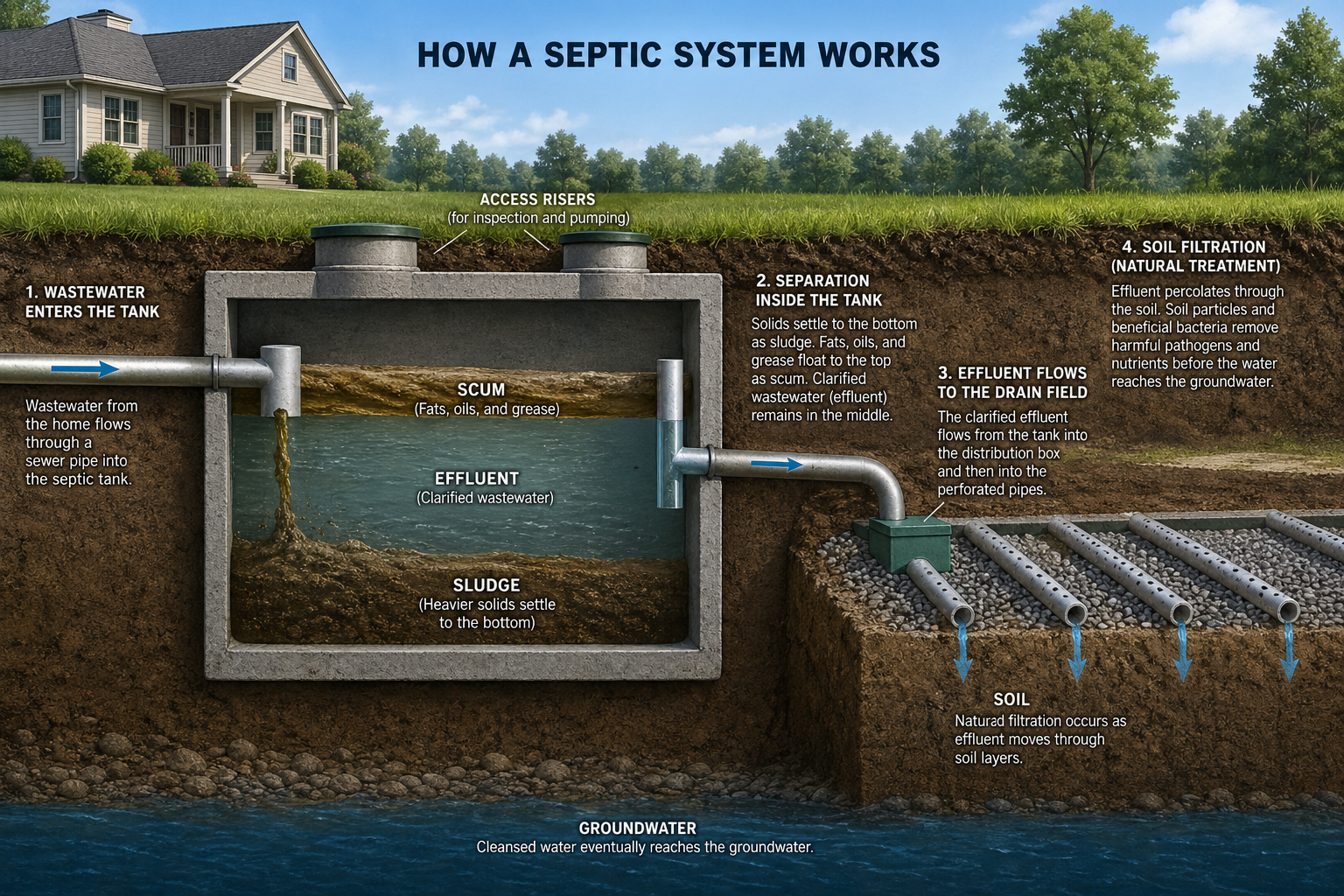
A septic tank system functions as a highly efficient, underground wastewater treatment facility for homes not connected to municipal sewer lines. The process begins when wastewater from your toilets, sinks, and laundry enters a watertight tank. Inside, the waste naturally separates: heavy solids sink to the bottom as sludge, while oils and grease float to the top as scum.
Between these layers, clarified liquid effluent remains. As new waste enters, this liquid is pushed out into a septic system drain field, where it undergoes final filtration through the soil. To ensure this process continues smoothly and prevents backups, regular maintenance like septic tank cleaning and pumping is essential for long-term system health.
A Closer Look at How a Septic System Works
To truly understand how septic systems work, you have to view them as living biological filters. It isn't just a storage container; it’s a pressurized environment where bacteria and gravity work in tandem to neutralize pathogens before they reach the groundwater.
Septic Tank Components: What Actually Works (and Why)
The success of the system relies on the biological breakdown occurring within the septic tank components. When waste enters, anaerobic bacteria begin "digesting" organic matter.
- The Inlet Baffle: Directs flow downward to prevent turbulence from stirring up settled sludge.
- The Three Layers: The tank naturally partitions into the "Scum" (fats), the "Effluent" (liquid), and the "Sludge" (solids).
- The Outlet Baffle: Ensures only the clarified effluent moves toward the septic system drain field, keeping solids trapped where they belong.
Soil and Design: What Influences how septic systems work
Not all properties handle wastewater the same way. The effectiveness of the septic tank and leach field is heavily influenced by:
- Soil Percolation: The soil must be porous enough to absorb water but dense enough to filter out bacteria.
- System Capacity: A tank must be sized correctly for the home's occupancy to allow enough "settling time" for solids.
- The Lift Station: In properties where the drain field is uphill from the tank, lift station pumping is required to move effluent against gravity.
Where Most People Get It Wrong with their Septic Tank System
The biggest misconception is that a septic system is "set it and forget it." Many homeowners believe that if they don't see a backup, the system is fine. However, if the sludge layer grows too thick, it begins flowing into the septic system drain field, clogging the soil with solids.
This creates a "biomat" that prevents drainage, often leading to a total—and expensive—system failure that could have been avoided with a simple real estate septic system inspection.
What You Need to Know Before You Decide on a Septic Tank System
Understanding how septic tanks work is the first step toward responsible homeownership. Before you commit to a specific maintenance plan or property purchase, keep these essential factors in mind to ensure your system remains functional for decades:
- Accessibility is Key: You cannot maintain what you cannot find. If your tank's access points are buried deep underground, consider septic risers and lid installation to make routine pumping and inspections effortless and more affordable.
- Water Conservation Matters: Overloading the system with excessive water—like doing five loads of laundry in one day—can flush solids out of the tank before they settle, damaging the septic tank and leach field.
- Bacteria Balance: Harsh chemicals, bleach, and drain cleaners kill the beneficial bacteria that break down waste.
- Surface Protection: Never drive vehicles or plant large trees over the septic system drain field, as soil compaction and root intrusion are leading causes of premature system failure.
Choosing the Right Option for Your Septic Tank System
Understanding how a septic drain field works is only half the battle; you must also consider how external environmental factors impact your specific setup. Depending on your property's layout and local conditions, your maintenance needs will vary:
- High Water Tables: In areas with saturated soil, the septic tank and leach field may struggle to process effluent efficiently. This often requires more frequent monitoring to prevent groundwater contamination.
- Heavy Clay Soil: If your land has poor drainage, the septic system drain field can become easily overwhelmed, making the use of specialized aerobic treatments or larger tanks necessary.
- Property Topography: For homes built on slopes, gravity alone may not suffice. In these cases, how septic systems work depends on mechanical components like lift stations to move waste to higher ground.
- High-Usage Households: Large families or homes with frequent guests put more stress on the septic tank system, requiring shorter intervals between professional septic tank cleaning and pumping to prevent overflow.
How This Works in Real Projects
In practice, understanding how does a septic system work shifts from a biological concept to a matter of preventative maintenance and engineering. When we visit a site for a real estate septic system inspection, the most successful projects are those where the homeowner treats the system as a critical utility rather than a buried mystery.
Professionals often recommend a three-to-five-year pumping cycle, but real-world performance depends heavily on the health of the septic tank and leach field. In aging systems, we frequently see the benefits of modern upgrades; for instance, the addition of effluent filters and septic risers significantly reduces the labor costs and surface disruption of future service visits.
Observation over time shows that systems paired with a well-maintained septic tank system last decades longer than those neglected. When homeowners prioritize early intervention—such as replacing a failing outlet baffle before it allows solids to migrate—they effectively save thousands in potential drain field reconstruction costs. The goal is always to keep the "biological engine" running smoothly through consistent, professional oversight.
Final Thoughts: Making the Right Choice
Mastering how a septic tank works is essential for protecting your property and the environment. By understanding the delicate balance between the septic tank and leach field, you can move from reactive repairs to proactive care. Whether you are maintaining an existing setup or evaluating a new property, remember that consistency is your best tool.
Staying diligent with your septic tank cleaning and pumping schedule ensures that your septic tank system remains a silent, reliable part of your home for years to come. Confident homeownership starts with knowing your system is handled.


