
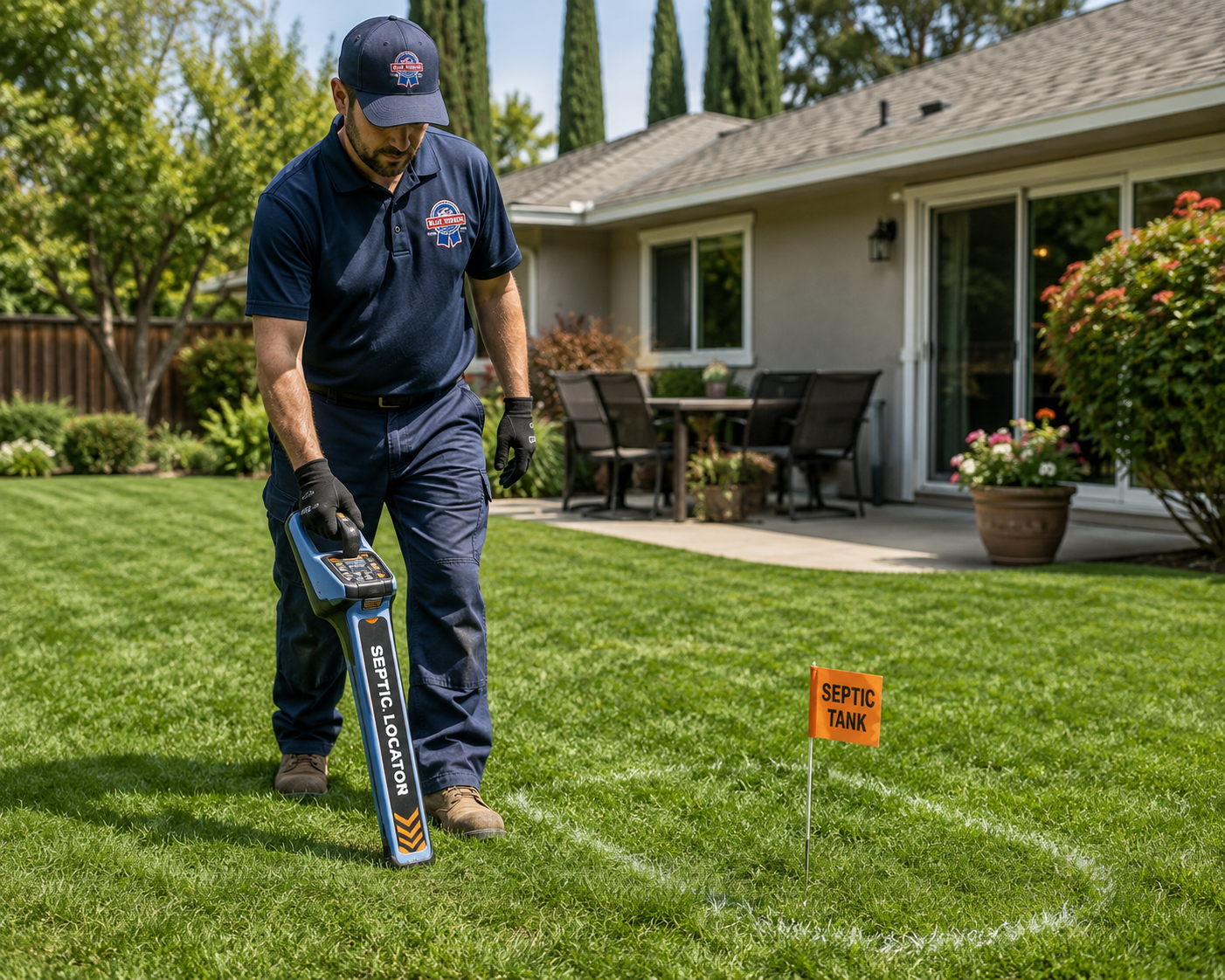
If you are wondering how to find a buried septic tank on your property, the short answer is that you need a mix of original property records, structural context clues, and professional tools to pinpoint its exact coordinates. Searching for your underground system without a clear plan often leads to a torn-up yard, wasted hours, and unnecessary frustration. For homeowners in the Greater Sacramento area, knowing where is the septic tank located is essential before scheduling routine pumping or landscaping projects. Guessing its position can result in costly structural damage or accidentally striking vital components like the drainfield.
In this guide, you will learn exactly how to find septic system in your yard safely and efficiently. We will cover the practical steps you can take on your own, when it is time to bring in professional septic tank locating equipment, and how precise tracking protects your property value. Let’s dive into the smartest ways to locate your system without turning your lawn into a construction zone.
Why Accurate Septic Tank Locating is Essential for Your Property
At its core, professional septic tank locating is the process of precisely mapping out the underground components of your wastewater system. Instead of relying on guesswork, technicians use specialized tools like electronic flushable transmitters, structural probes, and utility maps to find the exact dimensions and depth of your tank. Knowing your precise septic tank location is the first step in any successful maintenance task, ensuring that service ports can be accessed quickly without disrupting the surrounding landscape.
This knowledge matters immensely in the real world because an undiscovered tank is a ticking clock for maintenance delays. If you do not know how to find septic tank entry points, regular service becomes incredibly difficult. Postponing your regular septic tank cleaning and pumping because the access lid is buried out of sight can lead to severe system backups, sluggish household drains, and premature drainfield failure. Property owners who proactively identify their system layout enjoy distinct structural and financial advantages:
- Prevent Damage: Avoid driving heavy machinery or placing permanent landscaping features directly over fragile buried components.
- Streamline Service: Save time and labor costs during routine pump-outs by having an accessible point of entry ready for technicians.
- Protect Property Integrity: Prevent accidental strikes to lines when installing fences, pools, or home additions.
A common misconception is that a septic tank marker or a slight dip in the lawn is enough to pinpoint a system. In reality, soil shifts over time, and older properties often hide structural surprises. Relying on superficial guesswork often leads to erratic digging. Transitioning from basic guesswork to precise tracking requires understanding the specialized tools that experts use to map out your yard safely. For comprehensive management, coupling location services with proactive tank locating and outlet baffle replacement protects your entire home infrastructure from preventable malfunctions.
The Step-by-Step Guide on How to Find Septic System Layouts
Locating a buried system doesn't have to involve tearing up your entire lawn. By taking a systematic approach, you can narrow down the search area using historical records and physical indicators before any tools touch the dirt. Whether you need a septic tank locator near me for an urgent pump-out or you are simply planning a backyard improvement project, following a structured process ensures safety and precision.
If you are trying to figure out how to find septic tank entry doors on your own, the following step-by-step method will help you uncover your system efficiently.
1. Examine Your Property Records and Home Plots
The easiest way to start your search is on paper. Most county environmental health departments or local building offices maintain an "as-built" drawing or diagram of properties utilizing private waste systems. This blueprint shows exactly where is the septic tank located in relation to the home’s foundation, well lines, and property boundaries. Check your home buying documentation or request a copy of the original permit from your local municipality. This document will give you a highly accurate starting zone in your yard.
2. Follow the Main Waste Line from the House
If property maps aren't available, you can use your home's internal plumbing as a guide. Go into your crawlspace or basement and locate the main, three-to-four-inch PVC or cast-iron sewer pipe exiting the foundation wall. The underground tank is typically buried straight out from this exit point, usually between 10 to 25 feet away from the house. Walk out into the yard directly above where this pipe exits to establish your primary search path.
3. Survey the Yard for Unnatural Scapes and Markers
Nature often leaves subtle clues about what lies beneath the surface. Walk along your established search path and look for distinct visual anomalies in your landscaping.
- Depressions or Mounds: The soil over a buried tank may settle over time, creating a shallow dip, or it might bulge slightly if backfilled unevenly.
- Vegetation Differences: Grass over a shallow tank might dry out and turn brown faster during hot summer months due to limited soil depth. Conversely, if there is a small, unnoticed structural weep, the grass above it might look exceptionally lush and green.
- Physical Indicators: Look closely for a concrete, plastic, or metal septic tank marker flush with the ground, which past technicians may have left behind to simplify future service calls.
4. Probe the Soil Safely
Once you have narrowed down the suspected area, you can use a thin, sturdy metal soil probe (usually three to four feet long) to test the ground. Gently push the probe into the soil every few feet along your path. Concrete, fiberglass, or polyethylene tanks are typically buried anywhere from one to three feet below the surface. When the probe strikes a solid, unyielding flat surface, note the depth. Probe in a grid pattern to see if the shape matches the rectangular or oval dimensions of a typical tank.
Safety Warning: Always call your local utility underground locating service (like 811) before probing or digging to ensure you do not accidentally strike buried electrical, gas, or water lines.
5. Transition to Professional Tracking Methods
If soil probing proves inconclusive, or if you suspect your system is buried deeply, standard DIY methods can fall short. This is where advanced septic tank locating technology becomes necessary. Professional technicians use specialized equipment like electronic flushable pipe transmitters. These small beacons are flushed down a household toilet and tracked from above ground using a handheld receiver, mapping the exact path of the pipe directly to the main lid.
Using high-tech tracking eliminates guesswork entirely, preserving your lawn and landscaping from unnecessary trenching. If your tank is buried deep beneath years of topsoil accumulations, experts can also install durable septic risers and lid installation solutions. Bringing the access points up closer to the surface ensures that future maintenance, routine cleanings, or comprehensive real estate septic system inspections can be performed instantly without any digging required.
Ultimately, knowing how to find a buried septic tank is about protecting your infrastructure. Following these steps helps you understand your property's layout, saving you time and preventing accidental damage to your underground systems.
Real-World Scenarios: How Precision Tracking Saves Property Owners
Transitioning from tracking methods to real-world application shows exactly why accurate mapping matters. Property owners face various maintenance and structural challenges where knowing your system layout makes all the difference.
- The Overdue Maintenance Call: A homeowner in Roseville realized their system hadn't been pumped in five years but had no idea how to find septic tank lids beneath their thick turf. Instead of trenching the lawn blindly, they utilized professional septic tank locating services using an electronic flushable transmitter. The team pinned down the exact entry point within minutes, allowing for immediate lift station pumping and main tank cleaning while keeping the pristine lawn completely intact.
- The Backyard Renovation Project: Before installing a new perimeter fence, an Elk Grove family needed to learn how to locate a septic field and tank to avoid structural damage. By reviewing local permit plots and using a professional septic tank locating grid probe, they successfully mapped out the underground perimeter. This clear visual mapping allowed the fence contractors to install posts safely away from structural lines, avoiding thousands of dollars in accidental puncture repairs.
- The Real Estate Transaction: A buyer looking at an older home in Sacramento needed to verify system health but found no visible septic tank marker on the property. An expert locator used advanced receiver technology to quickly map the tank, facilitating a thorough inspection that kept the home sale moving forward without delays.
These examples highlight how precise location tracking resolves stressful property dilemmas. Taking the guesswork out of the equation guarantees faster fixes, safer upgrades, and total peace of mind for your investment.
Insider Tips for Seamless Septic System Tracking
Applying these professional insights can mean the difference between a quick, efficient service call and an afternoon of frustrating, destructive guesswork. These practical best practices ensure your tracking efforts remain safe, organized, and effective.
- Document the Coordinates Immediately: Once you successfully complete your septic tank locating search, measure its exact distance from two fixed points on your home, such as the corner of the foundation or a patio edge. Sketch a quick map and keep it next to your home's main water valve or electrical panel so you never have to guess how to find septic tank entry portals again.
- Install a Permanent Landscape Marker: Consider placing a decorative stone, birdbath, or flat stepping stone directly over the access lid area. Creating a subtle, intentional septic tank marker keeps the location visible for future service technicians while blending seamlessly into your backyard landscaping design.
- Never Plant Deep-Rooted Trees Nearby: If you are learning how to find septic system in your yard to plan future landscaping, ensure all major trees and shrubs are kept at least 30 feet away from the perimeter. Aggressive roots seek out moisture and can quickly crack tank walls or clog the lines, requiring intensive septic tank repairs to restore flow.
- Watch the Frost and Dew Patterns: On cold, frosty mornings, look out at your lawn early. The natural heat rising from an active underground system will often melt frost or dry up heavy morning dew much faster than the surrounding grass, temporarily outlining your exact septic tank location for free.
Utilizing these straightforward, proactive strategies keeps your property organized and ensures your next routine maintenance visit is completely stress-free.
Streamline Your Next Service with Professional Septic Tank Locating
Finding your underground system doesn't have to turn your yard into a messy guessing game. By combining historical property records, home plumbing paths, and advanced tracking tools, you now understand exactly how to find a buried septic tank safely and efficiently. Pinpointing your precise septic tank location ensures that future maintenance stays on schedule, saving you from unnecessary lawn excavation and unexpected repair costs.
Taking a proactive approach to map out your infrastructure today eliminates stress and protects your backyard investments for years to come. Whether you are dealing with a hidden access port or prepping for an upcoming landscaping project, having experts handle the tracking guarantees absolute precision from the start.
If you are tired of searching for a reliable septic tank locator near me and want to find your system without the guesswork, the local team at Blue Ribbon Septic is here to help. Contact us today to schedule our precision septic tank locating services and ensure your property remains completely protected.
Frequently Asked Questions About Septic Tank Location Tracking
How much does professional septic tank locating usually cost?
The cost of professional septic tank locating typically ranges from $150 to $400, depending on the depth of the tank and the complexity of your yard. If a technician uses advanced electronic flushable transmitters to map out the lines, it might increase the initial fee slightly. However, investing in an expert search is much more affordable than accidentally rupturing lines or digging random trenches across your entire lawn.
What is the easiest way to find my septic tank if I don't have tools?
The easiest initial step on how to find septic tank entry points without tools is inspecting your home's crawlspace or basement. Locate the main waste line exiting the foundation wall and walk straight out into the yard. Look for a physical septic tank marker, a shallow depression in the soil, or grass that turns brown faster than the rest of the lawn during dry summer months.
Can a property owner utilize a metal detector to find a tank?
A metal detector can occasionally help you learn how to find septic system in your yard, but its effectiveness depends entirely on the construction materials. If your system features a concrete tank reinforced with rebar, or if it has a heavy iron access handle, a high-quality metal detector will likely signal its presence. However, this method will not work on modern all-plastic or fiberglass tanks unless a metallic component is near the surface.
What should I do if my system is buried too deep to locate safely?
When a system is buried deep beneath multiple layers of topsoil, standard DIY probing can become incredibly difficult and risky. In this situation, calling an expert septic tank locator near me is the safest choice. Once professionals locate the system using electronic signaling, it is highly recommended to schedule a code-compliant septic risers and lid installation to bring the access points to the surface and simplify all future maintenance visits.


