
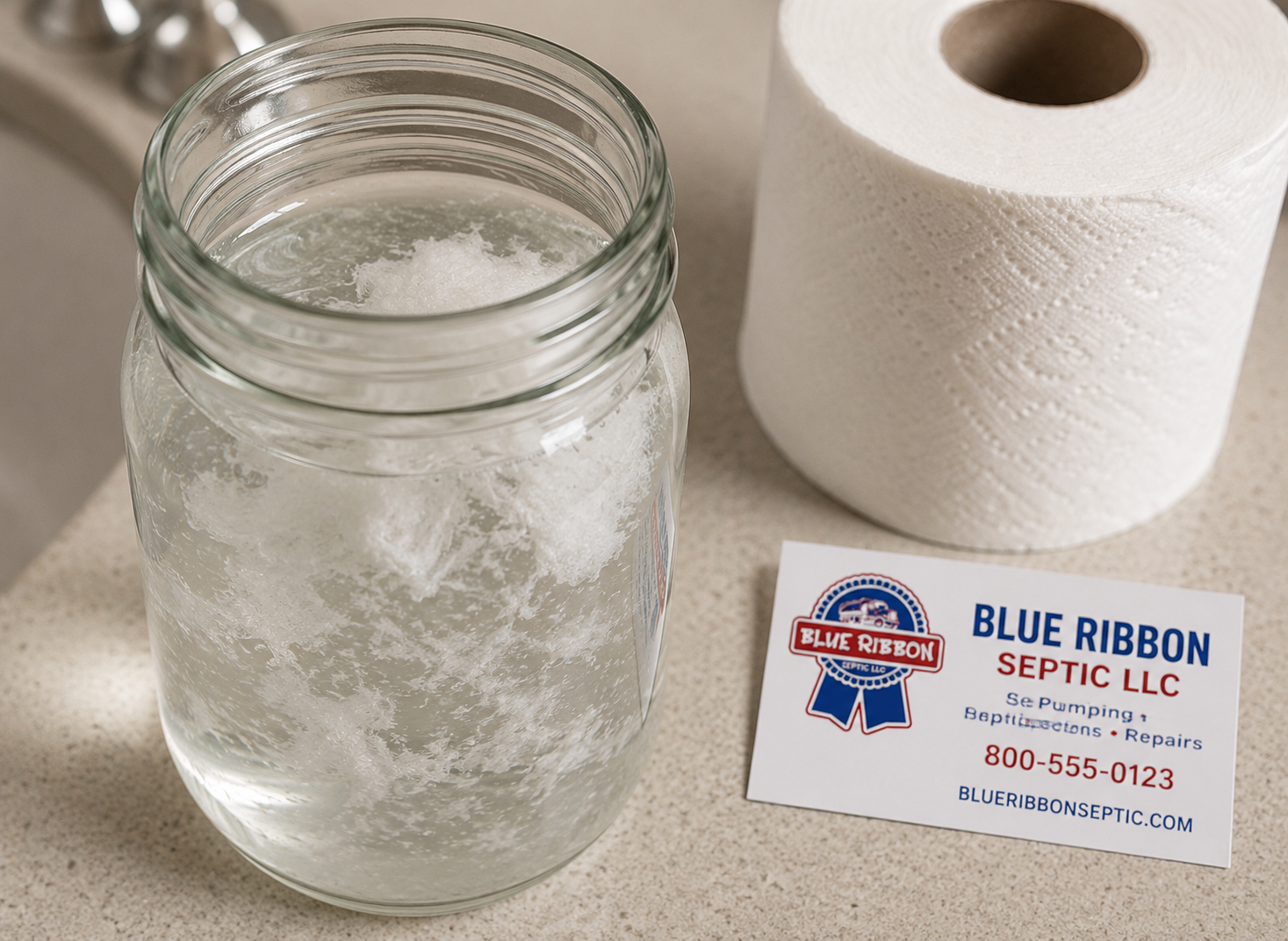
Yes, septic safe toilet paper is designed to dissolve quickly to prevent clogs, but not every brand labeled "safe" actually lives up to the claim. To protect your system, the best toilet paper for septic tanks is one that is specifically tested to break down rapidly in water, preventing the sludge buildup that leads to expensive backups.
For homeowners in the Sacramento area, choosing the wrong roll can lead to more than just a slow drain; it can cause structural damage to your baffles or lead to a total system failure. While many brands market themselves as biodegradable toilet paper, some premium, ultra-soft varieties contain thick fibers and strengthening agents that linger in your tank for months. Understanding what makes toilet paper septic safe is the difference between a healthy, functioning system and an emergency service call during dinner.
In this guide, we will break down the science of dissolvability, debunk common labeling myths, and help you choose a product that keeps your plumbing clear and your tank healthy. Here is what you need to know before you head to the grocery store.
What Makes Toilet Paper Septic Safe and Why It Matters
At its core, septic safe toilet paper is a specialized paper product engineered to dissolve rapidly upon contact with water. Unlike standard rolls that may prioritize thickness and plushness, toilet paper safe for septic systems uses shorter cellulose fibers and fewer chemical binders. This design ensures that the paper breaks down into tiny particles before it even reaches your septic tank, preventing it from forming a solid mass that can obstruct your inlet pipes or outlet baffles.
For homeowners, the stakes of choosing the right product are high. When you use paper that doesn't dissolve, it contributes to a thick "scum layer" at the top of your tank. Over time, this buildup can lead to devastating backups into your home or cause solids to escape into your leach field. Regular septic tank cleaning and pumping is the best way to manage unavoidable waste, but using the wrong paper forces you to pump far more frequently than necessary to avoid system failure.
Selecting a high-quality, dissolvable toilet paper offers several practical benefits for your property's long-term health:
- Prevents Pipe Obstructions: Fast-dissolving fibers move easily through the plumbing, even in older homes with low-flow toilets.
- Protects Downstream Components: Minimizing solids protects sensitive parts of your system, such as those serviced during lift station pumping, by ensuring only liquid effluent moves through the pumps.
- Saves Money: By reducing the rate of sludge accumulation, you extend the intervals between professional maintenance visits.
A common mistake is assuming that any "soft" or "premium" brand will work just because the packaging looks eco-friendly. In reality, the very features that make toilet paper feel like a cloud are often what make it a nightmare for your septic bacteria to process.
Separating Myth from Reality: How to Choose the Best Toilet Paper for Septic Tanks
The primary goal of a healthy septic system is to separate solids from liquids effectively. When you flush septic safe toilet paper, you are adding a material that is designed to disintegrate quickly so that it doesn't take up excessive space in your tank. However, a common misconception is that all paper is created equal. Many "luxury" brands focus on strength—using long, tightly woven fibers—which is exactly what you don't want. To keep your system running smoothly, you need paper that yields to water tension almost immediately.
If you aren't sure where your tank is or how it’s handling your current household habits, professional tank locating and outlet baffle replacement can help identify if paper clogs have already begun to damage your system’s infrastructure.
The Breakdown Test: How to Tell if It’s Truly Septic Safe
You don’t have to guess whether your favorite brand is safe. You can perform a simple "jar test" at home to see how your septic tank safe toilet paper actually performs:
- Fill a clear glass jar halfway with water.
- Drop two squares of your toilet paper into the jar.
- Secure the lid and shake the jar vigorously twice.
- If the paper has shredded into tiny, cloudy pieces, it is safe. If the squares are still intact or large clumps remain, that paper is likely to clog septic tanks over time.
Why "Flushable" Doesn't Always Mean Septic Safe
Marketing can be deceptive. Many brands labeled as "flushable" or "biodegradable" are designed for municipal sewer systems, which have powerful grinders and chemical treatments to handle tougher materials. A septic system relies on a delicate balance of bacteria and gravity. If a product is biodegradable toilet paper, it will eventually break down, but the "eventually" might take months. In that time, it can snag on a rough pipe or block the effluent filter, leading to a backup.
The Rise of Bamboo and Recycled Options
Many homeowners are turning to bamboo toilet paper as an eco-friendly alternative. Bamboo fibers are naturally shorter and often more absorbent than traditional virgin wood pulp, allowing them to dissolve quickly without the need for heavy chemical strengthening agents. Similarly, eco-friendly toilet paper made from recycled content often has shorter fibers because the paper has already been processed multiple times. These shorter fibers are a major win for your septic health because they lack the structural integrity to stay whole in your tank.
Critical Components of Your System Affected by Paper Choice
While the tank itself holds the waste, the components that move that waste are the most vulnerable to poor paper choices. If you have a system that requires a lift station to move effluent uphill, heavy paper buildup can burn out the pump motor. Regular lift station pumping and maintenance is essential, but you can reduce the strain on these mechanical parts by sticking to thin, fast-dissolving rolls.
Maintenance Tips for a Paper-Friendly System
- The "One-Ply" Rule: While it may not feel as luxurious, single-ply paper is almost always the safest choice for older or sensitive systems.
- Avoid "Ultra Soft" Varieties: These are often treated with lotions or waxes that create a waterproof barrier, slowing down the saturation and dissolution process.
- Keep it to Paper Only: Never flush "flushable" wipes, paper towels, or feminine hygiene products. These do not dissolve and are the leading cause of emergency service calls.
By choosing a high-quality dissolvable toilet paper, you are actively participating in septic system maintenance tips that extend the life of your home’s infrastructure. Your toilet paper should be a "flush and forget" item, not something that stays in your tank long enough to require a costly repair. Making the switch today is a simple, proactive step toward avoiding the stress of a failing system.
Putting Knowledge Into Practice: Septic Safe Success Stories
Choosing the right septic safe toilet paper is more than just a theory; it’s a daily practice that saves homeowners from major headaches. Here is how focusing on septic tank safe toilet paper and proper maintenance plays out in real-world scenarios.
- The Proactive Homeowner: A family in Loomis noticed their drains were slowing down and suspected their thick, quilted paper was the culprit. After switching to a high-quality dissolvable toilet paper and scheduling a professional real estate septic system inspection to clear their baseline, they saw an immediate improvement in drainage speed. The outcome was a clear system and the peace of mind that comes from knowing they aren't accidentally building a "paper mountain" in their tank.
- The Eco-Conscious Property Manager: Managing a multi-unit property in Sacramento, an owner decided to stock all units with bamboo toilet paper. By choosing a brand with short, fast-breaking fibers, they reduced the frequency of emergency line snaking by 40% over the first year. This simple shift in product choice protected the system’s longevity and kept maintenance costs predictable.
- The Smart Seller: A homeowner preparing to sell their house in North Highlands switched to single-ply, septic safe toilet paper six months before listing. This ensured that during the final inspection, the tank showed a healthy balance of liquids and solids, leading to a smooth transaction without any red flags for the buyer.
These examples prove that small, intentional changes to the paper you flush have a direct, positive impact on your property's value and functionality.
Expert Best Practices for Septic System Health
Moving beyond your choice of septic safe toilet paper, applying these professional insights can significantly extend the lifespan of your system and prevent unexpected failures. Here is how to refine your daily habits for maximum efficiency and long-term protection.
- Implement the "Less is More" Strategy: Even the best toilet paper for septic tanks can cause issues if used in excessive amounts. Encourage family members to use only what is necessary, as large clumps of paper take longer to saturate and break down, regardless of the brand. This simple habit reduces the volume of solids entering the tank and keeps your bacterial balance stable.
- Monitor Your Tank’s Accessibility: Proper maintenance is only possible if your system is accessible. If your tank is buried deep, consider septic riser and lid installation to make inspections and pumping more efficient. Having easy access allows you to regularly check for paper buildup near the inlet pipe before it turns into a full-blown backup.
- Verify "Septic Safe" Labels with the Jar Test: Don't take marketing at face value. Periodically test your septic tank safe toilet paper by placing a few sheets in a jar of water and shaking it; if it doesn't dissolve within a few minutes, it’s time to find a more reliable brand. This proactive verification ensures you are actually flushing dissolvable toilet paper rather than a product that just claims to be.
By integrating these best practices with the right products, you create a fail-safe environment for your home’s plumbing. Consistency in these small areas leads to a much more reliable and stress-free septic system.
Conclusion: Protect Your Investment with Septic Safe Choices
Navigating the myths around septic safe toilet paper is essential for maintaining a healthy, functional home. You now know that the best toilet paper for septic tanks is one that prioritizes rapid dissolution over plush thickness, and that simple home tests can confirm if your biodegradable toilet paper is truly performing as promised. By making informed choices at the grocery store and staying mindful of how much paper enters your system, you can significantly reduce the risk of clogs and structural damage.
Taking these small, proactive steps today ensures your system remains reliable and helps you avoid the stress of a sudden plumbing emergency. Consistency is the key to long-term system health, and being mindful of what you flush is one of the easiest ways to protect your property. If you’re unsure about your current tank levels or want to ensure your system is clear of paper buildup, contact the experts at Blue Ribbon Septic for professional septic tank cleaning and pumping today.
Frequently Asked Questions About Septic Health
Is bamboo toilet paper better for my septic system?
Yes, bamboo toilet paper is often an excellent choice because bamboo fibers are naturally shorter and break down more easily than traditional wood pulp. Unlike some luxury brands that use strengthening agents, many bamboo options are designed specifically as biodegradable toilet paper. This means they dissolve quickly in water, reducing the chance of catching on pipes or contributing to a thick scum layer in your tank.
Does toilet paper clog septic tanks if it’s labeled "flushable"?
Unfortunately, "flushable" does not always mean it is a septic safe toilet paper. Many products labeled as flushable are designed for city sewers and may not break down fast enough for a septic environment. If the paper doesn’t dissolve quickly, it can accumulate near the inlet or block the baffles. If you suspect a clog has already started, a professional outlet baffle replacement can restore proper flow and protect your system.
How can I tell if my brand is the best toilet paper for septic tanks?
The easiest way to verify your choice is the "Jar Test." Place a few squares of your paper in a jar of water and shake it. If it remains in large clumps or stays whole, it is not truly dissolvable toilet paper and could lead to issues. The best toilet paper for septic tanks will fall apart into tiny, cloudy fibers almost immediately, ensuring it flows easily into the tank without causing obstructions.
Can I use 2-ply paper in a septic system?
You can use 2-ply paper, but you must ensure it is specifically labeled as septic safe toilet paper. While 1-ply is technically the safest due to its thinness, many high-quality 2-ply brands are engineered to be toilet paper safe for septic systems. The key is to avoid "ultra-plush" or "quilted" varieties, as these often contain extra binders that resist breaking down, which can lead to faster sludge buildup and more frequent pumping needs.


