
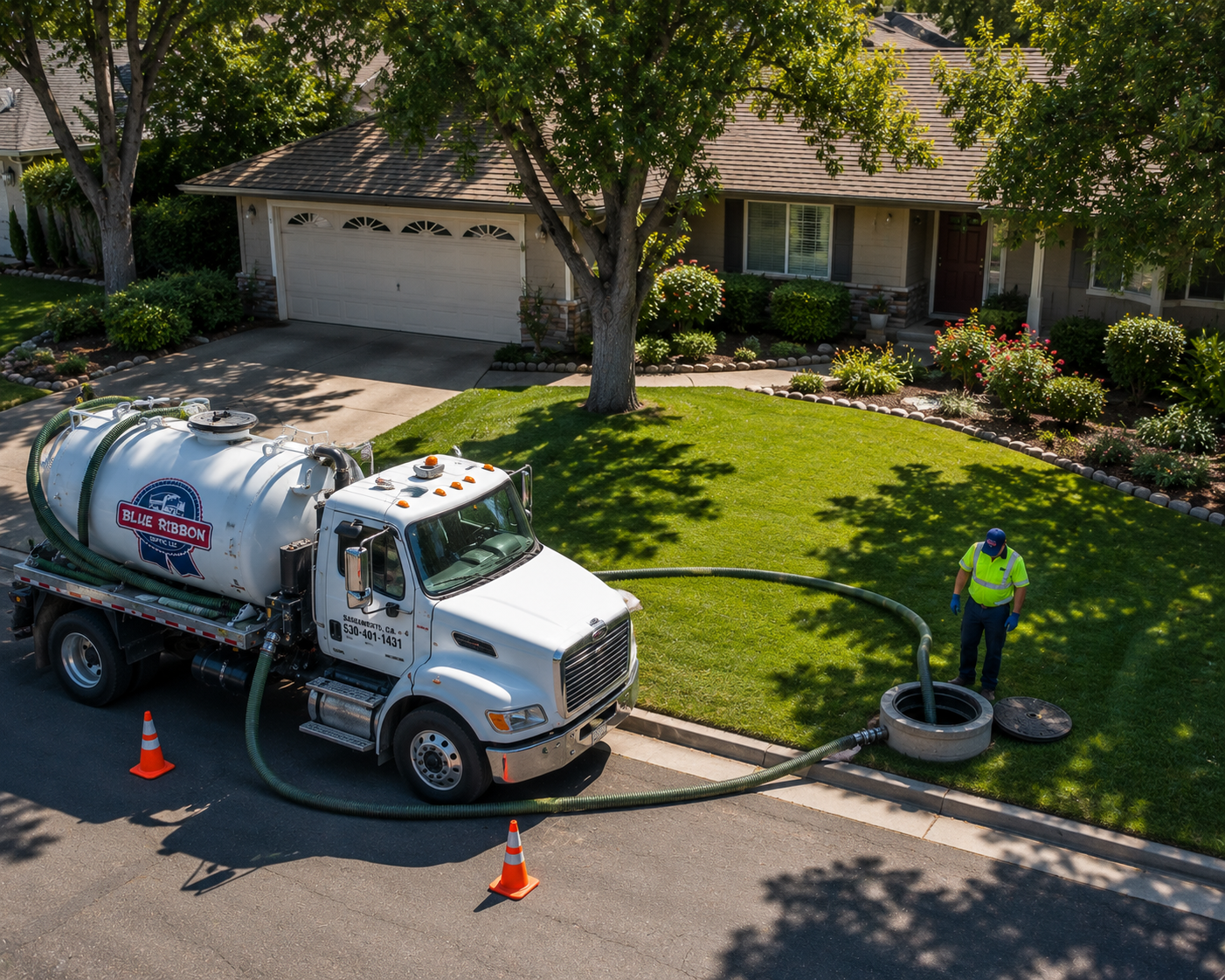
For most homeowners, the safest answer for how often to pump septic tank systems is every 3 to 5 years. If you’ve noticed slow drains or a slight odor in the yard, you're likely already due for a service. Waiting until a backup occurs doesn't just create a messy emergency; it can lead to permanent drainfield damage that costs thousands to repair.
Understanding how often should a septic tank be pumped depends on your specific household size and water usage. In the Sacramento Valley, where local soil conditions and high-occupancy homes put extra demand on waste systems, a "set it and forget it" mentality often leads to avoidable failures. This guide will help you determine the exact septic tank pumping frequency your home requires, explaining the variables that matter most so you can protect your property’s value.
The Science Behind Septic Tank Pumping Frequency
At its core, septic pumping is the process of removing the accumulated "sludge" and "scum" layers from your tank before they reach a level where they can escape into your leach field. Determining how often to pump septic tank systems isn't about guesswork; it’s about managing the biological balance of your wastewater. Over time, solids that aren't broken down by bacteria settle at the bottom. If these aren't removed via professional septic tank cleaning and pumping, they eventually clog the soil in your filtration area, leading to total system failure.
For Sacramento families, the stakes are high because a neglected tank is a ticking financial time bomb. Understanding how often should septic tank be pumped is the difference between a simple maintenance visit and a $20,000 system replacement. When the tank is too full, wastewater exits the house more slowly and can even push raw sewage back through your lowest drains. Beyond the mess, an overfilled tank stops acting as a clarifier, allowing suspended solids to flow into the outlet pipe. This is why we prioritize outlet baffle replacement and inspection during every visit—to ensure those solids stay exactly where they belong.
Why Proactive Pumping Matters
- Prevents Drainfield Clogging: Keeps solid waste out of your soil, which is the most expensive part of your system to fix.
- Early Detection: Regular pumping allows a technician to spot cracked pipes or failing baffles before they cause a flood.
- Property Value Protection: A well-maintained system is a major asset during home inspections and real estate transfers.
A common misconception is that if you aren't having "problems," you don't need to pump. In reality, septic system pumping how often you schedule it should be based on usage, not symptoms. Waiting for a backup means the damage to your pipes has already begun.
Key Factors That Determine How Often to Pump Septic Tank Systems
While the general rule of thumb is every 3 to 5 years, your specific septic tank pumping frequency is determined by the unique math of your household. No two homes in Sacramento are exactly alike, and treating them as such is how many owners end up with unexpected backups. By understanding the variables at play, you can move away from guessing and toward a plan that protects your property and your wallet.
1. Household Size and Daily Wastewater Volume
The most significant factor in how often should septic tank be pumped is simply how much water is moving through the pipes. A four-bedroom home in Roseville with a family of five generates significantly more wastewater and solid waste than a retired couple living in a similar-sized house. Your tank has a fixed capacity; the more people using it, the faster the sludge layer reaches the "full" mark.
2. The Size of Your Septic Tank
The physical dimensions of your tank dictate its holding capacity. If you have an older home with a smaller 750-gallon tank, you will naturally need to pump more frequently than a modern home with a 1,500-gallon tank. If you are unsure of your tank's location or size, our team provides professional tank locating and baffle replacement to help map out your system and provide an accurate maintenance schedule.
3. The "Solid" Content of Your Wastewater
What goes down your drains matters just as much as how much water you use. Households that use garbage disposals frequently often need to pump their tanks twice as often as those that don't. Food scraps do not break down as easily as human waste and toilet paper, leading to rapid sludge buildup. Additionally, "flushable" wipes, feminine products, and grease can significantly shorten the time between service visits.
4. System Age and Mechanical Components
Older systems or those located in areas with high water tables may require more frequent monitoring. If your property relies on a pump to move effluent to a higher-elevation leach field, the health of your pump is critical. We recommend regular lift station pumping and maintenance for these specialized systems to ensure that mechanical failures don't lead to a total system shutdown.
Real-World Consequences of Waiting Too Long
When you ask how often does a septic tank need to be pumped, you are really asking how to avoid a disaster. If you wait until you see sewage in the bathtub, you’ve waited too long. By that point, the "scum" layer (fats and oils) may have already floated into the outlet pipe, or the "sludge" (heavy solids) may have been pushed into the leach field. Once those solids enter the soil, they clog the pores of the earth, effectively "waterproofing" your yard and preventing drainage.
This often necessitates a full system replacement, which is a stressful and expensive process that proactive care could have easily prevented. By focusing on these factors, you can work with a professional to establish a custom interval. At Blue Ribbon Septic, we look at the actual sludge levels during your visit to tell you exactly how much "room" you had left, allowing us to refine your future schedule with total transparency. This ensures you are never paying for a service you don't need, while never waiting long enough to risk a failure.
How Real Sacramento Households Manage Pumping Cycles
Transitioning from general guidelines to real-world application helps clarify exactly how often to pump septic tank systems based on your lifestyle. Here is how proactive care plays out for different property owners in our community.
- The Busy Family Home: A family of five in Citrus Heights noticed slow-flushing toilets and gurgling pipes. After years of heavy water use and garbage disposal reliance, they realized they didn't know how often should septic tank be pumped for their specific needs. By scheduling a professional pump-out and installing septic risers and lids, they made future maintenance easier and stopped a brewing backup before it reached the house.
- The Real Estate Transaction: A homeowner in Auburn preparing to sell their property needed to verify the system's health for a buyer. They weren't sure how often should your septic tank be pumped during the transition, so they opted for a full inspection. The service provided a clean bill of health and the necessary documentation to close the sale without delays or expensive repair credits.
- The Rural Estate: For a property in Cool with a secondary guest house, the increased load meant the standard 5-year window was too long. By moving to a 3-year septic tank pumping frequency, they protected their large leach field from solid carryover, ensuring the system remains efficient even with seasonal guests.
Whether you are managing a growing household or preparing to sell, these real-world scenarios show that a proactive approach eliminates the guesswork and keeps your home's infrastructure secure.
Professional Tips for Maximizing Your Septic System’s Lifespan
Mastering how often to pump septic tank systems is the first step, but how you treat your drains between visits determines if you’ll make it to your next scheduled service without a hitch. These expert insights bridge the gap between basic maintenance and true system longevity.
- Audit Your Water Usage: High-efficiency toilets and showerheads aren't just good for the environment; they are vital for your septic health. Pushing too much water through the system too quickly—a process called hydraulic overloading—can stir up solids and push them into your leach field. Spacing out laundry loads throughout the week rather than doing five loads on a Saturday gives your tank time to settle properly.
- Keep Detailed Maintenance Records: Knowing exactly how often should septic tank be pumped becomes much easier when you have a history to look back on. We recommend keeping a "septic log" that includes your tank’s location, the date of your last pump-out, and any repairs. If you’ve recently moved, scheduling real estate septic system inspections is the best way to establish a baseline for your new home.
- Protect the Drainfield Area: Never park vehicles, plant trees, or build structures over your tank or leach field. Heavy weight can crush pipes, and thirsty roots can infiltrate your lines, causing massive blockages. Ensuring your septic system pumping how often schedule is maintained won't matter if the physical infrastructure is crushed or clogged by outside forces.
Applying these proactive habits alongside a consistent pumping schedule ensures your system remains a silent, reliable part of your home’s infrastructure for decades.
Secure Your System: Taking Control of Your Septic Health
Determining how often to pump septic tank systems is one of the most important steps you can take to protect your Sacramento home. You now understand that while a 3-to-5-year window is the standard, your specific septic tank pumping frequency depends on your household size, water habits, and the physical capacity of your tank. Moving from guesswork to a proactive maintenance plan is the only way to ensure your system remains reliable and your property stays safe from expensive, messy failures.
Don't wait for a slow drain or an unpleasant odor to tell you there’s a problem. Taking action today means avoiding the stress of an emergency repair and extending the lifespan of your system by years. Whether you are overdue for service or simply want to establish a baseline for your home’s health, our expert team is here to provide honest, no-pressure guidance.
If you are ready to ensure your system is operating at its best, contact us today to schedule your professional septic tank cleaning and pumping and get the peace of mind your family deserves.
Frequently Asked Questions About Septic Pumping
How can I tell if my septic tank is full?
While the only certain way to know how often to pump septic tank levels is a professional inspection, your home will usually provide warning signs. Common red flags include gurgling sounds in your pipes, slow-draining sinks, or lush, overly green patches of grass near your leach field. If you notice these symptoms, you likely have an overfilled tank that needs immediate attention to prevent a total backup into your home.
Can I go longer than five years between pump-outs?
It is rarely recommended. Even if you live alone, the septic tank pumping frequency should never exceed five years because the naturally occurring bacteria cannot break down all the solids. Over time, these un-degraded materials consolidate into a thick sludge. Waiting too long allows these solids to enter your filtration system, which often results in the need for real estate septic system inspections or major repairs to prove the system is still functional.
Does using septic additives mean I can pump less often?
No. While some additives claim to break down waste, they are not a substitute for mechanical pumping. In fact, some chemical additives can actually harm the natural bacterial balance of your tank or cause solids to remain suspended in the water, allowing them to flow into your leach field. Determining how often should septic tank be pumped should always be based on physical sludge measurements, not the use of store-bought treatments.
Does a garbage disposal affect how often a septic tank needs to be pumped?
Yes, significantly. If your household frequently uses a garbage disposal, you may need to increase your septic system pumping how often schedule by up to double the normal rate. Disposals introduce heavy organic solids that do not liquefy easily. These solids settle at the bottom of the tank much faster than standard wastewater, filling your tank's capacity and requiring more frequent professional removal to keep the system clear.


