
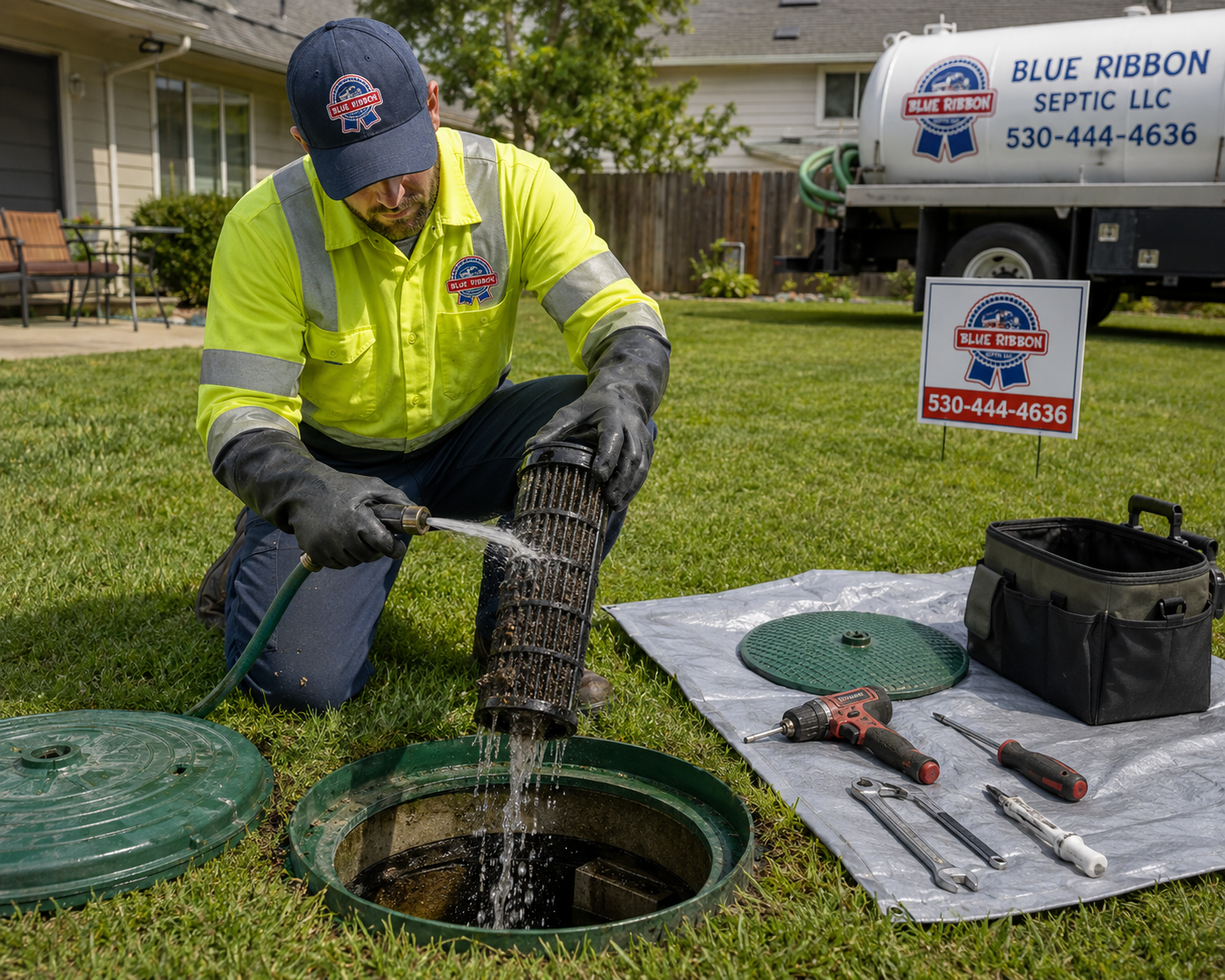
Proactive septic system filter cleaning keeps your entire plumbing grid operational by stopping suspended solid waste from escaping into your delicate absorption field. Neglecting this simple task allows hair, lint, and grease to escape the main tank, creating a severely clogged septic filter that forces raw sewage back up into your household drains. For families living with a private waste network, a sudden backup is more than a smelly inconvenience; it is an environmental risk that compromises your home's safety and threatens your budget. Failing to preserve this basic internal screen leaves you vulnerable to sudden drainfield destruction and thousands of dollars in premature replacement labor.
This comprehensive guide breaks down the critical mechanics behind effective septic system filter cleaning and outlines clear warning signs of failure. You will understand how to establish a practical upkeep schedule, protect your yard from premature absorption failure, and prolong your system's overall operating lifespan. Let's look closer at where this essential shield sits and how it protects your home infrastructure.
Understanding the Mechanics of Septic System Filter Cleaning
An effluent filter is a cylindrical mesh screen installed inside the outlet baffle of your waste tank that captures fine solid particles before they can enter the absorption field. Routine septic system filter cleaning involves pulling this protective core from its housing, rinsing away trapped grease and lint, and restoring optimal wastewater flow. This small component acts as a physical barrier, ensuring that only clarified liquid waste travels downstream to the soil treatment area.
For property owners, keeping up with this simple maintenance step has a direct impact on your household plumbing safety. Neglecting septic system filter cleaning eventually leads to a severely clogged septic filter, which stops wastewater from leaving the tank entirely. When this happens, incoming waste has nowhere to go but to push backward into your low-lying home fixtures or bubble up across your yard. Executing proper septic tank cleaning and pumping paired with regular screen maintenance provides clear advantages:
- Prevents Drainfield Failure: Stops hair and fine solids from choking up soil pores, preventing a total network failure.
- Saves Money: Cleaning a screen is inexpensive compared to the multi-thousand-dollar expense of rebuilding a ruined absorption field.
- Early Problem Detection: Allows a specialist to check your water levels and identify early signs of system strain.
A common misconception among homeowners is that a tank pumping appointment automatically covers your separate septic tank filter maintenance needs. In reality, unless you have modern access points like a dedicated septic risers and lid installation, this hidden screen can easily be overlooked. Knowing exactly where this critical barrier lives helps ensure it receives the necessary care during your regular maintenance checks.
Step-by-Step Guide: How to Clean Septic Filter Safely
Proactive wastewater care keeps your private utilities functioning safely and extends the lifespan of your drainage network. Executing regular septic system filter cleaning ensures that fine solids never escape into the soil, keeping your home lines clear. To keep your household safe from sudden backups, understanding the exact process of cleaning effluent filter septic tank systems is highly beneficial.
Executing a proper septic tank effluent filter cleaning requires specialized safety gear, a clear technical sequence, and an awareness of underlying plumbing pressures. Below is the step-by-step process a certified technician uses to complete this essential maintenance task.
Step 1: Pinpoint the Septic Tank Filter Location
Before any work begins, you must establish the exact layout of your underground system. The septic tank filter location is always inside the outlet baffle, which sits on the side of the tank closest to your yard's drainfield. Technicians utilize specialized tools for tank locating and outlet baffle replacement assessments to map out the underground chambers accurately. If your property lacks modern ground-level access, this step will require probing the soil and digging down to expose the structural concrete inspection port.
Step 2: Utilize Proper Safety Gear and Prepare the Work Area
Working around live wastewater requires strict safety measures to prevent exposure to harmful bacteria and organic gases. Put on heavy-duty waterproof gloves, safety goggles, and protective clothing before removing the access lid. Keep children and pets far away from the open port, and never lean directly over the open tank cavity. Lay down a clean plastic tarp next to the opening to protect your lawn from contaminated run-off during the cleaning process.
Step 3: Extract the Clogged Septic Filter Screen
Once the access port is safely exposed and stabilized, reach inside the outlet housing using a specialized long-handled reach tool or heavy-duty extension hooks. Securely grip the top handle of the filter cartridge and pull it straight up out of its vertical baffle slot.
Important Note: As you pull a heavily septic filter clogged assembly upward, work slowly. Dropping the cartridge back into the tank can damage the internal plumbing or release massive sheets of captured solid debris straight into your drainfield line.
Step 4: Rinse and Clean the Mesh Core Thoroughly
Hold the extracted filter core directly over the open septic tank access port so all waste drops back into the primary chamber. Use a garden hose set to a gentle stream to rinse down the plastic mesh grid, washing away layers of hair, trapped grease, and organic slime. Avoid using high-pressure spray nozzles or harsh chemical solvents, as these can warp the delicate mesh or inadvertently destroy the beneficial bacteria population living inside your tank. Work from the top down until the plastic screen is entirely clear of debris.
Step 5: Reseat the Filter and Secure the Cover
Inspect the rinsed screen for any structural tears, cracks, or signs of brittle plastic fatigue. If the unit is structurally sound, slide it carefully back down into the outlet slot, making sure it sits firmly against the bottom of the housing to prevent bypass leakage. If you notice structural damage, arrange an immediate professional repair to avoid fine debris escaping downstream. Replace the main tank lid securely, ensuring a tight seal to prevent water intrusion. If you are completing this as part of a real estate transaction, save the service receipt to include with your official real estate septic inspections file for future reference.
Following these precise operational steps ensures your wastewater system maintains excellent internal flow. Prioritizing this straightforward maintenance protocol shields your household budget from sudden plumbing failures and keeps your property infrastructure running smoothly.
Real-World Benefits: How Proper Filter Maintenance Prevents Failure
Reviewing real-world applications demonstrates how a quick maintenance routine directly shields your household from severe utility disruptions. Property owners who stay mindful of their underlying plumbing safeguards consistently avoid the catastrophic expenses that stem from a completely clogged septic filter.
- The Avoided Yard Overflow: A busy household in Sacramento noticed that their laundry room drains were beginning to gurgle whenever the washing machine emptied. Recognizing these symptoms of a restricted system, they scheduled immediate septic system filter cleaning to check the outlet line. The field technician extracted a screen packed with lint and hair, rinsed it clear, and instantly restored smooth wastewater movement before any structural backup could damage the home.
- The Commercial Safety Save: A small business owner in Elk Grove was experiencing frequent plumbing slow-downs that threatened day-to-day operations. Rather than ignoring the issue, the owner arranged for an accurate screen check and a professional lift station pumping to clear out the heavy accumulation of grease. Regular maintenance revealed that an effluent screen was heavily choked with solid waste, and cleaning it immediately prevented an expensive, messy backflow into public customer restrooms.
- The Smooth Property Sale: A seller in Roseville quickly cleared an escrow contingency by providing proof of recent preventative care. The technician verified that the filter was clean and working perfectly, allowing the transaction to proceed without delay.
These practical examples show that routine septic system filter cleaning is not just an elective chore—it is a critical tool for risk management. Taking this simple step protects your yard and keeps your utility network operating flawlessly.
Expert Advice: Maximizing Your Septic Tank Filter Maintenance
Applying these proven industry strategies bridges the gap between simply understanding your system and maintaining a flawless, worry-free utility network. Implementing these proactive steps maximizes the effectiveness of your septic system filter cleaning routine while protecting your absorption field.
- Establish a Firm Maintenance Schedule: Homeowners often wonder how often to clean septic filter screens to ensure smooth wastewater movement. As a standard rule of thumb, you should aim to check and clear the mesh core at least once every six months. Large families or households that cook frequently may need to inspect the screen quarterly to prevent a clogged septic filter from slowing down household drains.
- Install Ground-Level Access Risers: If accessing your outlet baffle requires digging up your lawn every few months, it is easy to fall behind on care. Investing in a permanent septic risers and lid installation brings your access points right to the surface. This simple property upgrade makes regular inspections incredibly easy and ensures your screen is never forgotten or neglected.
- Ditch the Garbage Disposal Entirely: Sending coffee grounds, cooking oils, and heavy food scraps down the kitchen sink places an immense burden on your filtration system. These fine particles do not break down easily and will quickly create a severely septic filter clogged condition. Scrape your dinner plates directly into the trash to keep your filter working efficiently between service visits.
- Watch for Warning Signs of Failure: Never wait for a complete backup to take action. Pay close attention to early indicators like slow-draining showers, gurgling kitchen pipes, or patches of strangely lush, vibrant green grass directly over your absorption field. Spotting these red flags early allows you to perform necessary maintenance before wastewater backs up into your home.
Adhering to these straightforward best practices keeps your system balanced, extends the lifespan of your infrastructure, and keeps your household plumbing completely stress-free.
Schedule Your Preventative Filter Care Today
Prioritizing regular septic system filter cleaning is the single most effective way to protect your drainfield from premature failure and keep your home's plumbing flowing smoothly. You now understand the basic steps involved in a proper clean septic filter routine, where this essential barrier lives, and how easily a neglected screen can lead to severe structural backups. Taking charge of this straightforward septic tank filter maintenance task eliminates the stress of unexpected plumbing emergencies and keeps your underlying utility infrastructure completely stable.
Investing a small amount of preventative attention today ensures your property remains safe, clean, and free from costly underground disasters. For reliable service and honest, expert assistance with your home's wastewater network, partnering with an experienced local specialist is the best choice you can make.
If you want to keep your lines clear and need a professional hand with your routine septic system filter cleaning, contact the dedicated team at Blue Ribbon Septic today to book our dependable septic tank cleaning and pumping services.
Frequently Asked Questions About Septic Tank Filter Maintenance
How often to clean septic filter screens in a standard household?
As a general rule, you should perform septic system filter cleaning at least once every six months to maintain proper flow. However, if you have a large family, cook frequently, or manage a commercial space, you may need to clean septic filter components quarterly. Regular intervals keep fine particles from compacting inside the mesh mesh grid.
What happens if I completely ignore my septic tank filter maintenance?
Completely ignoring your septic tank filter maintenance causes grease, hair, and solid waste to build up until you have a heavily clogged septic filter. When the screen is choked, wastewater cannot exit into the drainfield, which forces raw sewage to backup into your home's lower plumbing fixtures or bubble up into your yard.
Can a homeowner handle cleaning effluent filter septic tank units themselves?
Yes, a homeowner can clean the screen if they have proper safety gear and ground-level access, but hiring a professional is highly recommended. Working around live raw sewage exposes you to dangerous gases and harmful bacteria. A specialist has the diagnostic tools to inspect your tank locating and outlet baffle replacement needs safely during the process.
Where exactly is the septic tank filter location on most modern systems?
The primary septic tank filter location is inside the outlet baffle, which sits on the specific side of the tank that connects directly to your underground drainfield. To access it, a technician must open the secondary inspection port lid. If your system lacks modern risers, locating and uncovering this specific port will require some light backyard excavation.


