
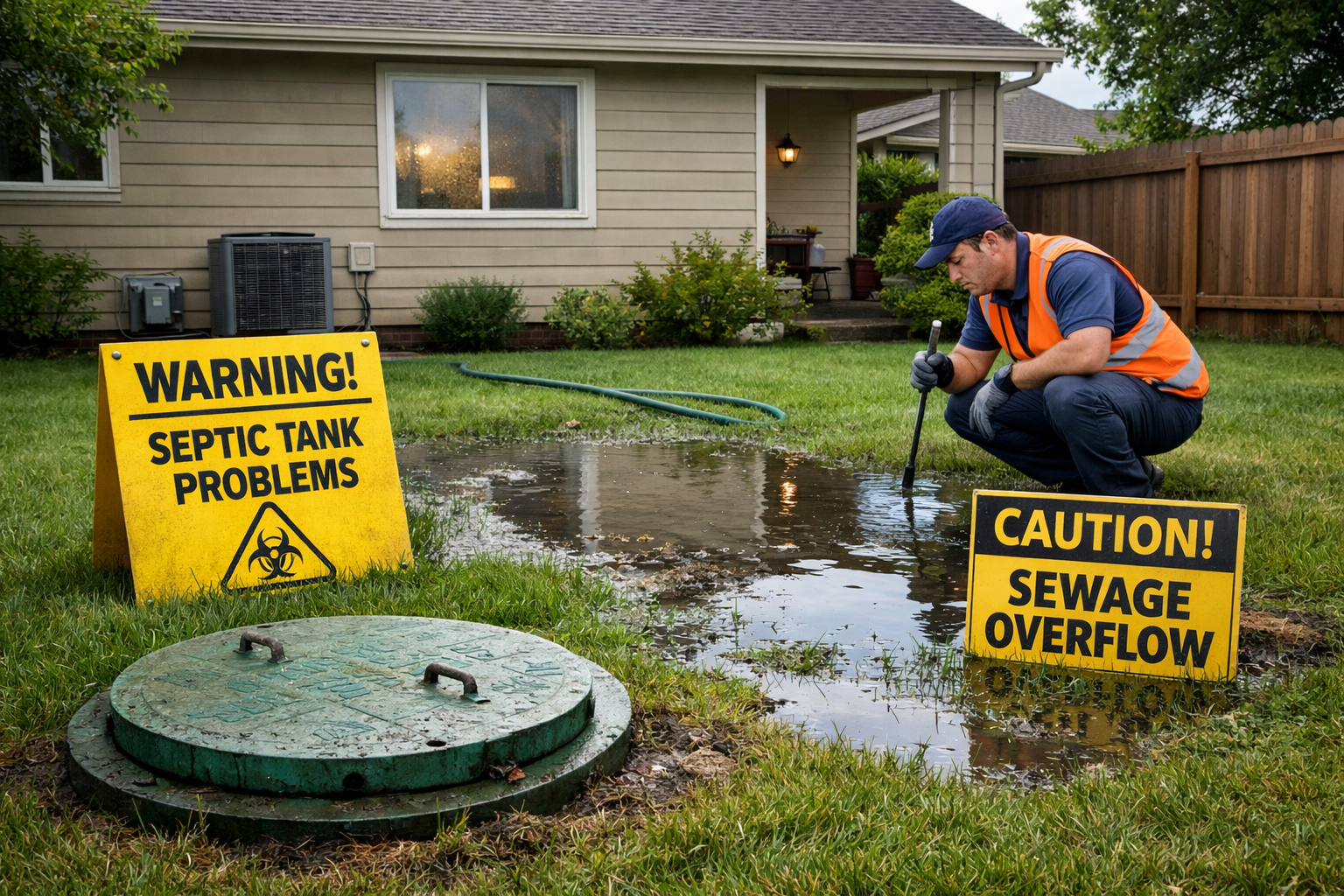
Most homeowners do not think about their septic system until something goes wrong, and by that point, the damage and cost can already be significant. A septic tank almost never fails suddenly. Instead, it gives off warning signals over time that indicate the system is reaching capacity. The real challenge is knowing how to recognize those signs and acting before a minor issue becomes a major repair.
For Sacramento homeowners, understanding septic tank full signs is especially important. Many homes rely on septic systems, and soil conditions vary widely across the region. When early warning signs are ignored, homeowners can face sewage backups, yard contamination, drainfield damage, and emergency service calls that could have been avoided with routine maintenance.
In this in-depth guide, you will learn the most common signs your septic tank is full, what those signs mean, what happens when a septic tank is full, and how to check septic tank is full before serious damage occurs. Whether you are new to septic ownership or have relied on one for years, recognizing these symptoms protects your home, health, and budget.
Understanding What Happens When a Septic Tank Is Full
A septic tank is designed to collect wastewater from your home, separate solids from liquids, and allow treated water to flow safely into the drainfield. Solid waste settles at the bottom of the tank, forming sludge, while lighter materials float to the top as scum. Between these layers is liquid effluent that exits the tank.
Over time, solids build up. If the tank is not pumped regularly, there is less room for wastewater to move through the system. Once the tank reaches capacity, wastewater can no longer flow properly. This is when homeowners begin to notice full septic tank symptoms throughout the home and yard.
When a septic tank is full, several things can happen at once. Wastewater may back up into plumbing lines, push foul odors into the home, or rise toward the surface of the yard. In severe cases, solids can overflow into the drainfield, causing long-term damage that is expensive and sometimes impossible to fully repair.
Understanding this process helps explain why septic problems often appear gradually and why early intervention matters so much.
7 Warning Signs Your Septic Tank Is Full
Slow Drains Throughout the House
One of the earliest and most common signs of a full septic tank is slow drainage in multiple fixtures. If sinks, showers, tubs, and toilets all drain slowly, the issue is rarely a simple clog.
As the septic tank fills, wastewater cannot move efficiently through the system. This causes backups in the plumbing lines, slowing drainage throughout the home. Many homeowners first start asking how do you know when your septic tank is full after noticing this symptom.
Ignoring slow drains allows solid buildup to continue, increasing the risk of a full backup.
Gurgling Sounds in Toilets or Pipes
Gurgling noises coming from toilets or drains are another warning sign. These sounds occur when air becomes trapped in the plumbing system due to restricted wastewater flow.
A full septic tank disrupts normal drainage, forcing air to escape through fixtures when water is used elsewhere in the home. Persistent gurgling is one of the more subtle septic tank full symptoms, but it often appears before visible backups.
In some cases, gurgling can also indicate damaged internal components such as outlet baffles. Services like tank locating and outlet baffle replacement help address these issues before they escalate.
Frequent Toilet Backups
Occasional toilet clogs can happen in any home. However, repeated backups, especially across multiple bathrooms, are strong signs that septic tank is full.
When the tank is overloaded, wastewater is pushed back toward the home rather than flowing away from it. Toilets are often the first place this becomes obvious because they sit at the lowest point in the plumbing system.
Frequent backups should never be dismissed, as they often signal a system-wide problem rather than a single fixture issue.
Sewage Odors Indoors or Outdoors
Persistent sewage smells are one of the clearest indicators of a full septic tank. Odors may be noticeable near drains, in bathrooms, or outside around the tank or drainfield.
As solids accumulate, gases produced by bacteria have fewer places to escape. These gases are then forced back through the plumbing or into the yard. If you are wondering how to know if septic tank is full, strong odors are a major clue.
Odors are not just unpleasant. They can also contain harmful gases and bacteria, making prompt action important for health and safety.
Standing Water or Wet Spots in the Yard
Pooling water or soggy soil near the septic tank or drainfield is another serious warning sign. This is especially concerning if it occurs during dry weather.
When a septic tank is full, liquid waste cannot properly absorb into the soil. Instead, it may rise to the surface, creating wet patches, foul smells, and potential contamination. This is one of the most visible full septic tank symptoms and often indicates the system is already under significant stress.
Homes with lift stations are particularly vulnerable if maintenance is delayed. Routine lift station pumping helps prevent overflows and surface water issues.
Unusually Lush or Fast-Growing Grass
While healthy grass is usually a good sign, unusually green or fast-growing patches over your septic system can indicate trouble.
When wastewater leaks into the soil, it acts as fertilizer, causing grass to grow faster and thicker than surrounding areas. This visual cue is often overlooked, but can be an important sign your septic tank is full.
If you notice lush growth concentrated above your septic tank or drainfield, it is wise to have the system evaluated.
Septic Alarm or Warning Light
Some septic systems include alarms or warning lights that activate when liquid levels become too high. If your alarm goes off, it is a direct signal that immediate attention is needed.
A septic alarm indicates that the tank or pump chamber is approaching overflow conditions. When this happens, water use should be stopped immediately and professional service scheduled as soon as possible.
Real World Septic Tank Issues in Sacramento Homes
Sacramento area septic systems face unique challenges due to soil composition, groundwater fluctuations, and the age of many residential systems.
In older homes, smaller tanks and outdated designs mean capacity can be reached more quickly than homeowners expect. Even normal water usage can trigger problems if pumping schedules are not adjusted.
Large households also place additional strain on septic systems. Increased laundry, showers, and dishwashing can fill a tank faster than anticipated, especially if maintenance schedules have not been updated.
Rental properties and recently purchased homes present another risk. New owners often do not know the last pump date, making undetected buildup more likely. This is why real estate septic system inspections with a full report are so valuable before finalizing a purchase.
These real-world scenarios show how quickly minor warning signs can escalate when ignored.
How to Check Septic Tank Is Full
Many homeowners ask how to check septic tank is full without digging up the yard. While visual inspection alone is limited, there are practical ways to assess system health.
Monitoring slow drains, odors, yard conditions, and alarm activity provides valuable clues. Keeping accurate records of pumping history is also essential. If it has been more than three to five years since your last service, the tank may already be near capacity.
Professional evaluation is the most reliable method. Licensed providers offering septic tank cleaning and pumping can inspect the tank, measure sludge levels, and determine whether pumping is needed.
What Happens When Septic Tank Is Full and Left Untreated
Ignoring septic tank full signs can lead to serious consequences.
Wastewater backups can damage flooring, walls, and personal belongings. Drainfield failure can contaminate soil and groundwater, sometimes requiring complete system replacement. Repairs of this scale can cost tens of thousands of dollars.
Health risks also increase. Sewage contains bacteria and gases that pose dangers to people and pets. Prolonged exposure can create unsafe living conditions inside and outside the home.
Regular maintenance is far more affordable than emergency repairs. Preventative pumping protects both your property and your peace of mind.
Best Practices to Prevent a Full Septic Tank
Prevention is the most effective way to avoid septic emergencies.
Schedule routine pumping based on household size and usage. Most homes require service every three to five years, but some need it more often.
Monitor water usage carefully. Fix leaks promptly and spread out high-water activities like laundry.
Avoid flushing non-biodegradable items such as wipes, paper towels, and hygiene products. These increase solid buildup and clog risks.
Improve access to your system by installing risers. Septic risers and lid installation make inspections and pumping easier, encouraging timely maintenance.
Choose a reputable provider. Guidance on choosing the right septic pumping service can help homeowners avoid costly mistakes.
Act Early to Protect Your Septic System
Recognizing septic tank full signs is a homeowner’s key to avoiding costly emergencies. Slow drains, gurgling sounds, odors, wet yards, lush grass, alarms, and backups are all ways your system asks for attention.
Addressing these warnings early protects your home, your health, and your investment. A well-maintained septic system operates quietly in the background, which is exactly how it should.
For Sacramento homeowners, taking action now is always easier and far less expensive than dealing with a septic emergency later.
Frequently Asked Questions About Septic Tank Full Signs
How often should I pump my septic tank in Sacramento?
Most homes need pumping every three to five years. Larger households or heavy water usage may require more frequent service.
Can a full septic tank damage my drainfield?
Yes. When solids overflow into the drainfield, they can clog soil pores and cause long-term damage.
Are slow drains always a septic problem?
Not always. A single slow drain may be a local clog, but multiple slow drains often indicate septic capacity issues.
Is septic odor dangerous?
Persistent sewage odors can contain harmful gases and bacteria. They should be addressed promptly.
What should I do if my septic alarm goes off?
Stop using water immediately and contact a septic professional. An alarm indicates high liquid levels that require urgent attention.


