
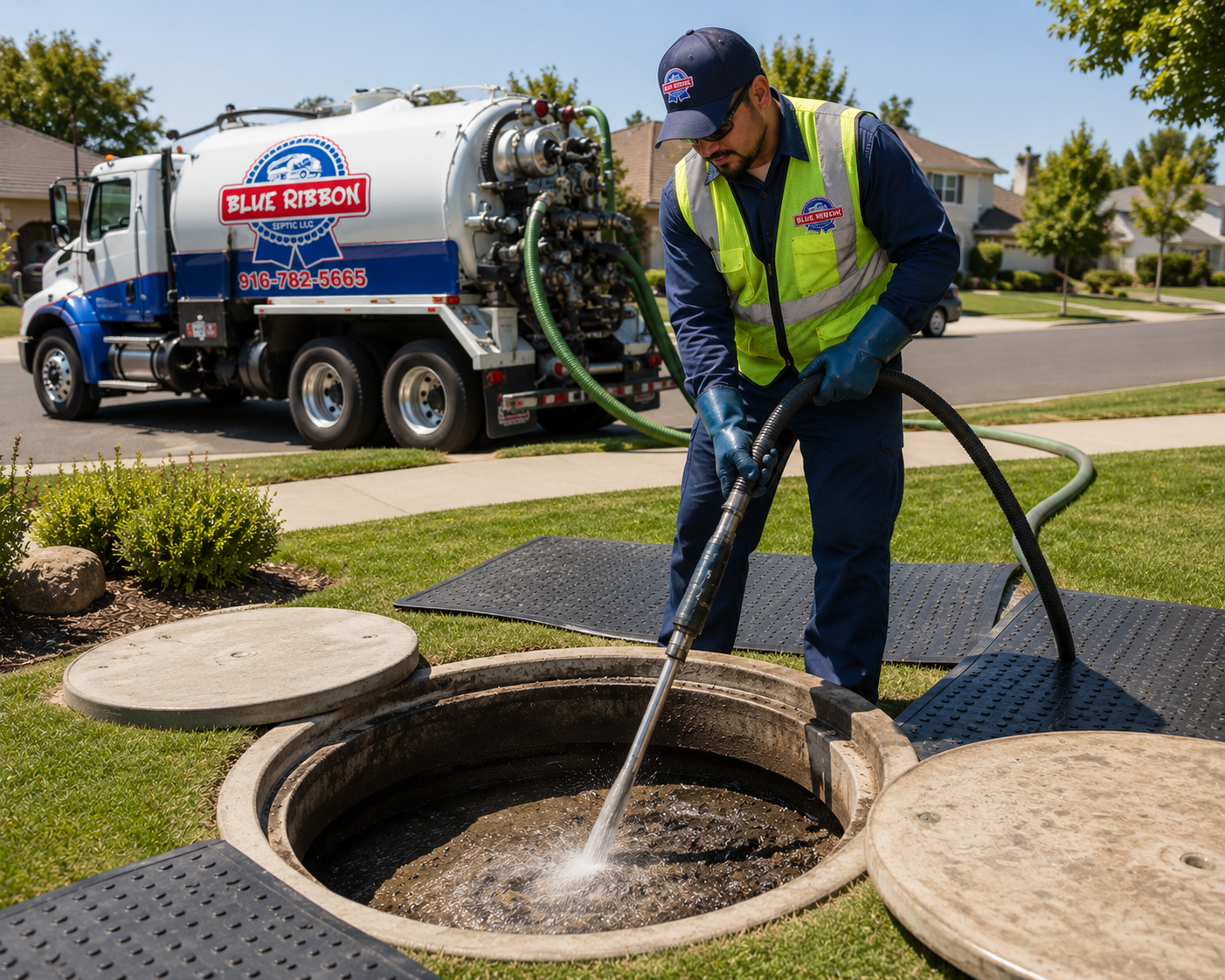
When your drains slow down or a strange odor wafts across your yard, you need answers fast—not confusion over what service to book. To put it simply, septic tank pumping removes the liquid waste and floating scum layer from your tank, while septic tank cleaning goes a step further by blasting away the hardened sludge and compacted waste stuck at the bottom.
For homeowners, confusing these two tasks can lead to premature system failure or unnecessary expenses. Over time, heavy solids settle at the base of your system; if neglected, they can escape into your drainfield, causing catastrophic backups that disrupt your household and cost thousands to fix.
By understanding the distinct roles of a routine septic pumping service versus deep septic tank cleaning, you will be able to make informed, cost-effective decisions for your property's long-term health. Let’s break down exactly what happens during each process so you know precisely what your system needs.
Understanding Septic Tank Pumping: The Basics and Benefits
Septic tank pumping is the fundamental maintenance process of inserting a high-vacuum hose into your tank to suction out the top layers of wastewater and floating scum. This routine service lowers the overall volume in the tank, preventing the liquid levels from rising too high and forcing solid waste into your home's plumbing or the surrounding soil.
Regularly scheduling a septic pumping service matters because it directly impacts the safety and functionality of your property. For families and homeowners, a neglected tank doesn't just mean slow drains—it can lead to pooling water in the yard, foul odors, and severe structural damage. When the liquid level isn't managed, the entire system strains, which is why proactive septic tank maintenance is essential to protect your home from sudden, messy backups. Staying on top of this simple task ensures your wastewater moves safely away from your living space without disruption.
Investing in consistent care offers several practical advantages for property owners:
- Extends System Lifespan: Keeps wastewater moving efficiently, reducing strain on old or sensitive components.
- Prevents Drainfield Failure: Stops lighter solids from migrating into the soil, saving you from a premature, full-scale system replacement.
- Saves Money: Routine maintenance costs a fraction of what you would pay for emergency repairs or resolving a total system breakdown.
A common misconception is that simply removing the liquid via standard pumping solves every issue. While it is a critical first step, heavy solids eventually compact at the very bottom of the tank over the years. When this happens, a standard pump isn't enough, and a deeper septic system cleaning is required to restore full capacity.
Septic Tank Pumping vs. Cleaning: The Core Differences
While many property owners use the terms interchangeably, pumping and cleaning address entirely different stages of waste accumulation. Mixing them up can leave you with a false sense of security about your system’s health. Standard pumping handles the daily management of liquids, but a deeper cleaning is what protects the physical infrastructure of your system from long-term decay.
What Happens During Routine Septic Tank Pumping?
During a standard service visit, a technician inserts a large vacuum hose into the main access port of your tank. The primary goal is to remove the top liquid layer (effluent) and the floating layer of grease, oils, and light solids (scum).
This process is highly effective for routine maintenance, usually recommended every three to five years depending on your household size. It frees up immediate volume so your sinks, toilets, and showers can drain without resistance. If you are experiencing slow drains right now and suspect your tank is full, scheduling septic pumping near me will quickly lower the liquid level and restore proper airflow and pressure to your home's plumbing.
What Happens During a Deep Septic Tank Cleaning?
Over time, heavy solid waste—like food particles, soil, and organic matter—sinks to the bottom of the tank. This layer is known as sludge. During standard septic tank pumping, this sludge layer is often too thick, compacted, and heavy to be pulled out by a vacuum hose alone.
When a technician performs a deep cleaning, they don't just pull out the liquid; they break up the hardened sludge at the bottom. This is typically done using specialized tools or a high-pressure water sequence known as hydro-jetting. By mixing the hardened solids with water, the technician creates a slurry that can then be completely vacuumed out. This process cleans the actual walls and floor of the tank, restoring it back to its original capacity.
Key Differences At a Glance
To help you determine which service your property requires, consider how these two maintenance tasks compare across key areas:
- Target Waste: Pumping targets liquids and floating scum; cleaning targets compacted bottom sludge and wall buildup.
- Process Method: Pumping uses a vacuum hose to remove liquids; cleaning uses high-pressure water agitation to break up solids before extraction.
- Frequency: Pumping is a routine task needed every few years; deep cleaning is performed less frequently, often when sludge levels exceed one-third of the tank's total volume or during comprehensive septic maintenance services.
- System Impact: Pumping prevents short-term overflows; cleaning removes old, corrosive waste that can degrade concrete tanks over time.
A Critical Step: Inspecting the Internal Components
A major benefit of a deep cleaning is that it leaves the tank completely empty and visible. This allows technicians to inspect internal components that are otherwise hidden beneath the wastewater.
For instance, they can check the condition of the physical baffles, which prevent solids from exiting into your drainfield. If a baffle is damaged, solids will escape and ruin your soil's filtering capability. Uncovering these issues early allows you to schedule a timely outlet baffle replacement before a small component failure turns into a total system backup.
What This Means for Your Property
If your system has been pumped regularly on schedule, a standard vacuum service is likely all you need to keep things running smoothly. However, if it has been a decade since your tank was last serviced, or if the property was vacant for a long period, those bottom solids have likely hardened into a thick layer. In that scenario, simple pumping will leave the heavy sludge behind, meaning your tank will fill up again much faster than it should. Knowing the status of your sludge layer helps you choose the right service, saving you from repeating the process a few months down the road.
Real-World Scenarios: When to Pump vs. When to Clean
Understanding how these services function in everyday life makes it much easier to determine exactly what your property needs. Here is how real-world situations dictate whether you need standard septic tank pumping or a deeper solution.
Scenario 1: The Multi-Year Family Home
A family of four living in Roseville has maintained a strict schedule, investing in a standard septic pumping service every three years. Because they have been consistent, a technician hooks up a vacuum line and easily clears out the accumulated liquids and light scum. The outcome is a perfectly balanced system with zero solid buildup, keeping their household running smoothly without the added cost of heavy sludge removal.
Scenario 2: The Inherited Procrastinator Tank
A property owner purchases an older home in Sacramento that has sat empty for several years with no maintenance records. When the toilets begin flushing sluggishly, they search for septic tank cleaning near me to address the issue. The technician discovers that the bottom sludge has solidified into a thick, compacted crust that standard pumping cannot move, requiring a high-pressure wash to fully break up the solids and restore the tank's original capacity.
Scenario 3: The Heavy-Use Commercial System
A local small business or restaurant experiences heavy daily wastewater volume, causing fats and solids to settle rapidly. Routine pumping manages the daily flow, but they schedule an intensive septic system cleaning every few years to keep grease from building up on the tank walls and clogging their lift station.
These examples show that matching the right service to your specific situation prevents unexpected emergencies and keeps your maintenance costs entirely predictable.
Expert Tips for Managing Your Septic System Over Time
Applying these professional insights allows you to move from simply understanding your system to actively managing it, helping you avoid unexpected failures and unnecessary service fees.
- Track Your Sludge Accumulation Levels: Don't guess when you need a septic pumping service. Ask your technician to measure your sludge and scum layers during routine visits. If the sludge layer occupies more than one-third of the total volume, it is time to transition from standard septic tank pumping to a deep tank cleaning.
- Install Accessible Access Risers: If your tank is buried deep underground, technicians have to dig up your yard every time they service it. Installing durable septic risers and lids brings your access point up to ground level, making routine inspections and pumping significantly faster and less invasive.
- Be Mindful of What Goes Down the Drain: A major cause of early solid compaction is flushing non-biodegradable items like wet wipes, grease, and harsh chemical cleaners. These items do not break down naturally, turning a standard maintenance cycle into a premature, urgent need for intensive septic tank emptying and sludge removal.
- Keep Your Drainfield Completely Clear: Never park vehicles, drive heavy equipment, or plant deep-rooted trees over your drainfield area. Soil compaction and root intrusion can crack underlying pipes and destroy the soil's absorption capacity, causing wastewater to back up into your tank regardless of how clean it is.
Following these straightforward, proactive steps keeps your maintenance costs predictable and ensures your home's wastewater system operates reliably for decades.
Keep Your Septic System Safe and Reliable
You now understand that regular septic tank pumping is essential for managing daily liquid waste, while deep cleaning is the key to removing stubborn, compacted sludge from the bottom of your tank. Knowing the difference between these two vital processes allows you to make informed decisions that protect your property and prevent unexpected, costly backups.
Taking a proactive approach to your home's wastewater infrastructure gives you complete peace of mind and ensures your plumbing operates flawlessly year after year. Whether you need a routine checkup or are currently dealing with a backup that requires emergency septic pumping, taking action today shields your household from stressful plumbing failures tomorrow.
If you are unsure of your tank's current sludge levels or are ready to schedule your next maintenance check, contact the local experts at Blue Ribbon Septic today to secure a transparent, professional septic tank pumping evaluation for your property.
Blue Ribbon Septic
- Address: PO Box 698, Loomis, CA 95650
- Phone: (530) 444-4636
- Website: www.blueribbonseptic.com
Official Citations & Profiles
- Yelp: Find Blue Ribbon Septic Service on Yelp
- MapQuest: View Our MapQuest Listing
- Instagram: Follow @blueribbonseptic on Instagram
Frequently Asked Questions About Septic Maintenance
How can I tell if I need septic tank pumping or a deep cleaning?
A standard septic tank pumping service is perfect if you are on a regular three-to-five-year maintenance schedule and your solids haven't hardened. However, if your system has been neglected for over five years, or if you experience persistent plumbing backups despite a recent pump-out, you likely need a deep cleaning to break up the compacted bottom sludge that a standard vacuum line leaves behind.
What are the risks of ignoring a full septic tank?
Ignoring a full tank leads to severe, expensive failures. When liquid and solid waste levels rise too high, they flow directly into your home's pipes or saturate your lawn. This results in raw sewage backups, foul odors, and irreversible drainfield damage. Regular maintenance prevents these hazardous conditions, protecting your family's health and saving you from a premature, full-scale system replacement.
Can I clean or pump out my own septic tank?
No, you should never attempt to pump or clean a tank yourself. The process requires heavy-duty commercial vacuums, high-pressure equipment, and specialized safety training. Septic systems contain dangerous, toxic gases like methane and hydrogen sulfide that can be fatal. Additionally, legal disposal of the waste requires licensed facilities, making it a job strictly for professional septic maintenance services.
Does standard septic tank pumping remove all the sludge?
No, it does not. Standard septic tank pumping primarily draws out the liquid wastewater and the lighter, floating scum layer. The heavy, thick sludge settles at the very bottom of the tank and often becomes compacted over time. Removing this stubborn layer requires a full system cleaning, which uses water agitation or hydro-jetting to liquefy the solids so they can be completely suctioned out.


