
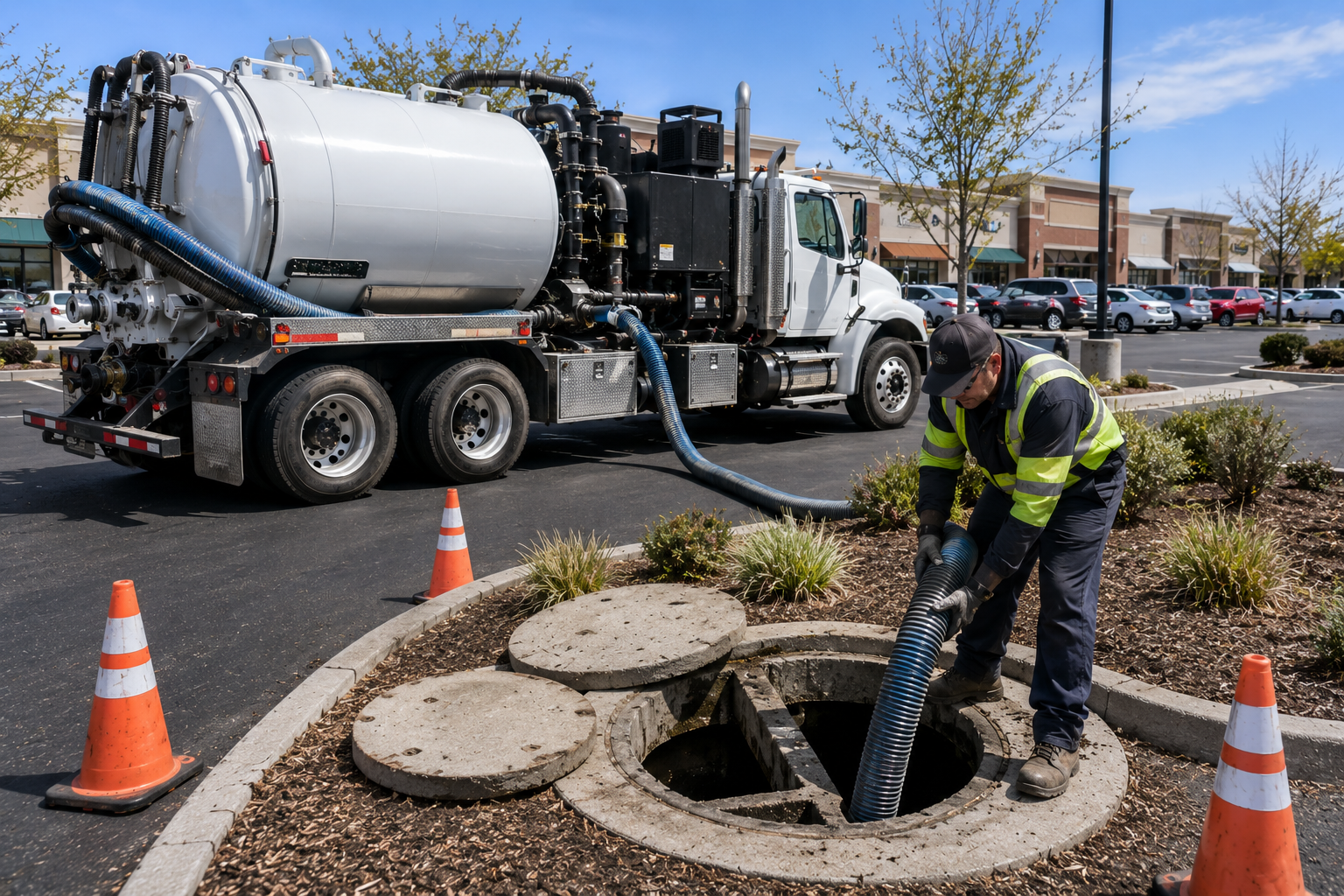
A high-performing commercial septic tank functions as the primary containment and anaerobic digestive chamber for a facility's high-volume wastewater, collecting heavy solid waste and cooking fats before they can ruin your property's absorption field.
For business owners in the Greater Sacramento area, a sudden system breakdown can instantly trigger health department closures, foul customer odors, and thousands of dollars in daily operational losses. Relying on an unmaintained commercial septic system leaves your entire facility vulnerable to sudden indoor sewer backups, grease trap failures, and expensive emergency compliance violations.
By reading this guide, you will understand exactly how high-traffic wastewater infrastructure operates, how to structure a reliable preventative care plan, and how to control your ongoing commercial septic system cost.
Let's review the practical maintenance habits that keep your commercial plumbing operating smoothly and efficiently without unexpected company downtime.
The Strategic Value of a Commercial Septic Tank
A commercial septic tank is a large-scale, heavy-duty underground containment vessel engineered to intercept, separate, and partially treat high volumes of wastewater generated by business facilities, retail hubs, or multi-unit office complexes.
Unlike standard residential setups, these systems are built to withstand heavy daily surges, filtering out high concentrations of cooking oils, chemical cleaners, and solid debris before the clarified liquid reaches the drainfield. Operating a dependable commercial septic system ensures that public facilities remain completely sanitary, fully functional, and legally compliant with regional environmental safety codes.
For business owners and property managers across Sacramento, Roseville, and Elk Grove, maintaining this infrastructure is a matter of basic operational survival. A sudden structural failure or line blockage can immediately halt your operations, ruin customer trust, and spark expensive health department fines.
Investing in proactive septic tank cleaning and pumping shields your business from sudden emergency closures, protects your local groundwater tables, and keeps your daily overhead completely predictable.
Prioritizing preventative industrial system care delivers distinct operational advantages:
- Eliminates Business Disruptions: Routine cleanings remove heavy sludge blankets before they can cause slow plumbing drains or foul odors that drive away customers.
- Protects Secondary Infrastructure: Routine checks prevent heavy solids from clogging downstream pumps, ensuring your lift station pumping schedules remain efficient and cost-effective.
- Reduces Long-Term Capital Expenses: Well-maintained tanks reduce premature structural wear, allowing you to get the maximum possible lifespan out of your major drainage investments.
A common industry misconception is that industrial systems only need attention when toilets stop flushing or drains begin backing up. In reality, heavy grease and solid waste can collect silently over a few short months, meaning a proactive maintenance plan is essential to protect your company from sudden, expensive failures.
Essential Maintenance Protocols for a High-Volume Commercial Septic Tank
Managing a busy public property requires a shift away from reactive plumbing repairs toward a highly structured, proactive maintenance routine. Because public restrooms, commercial kitchens, and multi-unit office hubs process thousands of gallons of waste daily, their treatment components face extreme physical strain.
Implementing a comprehensive commercial septic tank maintenance program is the single most effective way to protect your infrastructure, maintain environmental compliance, and prevent sudden operational downtime.
To keep your high-traffic facility running smoothly, your facilities team must execute four core, field-tested maintenance steps designed specifically for a high-volume commercial septic system.
1. Establish a High-Frequency Pumping and Cleaning Schedule
Unlike standard residential systems that can go several years between service visits, a busy commercial facility requires routine pumping on a much tighter schedule. High concentrations of food debris, heavy cleaning chemicals, and non-biodegradable solids accumulate quickly inside a commercial septic tank, forming a dense sludge layer that can reduce total treatment capacity.
Depending on your daily customer traffic and the size of your facility, your holding tank should be professionally cleared every few months. This consistent upkeep ensures that excessive solid waste never gets a chance to escape the main chamber and clog your secondary drainage networks.
2. Inspect and Service Internal Safety Components
The internal components of an industrial wastewater system are your primary defense against sudden line blockages. During every scheduled maintenance visit, technicians must thoroughly clean the high-capacity effluent filters and verify the structural condition of both the inlet and outlet baffles.
These components are designed to keep floating oils, grease, and heavy solid waste trapped safely inside the main treatment chamber. If your facility handles high-volume wastewater surges from large public restrooms or multi-unit complexes, this is the ideal operational window to install durable septic risers and lid installation upgrades, ensuring your team has fast, surface-level access for routine inspections and emergency line clearing.
3. Maintain Secondary Infrastructure and Lift Pump Controls
Many large commercial properties rely on advanced mechanical components to move clarified wastewater to higher-elevation absorption fields or municipal treatment lines. If your system features an automated lift station, technicians must regularly test the submersible pumps, check the mechanical float switches, and clear away grease buildup inside the wet well.
Neglecting these moving parts puts extreme stress on your entire system, which can cause sudden tank overflows or plumbing lines to back up into your public spaces. Keeping these pumps clean ensures your lift station pumping routines remain highly efficient and cost-effective.
4. Monitor and Protect the Soil Absorption Trenches
The final stage of automated wastewater management happens in the ground-level absorption field, where clarified effluent is safely filtered back into the soil. Property managers must regularly walk the disposal area to check for warning signs like overly spongy turf, standing puddles, or sour odors that point to soil saturation.
To preserve the earth's natural filtering capacity, keep heavy commercial trucks, parking areas, and heavy storage containers far away from the designated drainage site. Protecting this zone prevents underground pipe damage, eliminates expensive ground contamination risks, and ensures your system continues to pass regional environmental checks.
Field Note: Always double-check that your grease interceptors are serviced on a separate, high-frequency schedule from your main treatment tanks. Allowing hot kitchen grease to bypass your traps and enter your main wastewater line can quickly choke your underground pipes, triggering severe system backups and high repair bills.
Following these four clear maintenance steps takes the guesswork out of corporate facilities management. This proactive framework protects your daily business operations, extends the life of your underground investments, and ensures your property remains safe, sanitary, and fully functional for your customers and staff.
Real-World Applications: Keeping Commercial Septic Systems Reliable
Reviewing how high-traffic facilities manage their wastewater infrastructure highlights the practical importance of consistent, preventative care. Let's look at how local commercial operators protect their companies from sudden, expensive plumbing breakdowns.
- The Local Restaurant Owner: A busy diner in Roseville experienced slow drainage and foul odors near its outdoor patio during weekend rushes. To prevent a health department closure and protect customer comfort, the owner scheduled an urgent diagnostic check on their commercial septic tank.
Technicians completed a deep tank pump-out, cleared a grease clog from the intake lines, and set up a customized septic tank cleaning and pumping schedule for the business. This proactive adjustment completely eliminated the recurring backup risks and ensured smooth, uninterrupted dining room operations.
- The Shopping Center Property Manager: A retail hub in Elk Grove faced frequent system alarms due to the high volume of waste entering its commercial septic system every day. The facility manager decided to upgrade their setup by installing durable, high-capacity effluent filters and larger surface access points to simplify routine maintenance.
This strategic action allowed technicians to clean internal components in half the time, significantly lowering ongoing labor costs while ensuring total environmental compliance for the property.
These real-world examples show that simple, scheduled adjustments keep heavy-duty plumbing systems running efficiently. You can easily use these same practical maintenance habits to keep your own company's infrastructure safe and functional.
Proactive Management Tips for Your Commercial Septic Tank
Moving from a general understanding of your facility's plumbing to implementing an active upkeep plan is the secret to avoiding costly operational emergencies. These targeted, field-tested best practices allow property managers to maximize the efficiency of their commercial septic tank while keeping long-term maintenance costs entirely predictable.
- Install High-Capacity Effluent Filters Immediately: Standard plumbing lines cannot stop fine paper debris or lint from migrating downstream. Adding an industrial-grade filter inside your commercial septic tank catches fine debris before it enters your drain lines.
Checking and rinsing this filter during every routine service call protects your soil absorption fields from premature clogging and expensive failure.
- Train Your Janitorial Staff on Source Control: Public restrooms often face severe plumbing abuse from customers flushing non-biodegradable trash, wipes, and plastic wrappers.
Posting clear signage in your stalls and educating your maintenance crew about what cannot enter a commercial septic system reduces physical line blockages. This basic training lowers your emergency plumbing costs and protects internal components from sudden damage.
- Bring Access Manholes Right to Ground Level: Searching for buried access lids during a plumbing backup wastes precious time and increases emergency labor costs.
Upgrading your property with heavy-duty, code-compliant septic risers and lid installation options makes routine service calls much faster. This simple upgrade gives technicians instant, surface-level access for visual checkups and automated cleanings.
- Keep Complete and Accurate Maintenance Records: Guessing when your commercial system was last cleared makes it almost impossible to map out an accurate maintenance budget.
Keeping a clear file of all pumping volumes, system evaluations, and mechanical component repairs helps you optimize your service schedule. These detailed records are also highly valuable for showing local health department officials that your property is fully compliant.
Using these simple operational guidelines shields your enterprise from sudden structural breakdowns, simplifies routine contractor visits, and keeps your commercial facilities completely safe, sanitary, and functional.
Secure Your Commercial Septic Tank Performance Today
Maintaining an efficient, high-capacity wastewater system is essential for protecting your business from sudden, expensive plumbing emergencies. You now understand that a dependable commercial septic tank requires a dedicated, proactive maintenance routine to manage high daily usage surges, preserve secondary pump controls, and keep soil absorption fields completely clear.
By taking control of your commercial septic system upkeep, you protect your public facilities from foul odors, eliminate the risk of unexpected health department closures, and keep your overall facility overhead completely predictable.
Investing in consistent, professional maintenance brings lasting peace of mind and ensures your property stays fully compliant with local environmental safety codes. Our highly trained, non-commissioned technicians focus purely on your company's actual operational needs, providing honest recommendations without high-pressure sales tactics.
If you are ready to eliminate operational risks and extend the life of your heavy-duty plumbing infrastructure, reach out to Blue Ribbon Septic to schedule your routine septic tank cleaning and pumping service today.
Frequently Asked Questions About Commercial Septic Systems
How often does a commercial septic tank need to be pumped?
A heavy-duty commercial septic tank typically needs to be pumped every three to six months, depending on your business type and daily guest volume. Restaurants with commercial kitchens or high-traffic retail centers accumulate sludge and grease blankets much faster than residential properties.
Sticking to a consistent cleaning schedule keeps your primary treatment lines clear and protects your downstream soil fields from severe clogs.
What factors impact the overall commercial septic system cost?
The total commercial septic system cost is determined by the required tank capacity, your property’s soil composition, and the complexity of your plumbing lines. Facilities processing high daily wastewater volumes need larger dual-chamber concrete setups or automated mechanical pumps to safely filter effluent.
Investing in specialized lift station pumping and preventative cleanings helps control these ongoing operational expenses by eliminating the need for emergency excavations.
Can a commercial septic system handle standard chemical cleaners?
No, an industrial commercial septic system cannot process heavy amounts of harsh chemical disinfectants, solvents, or bleach without breaking down. These strong corporate cleaning agents kill off the beneficial bacteria needed to liquefy organic waste inside the holding tank.
Using septic-safe, biodegradable cleaners keeps your system's biological environment perfectly balanced and ensures your primary digestion chambers continue to process wastewater efficiently.
What is the average lifespan of heavy-duty commercial septic tanks?
Well-maintained commercial septic tanks constructed from high-strength concrete or reinforced fiberglass can last between twenty and thirty years. However, this lifespan depends heavily on regular waste removal, routine line inspections, and keeping heavy vehicles away from the disposal fields. Neglecting your scheduled tank maintenance can cause structural concrete corrosion from sewer gases, leading to premature leaks and expensive replacement needs.


