
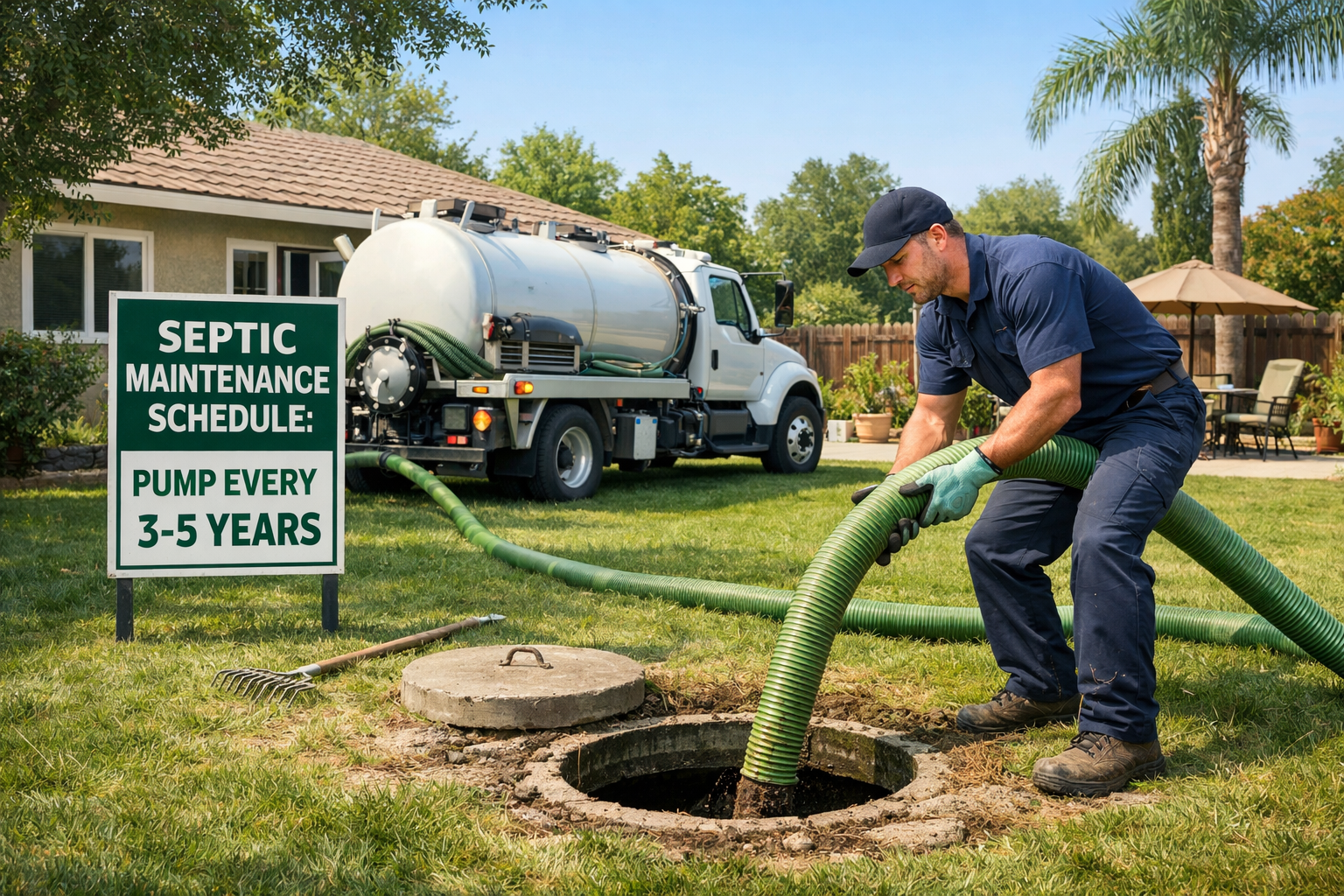
The Ideal Septic Pumping Schedule for Sacramento, CA Homeowners: How Often Is Enough?
If you own a home or manage a property with a septic system, chances are you’ve wondered whether your current septic pumping schedule is actually sufficient or quietly putting you at risk. Septic problems rarely announce themselves politely. Instead, they tend to surface as slow drains, foul odors, soggy patches in the yard, or emergency backups that always seem to happen at the worst possible time.
One of the biggest challenges with septic maintenance is that there is no universal answer to how often should I pump my septic tank. Household size, daily water usage, tank capacity, waste habits, and even Sacramento’s local soil conditions all play a role. Pump too infrequently, and solid waste accumulates, increasing the risk of backups and drain field failure. Pump too often, and you may be spending money without added benefit.
This comprehensive guide explains how to determine the ideal septic tank pumping schedule for Sacramento, CA homeowners and property managers. You’ll learn what affects septic tank pumping frequency, how to recognize early warning signs, and how a proactive approach protects your system and your budget. By the end, you’ll have clarity and confidence about building a reliable pumping plan that works long-term.
Why a Proper Septic Pumping Schedule Matters
A septic system is designed to work quietly and efficiently underground, but its health directly impacts your plumbing, property value, and finances. Understanding why a consistent septic pumping schedule matters helps reframe pumping as preventative care rather than an avoidable expense.
When a septic tank is not pumped often enough, solid waste accumulates faster than it can break down. Eventually, sludge and scum can escape the tank and enter the drain field. Once the drain field becomes clogged or saturated, repairs are no longer simple or inexpensive. In Sacramento, where soil conditions vary widely, drain field replacement can cost tens of thousands of dollars.
Maintaining an appropriate septic tank pumping frequency offers several critical benefits:
- Prevents sewage backups and unpleasant odors
- Extends the lifespan of your septic tank and drain field
- Reduces the likelihood of emergency repairs
- Protects groundwater and local ecosystems
- Preserves property value and system reliability
Many homeowners mistakenly believe septic issues only affect older systems. In reality, even newer tanks can fail prematurely without a proper septic pumping schedule. Routine pumping ensures your system continues operating as designed year after year.
Factors That Influence Your Septic Pumping Schedule
There is no one-size-fits-all answer to how often should septic tank be pumped out. Several factors influence how frequently your system needs service, especially in the Sacramento region.
Household Size and Water Usage
The more people living in a home, the more wastewater and solid waste the system must process. A family of five will typically need pumping far more often than a single occupant—even if the tank size is the same. Homeowners frequently ask how often pump septic family of 5, and the answer is usually every 1–2 years depending on usage habits.
Septic Tank Size and Design
Most residential septic tanks range from 1,000 to 1,500 gallons. Smaller tanks reach capacity faster, while larger tanks allow longer intervals between pumpings when used responsibly. Your tank size plays a major role in determining pumping a septic tank how often.
Waste Disposal Habits
Flushing non-biodegradable items, grease, or excessive cleaning chemicals accelerates sludge buildup. Even products labeled “flushable” can disrupt bacterial balance and shorten the frequency of septic tank pumping.
Soil and Ground Conditions in Sacramento
Sacramento’s soil composition and groundwater levels affect how efficiently wastewater disperses. Poor drainage or saturated soil can increase stress on the system, making a shorter septic tank pumping schedule necessary.
How Often Should You Pump Your Septic Tank?
Homeowners frequently search how often should I pump septic tank because the answer depends on real-world use. However, there are reliable guidelines that provide a solid starting point.
Standard Residential Pumping Guidelines
For a typical Sacramento household of four with a 1,200-gallon tank, pumping every 3 to 4 years is generally appropriate. This balance prevents excessive sludge buildup without unnecessary expense.
High-Use and Multi-Generational Homes
Homes with high water usage, frequent guests, or multiple generations under one roof often require pumping every 1 to 2 years. Ignoring higher usage can cause sludge to enter the drain field prematurely.
Rental and Commercial Properties
Rental properties and commercial systems require customized septic tank pumping frequency plans. Annual pumping is common, while restaurants or food-service businesses may need service every 3 to 6 months due to grease and waste volume.
For the most accurate answer to how often to empty septic, professional inspections that measure sludge and scum levels provide clarity beyond general rules.
Septic Tank Pumping Frequency Chart (General Guide)
While exact needs vary, the following general guide helps visualize a typical septic tank pumping frequency chart:
- 1–2 people, 1,000-gallon tank: every 4–5 years
- 3–4 people, 1,200-gallon tank: every 3–4 years
- 5+ people, 1,500-gallon tank: every 1–2 years
- Rental or high-use properties: annually or more often
This chart offers guidance, but real-world conditions should always take priority.
How Do I Know When My Septic Tank Is Full?
Even with a planned septic pumping schedule, tanks can fill faster than expected. Knowing how do I know when my septic tank is full allows you to act early.
Slow Drains Throughout the Home
When multiple drains slow down at the same time, the tank may be nearing capacity.
Sewage Odors Indoors or Outdoors
Persistent odors near sinks, toilets, or the yard often indicate excessive waste buildup.
Pooling Water or Lush Grass
Standing water or unusually green grass above the drain field suggests system overload.
Gurgling Sounds in Plumbing
Air trapped by solids can cause bubbling or gurgling noises in pipes.
These warning signs should never be ignored, as delays can lead to serious damage.
Real-World Septic Pumping Schedule Examples
Understanding real-life scenarios helps homeowners confidently apply a septic pumping schedule.
A Sacramento family of three with a 1,000-gallon tank may pump every four years without issues. Meanwhile, a five-bedroom home with frequent visitors may require pumping every 18–24 months. These differences illustrate why septic tank pumping frequency must match actual usage.
Commercial examples vary even more. A small office may require annual pumping, while restaurants often need pumping multiple times per year due to grease accumulation.
Best Practices to Extend Your Septic Pumping Interval
Smart habits can significantly improve how long your system operates between pumpings.
Conserve Water
Fix leaks promptly, install water-efficient fixtures, and spread laundry loads throughout the week.
Be Mindful of What You Flush
Avoid grease, wipes, hygiene products, and harsh chemicals that disrupt bacterial balance.
Schedule Routine Inspections
Professional inspections help fine-tune your septic pumping schedule using real measurements.
Protect the Drain Field
Keep vehicles, heavy equipment, and deep-rooted plants away from the drain field area.
These practices reduce strain on your system and help maintain a healthy pumping interval.
Professional Septic Pumping Services in Sacramento
Working with a trusted local provider ensures your septic pumping schedule is accurate and compliant. Professional services understand Sacramento’s soil conditions, regulations, and system designs.
Routine septic tank cleaning and pumping services help remove accumulated waste before it causes damage. Properties with lift systems benefit from specialized lift station pumping services, while accessibility improvements like septic riser and lid installation make ongoing maintenance easier.
If you’re unsure where your tank is located or concerned about system components, professional tank locating and outlet baffle replacement services ensure your system remains functional and protected.
For buyers and sellers, real estate septic system inspections with full reports confirm system condition and maintenance compliance. You can also explore local insights through this guide on septic pumping near Sacramento.
Environmental and Regulatory Considerations
Proper septic maintenance protects more than your home. The Environmental Protection Agency emphasizes that routine pumping helps prevent groundwater contamination and environmental damage. Following EPA-backed guidelines supports public health and long-term sustainability.
Common Septic Pumping Mistakes to Avoid
Many system failures are caused by avoidable mistakes rather than age.
- Waiting for visible problems before pumping
- Believing additives eliminate the need for pumping
- Ignoring household size or usage changes
- Skipping professional inspections
Avoiding these mistakes keeps your septic pumping schedule effective and affordable.
Building a Reliable Septic Pumping Schedule
A well-planned septic pumping schedule is one of the simplest and most effective ways to protect your home, health, and finances. By understanding your system, monitoring warning signs, and adjusting based on usage, you can avoid costly emergencies and extend your septic system’s lifespan.
Sacramento homeowners benefit most from proactive maintenance paired with professional guidance. Whether you’re setting your first schedule or reassessing an existing one, consistent pumping ensures your system continues working quietly and efficiently for years to come.
Frequently Asked Questions About Septic Pumping Schedules
How do I know my septic pumping schedule is correct?
If sludge and scum levels remain within safe limits and you experience no drainage issues, your schedule is working. Professional inspections provide confirmation.
Is septic pumping required by law in Sacramento, CA?
While specific intervals are not mandated, proper maintenance is required to prevent contamination and system failure.
Can pumping too often damage a septic system?
No, pumping too often won’t damage the system, but it may increase costs without added benefit.
Do septic additives reduce pumping frequency?
Additives may support bacteria but cannot replace physical waste removal.
What happens if I delay septic pumping too long?
Delays can cause solids to enter the drain field, leading to backups, contamination, and costly repairs.


