
Designing a septic system isn’t just about placing a tank in the ground and hoping for the best. Many septic system failures, permit rejections, and costly rebuilds stem from one core issue: a poorly prepared septic design plan. For property owners in Sacramento, this matters even more due to soil variability, groundwater concerns, and strict county health regulations.
A septic design plan Sacramento homeowners depend on must do more than show tank and drainfield placement. It must demonstrate code compliance, reflect real site conditions, and ensure long-term system performance. Without a compliant design, projects can face permit denials, extended delays, or inspection failures after installation.
Whether you are building a new home, replacing an aging system, or adding an accessory dwelling unit (ADU), understanding septic system design helps you avoid costly mistakes and future problems.
What a Septic Design Plan Covers and Why It Matters
A septic design plan is a technical document that defines how a septic system will be sized, placed, and constructed on a specific property. It serves as the foundation for permitting, installation, and inspection.
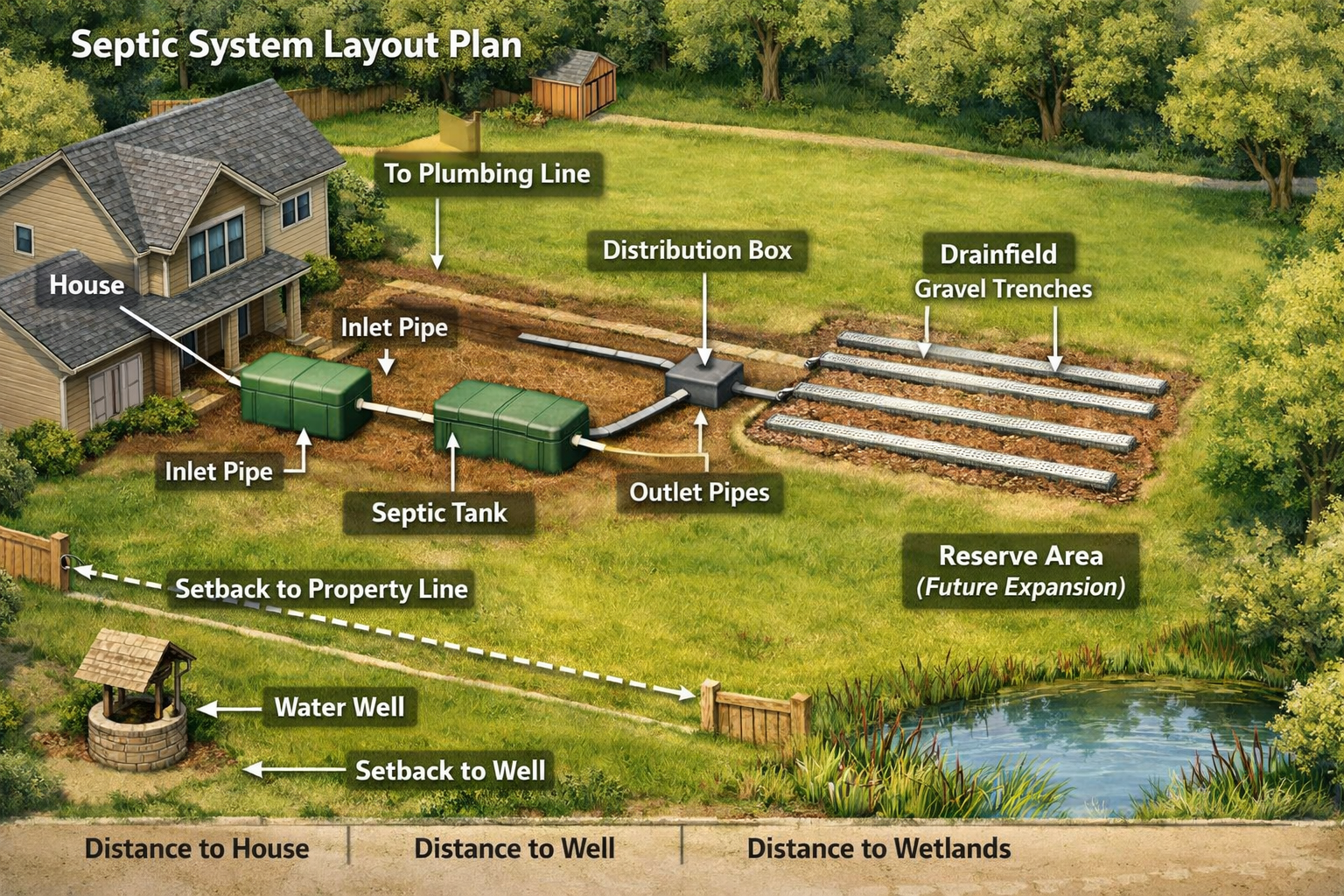
In Sacramento, septic system plans typically include septic tank size and location, drainfield layout, soil and percolation test results, groundwater depth, setback distances, and a typical septic system layout showing wastewater flow. A clear septic system diagram is often included to illustrate how the septic tank and drainfield work together.
When a system is not properly designed, solids can move into the drainfield prematurely, increasing the need for frequent septic tank cleaning and pumping and raising the risk of drainfield failure.
Key Factors That Influence Septic System Design in Sacramento
Every property requires a site-specific approach. Sacramento County mandates that several factors be evaluated before approving a septic design plan.
Soil Type and Absorption Rate
Soil conditions directly affect septic tank and drainfield design. Sandy soils absorb wastewater quickly, while clay-heavy soils common in parts of Sacramento drain slowly and may require larger or alternative systems.
Groundwater and Seasonal Water Levels
High groundwater restricts installation depth and affects system performance. Designs must maintain adequate separation between the drainfield and groundwater to prevent contamination.
Property Size, Shape, and Slope
Lot size influences whether there is sufficient room for a compliant residential septic drain field design. Sloped properties add complexity related to flow control, erosion, and long-term maintenance access.
Household Size and Water Usage
Septic system design is based on potential wastewater flow, not current occupancy alone. Underestimating usage often leads to overloaded systems and frequent service calls.
Local Code and Environmental Setbacks
Setbacks from wells, waterways, structures, and property lines shape the typical septic system layout and must be accurately reflected in septic system design drawings.
How to Design a Septic System That Meets Sacramento Codes
Knowing how to design a septic system in Sacramento requires following a structured, code-driven process.
Site Evaluation and Soil Testing
Every compliant design begins with soil testing and site evaluation. These results guide system sizing and placement decisions.
Selecting the Appropriate System Type
Some properties do not qualify for conventional gravity systems. In these cases, alternative designs may rely on pumps, making ongoing lift station pumping an important long-term consideration.
Creating a Code-Compliant Layout
The septic system layout must meet all setback requirements while allowing access for inspections and maintenance. Accurate septic system design drawings help prevent installation errors.
Permit Submission and Approval
All documentation is submitted to Sacramento County for review. Installation cannot begin until the septic design plan is approved.
Coordinating Design and Installation
Any deviation from the approved plan can result in inspection failure or costly corrections.
Understanding Septic Tank and Drainfield Design
Septic tank and leach field design determines how effectively wastewater is treated and dispersed. The septic tank separates solids from liquids, while the drainfield allows treated effluent to absorb into the soil.
Poor access to system components makes maintenance difficult. Adding access points through septic risers and lid installation improves long-term serviceability and helps protect the drainfield.
A properly balanced home septic system design considers tank capacity, soil conditions, and drainfield size together to ensure reliable performance.
Common Septic System Design Mistakes That Lead to Violations
Many septic failures are preventable. Common design mistakes include undersized tanks, ignoring seasonal groundwater, inadequate setbacks, and designing only for current use.
Another frequent issue is failing to properly identify component locations, which later requires professional tank locating and outlet baffle replacement to restore proper system function.
These mistakes often result in rejected permits, redesign costs, or early system failure.
Real-World Septic Design Scenarios in Sacramento
New Home Construction
A homeowner submits generic septic system plans without proper soil analysis. The county rejects the design. A revised engineered septic system design drawing resolves the issue and allows construction to proceed.
Septic Replacement Projects
An aging system fails inspection under updated codes. A redesigned septic tank and drainfield layout improves compliance and reduces long-term maintenance risk.
ADU Additions
Adding an ADU increases wastewater demand. A redesigned septic design plan ensures the system can handle the additional load without overloading the drainfield.
Best Practices for a Code-Compliant Septic Design Plan
Best practices include starting the design process early, working with professionals familiar with Sacramento regulations, designing for future household expansion, keeping approved permits and plans, and avoiding shortcuts that lead to expensive fixes later.
How Maintenance Supports Long-Term Septic Design Performance
Even the best septic system design relies on proper maintenance. Routine service helps preserve the integrity of the original design and prevents unnecessary strain on the drainfield.
Regular septic service includes scheduled septic pumping, inspections, and maintenance. When buying or selling a property, real estate septic system inspections with a full report confirm the system matches its approved design and is operating correctly.
Homeowners should also understand early warning signs. Knowing the signs your septic tank is full in Sacramento allows problems to be addressed before backups or drainfield damage occur.
Code-Compliant Septic Design Saves Time and Money
A properly prepared septic design plan is the foundation of a reliable, long-lasting septic system. In Sacramento, meeting local codes is essential for permit approval, environmental protection, and system performance. Investing in professional septic system design upfront helps avoid delays, fines, and premature failure.
For homeowners and builders seeking trusted guidance, Blue Ribbon Septic provides experienced septic design support, inspections, and compliance-focused solutions tailored to Sacramento properties. The right design today prevents septic problems tomorrow.
Frequently Asked Questions About Septic Design Plans
What is a septic design plan?
A septic design plan is a detailed blueprint showing how a septic system will be sized, placed, and constructed to meet site conditions and local codes.
Are septic design plans required in Sacramento County?
Yes. Sacramento County typically requires an approved septic design plan before issuing installation or replacement permits.
Can I design my own septic system?
Most projects require professional design or engineering, especially when alternative systems or strict code constraints apply.
How long does septic design approval take?
Approval timelines vary but typically range from a few weeks to over a month depending on testing and county review.
What happens if my septic system doesn’t meet code?
Non-compliant systems may be denied permits, fail inspections, or require costly redesign and reconstruction.


