
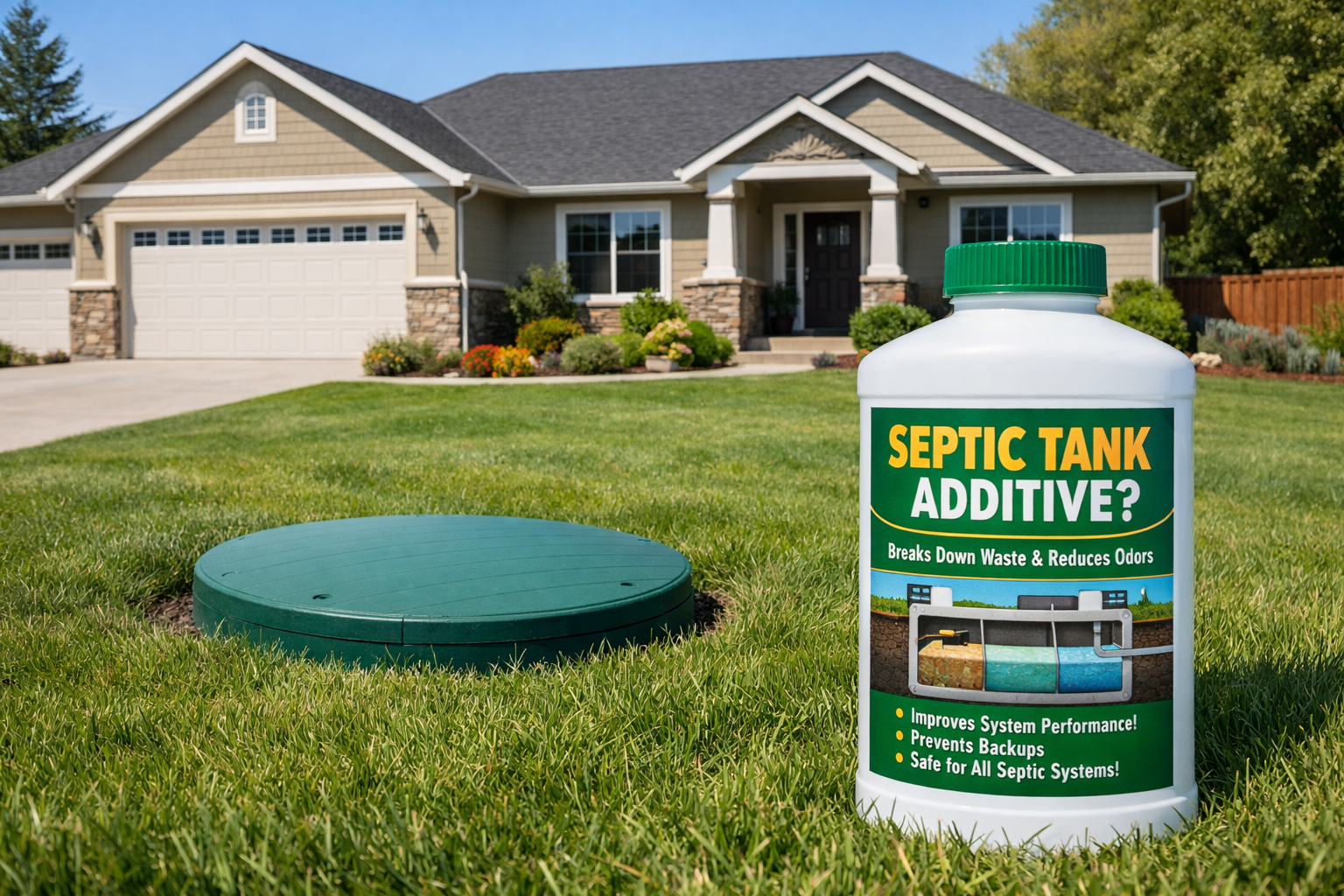
Do Septic Tank Additives Actually Help, or Hurt, Your Septic System?
If you own a home with a septic system in Sacramento, you have likely seen bold claims about septic tank additives Sacramento homeowners are encouraged to buy. These products promise to eliminate pumping, break down waste instantly, remove odors, and even restore failing systems with a single application.
It sounds convenient. Routine septic maintenance can feel inconvenient and costly. The idea of pouring in a solution that “fixes everything” is understandably appealing.
But the real question remains: do septic tank additives really work, or are they simply marketing hype?
Septic systems are hidden underground, which makes it difficult to see what is happening inside. When everything appears normal, homeowners may assume additives are doing their job. When problems develop, such as a septic system backing up into the home, confusion sets in.
In Sacramento, soil composition, groundwater protection requirements, and aging septic infrastructure make proper maintenance even more important. In this guide, we will break down:
- How septic tank additives are supposed to work
- What science says about their effectiveness
- What causes a septic tank to back up
- Signs of a failing septic system
- What happens when septic tank backs up
- What to do if septic backs up
- Why professional maintenance is more reliable than additives
Let us begin with how these products claim to function.
How Septic Tank Additives Are Supposed to Work
Septic tank additives are marketed as performance boosters for your system. They typically come in liquid, powder, or tablet form and are flushed down a toilet or drain.
Most additives fall into two categories:
- Biological additives
- Chemical additives
Biological Additives
These products contain bacteria or enzymes intended to accelerate the breakdown of organic waste. The marketing message suggests they “replenish” helpful bacteria in your tank.
In reality, a properly functioning septic system already contains billions of naturally occurring bacteria. These bacteria develop automatically from normal household wastewater.
In most homes, additional bacteria are unnecessary.
Chemical Additives
Chemical additives use solvents or compounds designed to dissolve solids and grease aggressively. While they may temporarily liquefy materials, they can disrupt the natural bacterial balance and damage components.
In some cases, chemical additives push solids into the drainfield, increasing the risk of clogging and system failure.
Common Marketing Claims
Products often promise to:
- Reduce sludge buildup
- Prevent septic system backup
- Eliminate pumping
- Extend system lifespan
- Improve drainage
However, these claims do not align with how septic systems actually function over time.
What Science Says About Septic Tank Additives
Research consistently shows that septic tank additives provide little measurable improvement in system performance compared to normal wastewater alone.
Government agencies and environmental health departments emphasize one critical fact:
Additives do not replace routine pumping.
Sludge accumulation is the primary reason septic tanks require pumping. Solids settle at the bottom of the tank and cannot be dissolved away completely by enzymes or bacteria.
Biological additives may briefly increase microbial activity, but systems quickly return to natural equilibrium.
Chemical additives present greater risks. They may:
- Damage tank components
- Contaminate groundwater
- Disrupt soil absorption in the drainfield
- Accelerate septic system backing up
For Sacramento homeowners, groundwater protection is especially important. California regulations prioritize environmental safety, making chemical additives a risky choice.
What Causes a Septic Tank to Back Up?
Understanding what causes a septic tank to back up is essential before relying on additives.
Common causes include:
- Excessive sludge buildup
- Drainfield clogging
- Tree root intrusion
- Hydraulic overload from excessive water use
- Damaged outlet baffles
- Collapsed or aging pipes
Additives cannot fix structural damage or remove accumulated solids.
If you are experiencing symptoms of a septic system backing up, professional service is necessary. Routine maintenance such as septic tank cleaning and pumping removes sludge and restores proper capacity.
Signs of a Failing Septic System
Recognizing septic tank signs of trouble early can prevent costly repairs.
Common warning signs include:
- Slow draining sinks and tubs
- Gurgling pipes
- Foul odors indoors or outdoors
- Pooling water near the drainfield
- Lush, overly green grass patches
- Frequent backups
These are classic signs of a failing septic system and should never be ignored.
If left untreated, minor issues can escalate into full system failure.
What Happens When Septic Tank Backs Up?
Homeowners often underestimate what happens when septic tank backs up.
Consequences may include:
- Sewage entering household drains
- Wastewater flooding bathrooms or basements
- Contaminated soil and groundwater
- Health hazards from bacteria exposure
- Expensive drainfield replacement
A septic system backup is not just inconvenient. It can be a serious sanitation issue.
In severe cases, lift station failures may also contribute to backups. Services such as lift station pumping help maintain proper wastewater flow in certain system configurations.
What to Do If Septic Backs Up
If you are wondering what to do if septic backs up, follow these steps:
- Stop using water immediately
- Avoid flushing toilets or running sinks
- Keep people and pets away from affected areas
- Contact a licensed septic professional
- Schedule immediate inspection and pumping
Do not rely on additives as an emergency solution. They will not resolve a mechanical failure or clogged drainfield.
Professional services such as tank locating and outlet baffle replacement can address underlying structural problems.
Why Additives Cannot Replace Pumping
No additive removes solid sludge from the bottom of the tank. Over time, sludge reduces retention time, allowing solids to escape into the drainfield.
When solids reach the drainfield, soil pores clog and absorption declines. This leads to septic system backing up and eventual failure.
Routine pumping physically removes sludge. Additives do not.
Homeowners considering property transactions should also schedule real estate septic system inspections with full report to identify hidden issues before they become major expenses.
Sacramento-Specific Septic Challenges
Sacramento’s climate and soil composition create unique septic considerations.
Clay-Heavy Soil
Clay soil drains slowly. If solids enter the drainfield, absorption declines rapidly.
Wet Seasons
Saturated soil during rainy periods reduces drainage capacity and increases backup risk.
Aging Systems
Many Sacramento properties rely on older systems that are more sensitive to overload.
Advanced Septic Treatment Systems
Some properties use advanced septic treatment systems or an aerobic septic tank system, which require specialized maintenance. Improper additive use can disrupt their mechanical processes.
For homeowners evaluating system upgrades, understanding the cost of septic system installation in Sacramento can help plan proactively.
Practical Scenarios: Additives vs. Professional Maintenance
Consider two common situations.
Scenario 1: Long-Term Additive Use
A homeowner relies on additives instead of pumping for years. No visible issues occur at first. Eventually, the drainfield fails due to accumulated solids. Replacement costs can reach tens of thousands of dollars.
Scenario 2: Routine Maintenance
Another homeowner schedules pumping every three to five years. The tank remains within capacity, solids never overload the drainfield, and the system lasts decades.
The difference is not additives. It is consistent professional care.
Best Practices for Septic Health in Sacramento
To maintain a healthy septic system:
- Follow a pumping schedule every 3 to 5 years
- Limit excessive water usage
- Avoid flushing wipes, grease, and non-biodegradable materials
- Reduce use of harsh chemicals
- Schedule routine inspections
- Install septic risers for easier access when needed through septic risers and lid installation
These practices protect your investment far more effectively than store-bought additives.
Do Septic Tank Additives Really Work?
The honest answer is that septic tank additives are not a substitute for proper maintenance.
Biological additives may offer limited short-term benefits in rare cases. Chemical additives may cause more harm than good.
For homeowners researching septic tank additives Sacramento residents often see advertised, the safest approach is simple:
- Pump regularly
- Inspect routinely
- Address problems early
- Work with experienced professionals
Septic systems are long-term infrastructure investments. Protecting them requires consistent care, not shortcuts.
Frequently Asked Questions
1. Do septic tank additives really reduce pumping frequency?
No. Additives cannot remove sludge or scum buildup. Only professional pumping physically removes solids.
2. Are septic tank additives safe for Sacramento groundwater?
Biological additives are generally safer than chemical products, but neither replaces proper maintenance. Chemical additives may pose environmental risks.
3. Can additives fix septic system backup?
No. Additives cannot resolve mechanical failures, clogged drainfields, or structural damage.
4. What are the main septic tank signs of trouble?
Slow drains, odors, pooling water, and gurgling pipes are common warning signs.
5. What is the best alternative to additives?
Routine pumping, inspections, and responsible household practices are the most effective ways to maintain a healthy septic system in Sacramento.
When it comes to septic system performance, prevention is always less expensive than repair. Professional service, not septic tank additives, remains the most reliable way to protect your home and property in Sacramento


