
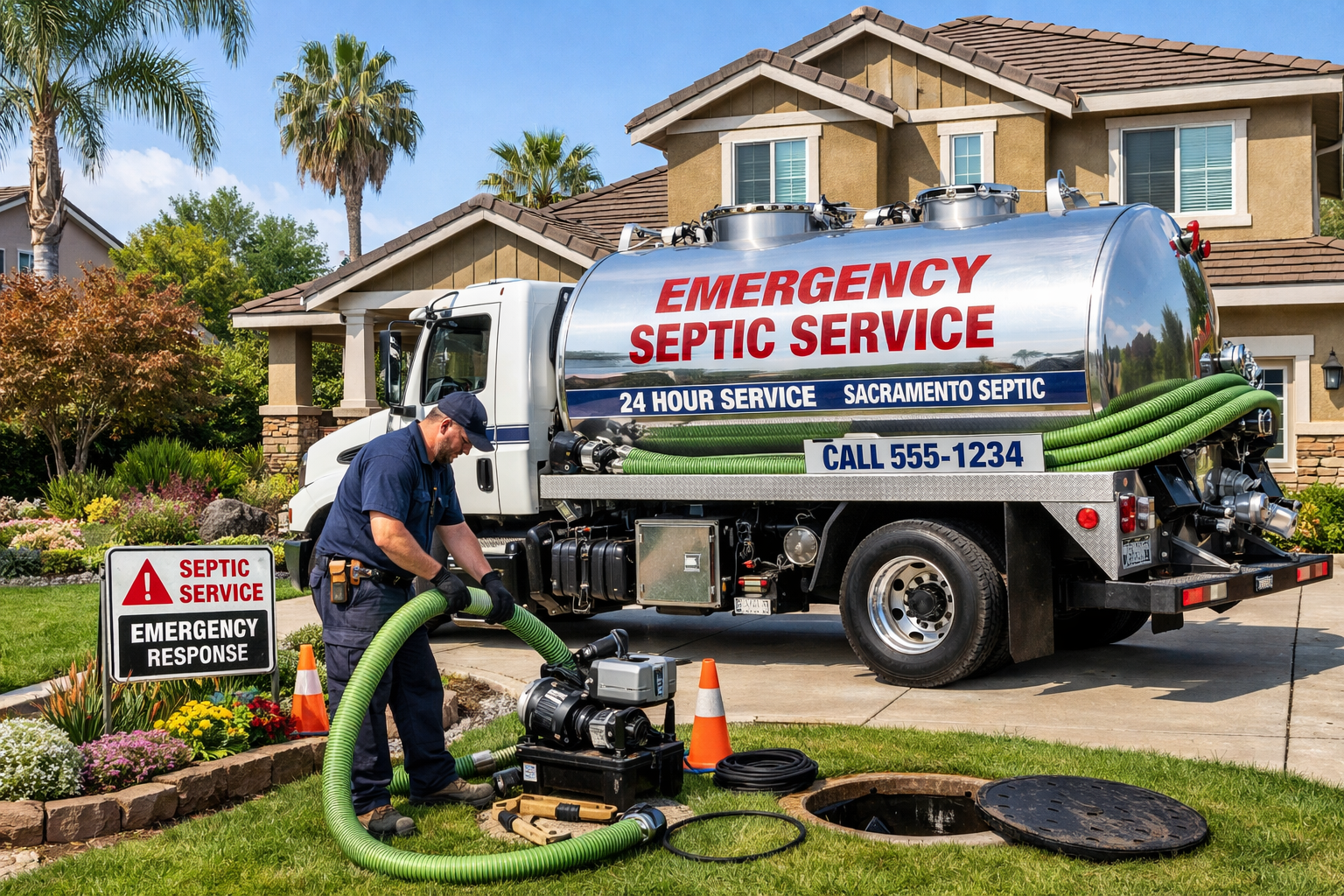
When a Septic Backup Turns Into an Emergency
Few home problems cause panic quite like a septic system backup in Sacramento. One moment everything seems normal, and the next you’re dealing with slow drains, foul odors, or raw sewage backing up into your home or yard. It’s stressful, unsanitary, and often happens at the worst possible time, late at night, during a family gathering, or on a weekend.
A septic backup is more than an inconvenience. It’s a serious plumbing and sanitation emergency that can threaten your health, damage your home, and lead to costly repairs if not handled correctly. Sacramento homeowners face unique risks due to aging septic systems, variable soil conditions, and seasonal groundwater changes that can overwhelm systems faster than expected.
The good news is that a septic backup does not have to become a disaster. Knowing exactly what to do and what not to do can dramatically reduce damage, protect your family, and speed up recovery. In this guide, you’ll learn how to respond to a septic system backup in Sacramento, why it happens, when to call for emergency septic service, and how to prevent it from happening again.
Understanding What a Septic System Backup Really Means
A septic system backup occurs when wastewater can no longer flow from your home into the septic tank and drainfield as designed. Instead, sewage reverses direction and surfaces through toilets, showers, floor drains, or even outdoors near the drainfield.
This is not just a plumbing issue; it’s a system-wide failure. When a backup happens, it means something is blocking, overwhelming, or damaging the septic system. In Sacramento, common contributors include full tanks, clogged outlet baffles, saturated drainfields, or sudden spikes in water usage.
Why septic backups are serious:
- Exposure to harmful bacteria, viruses, and pathogens
- Damage to flooring, drywall, and fixtures
- Increased risk of drainfield failure
- Potential environmental contamination
- Expensive repairs if delayed
Many homeowners hope the problem will “clear itself” once water usage slows. Unfortunately, a septic system backup in Sacramento almost always gets worse without professional intervention.
Immediate Steps to Take During a Septic System Backup
When a backup occurs, your response in the first hour matters. These steps can help minimize damage and protect everyone in your home.
Step 1: Stop All Water Use Immediately
The most important first action is to stop sending water into the system. Every flush, sink use, or appliance cycle adds pressure to an already overwhelmed tank.
- Stop flushing toilets
- Turn off sinks and showers
- Pause washing machines and dishwashers
If appliances are mid-cycle, shut them off at the breaker. Reducing water input can prevent sewage from spreading further inside your home.
Step 2: Keep People and Pets Away from Affected Areas
Sewage contains dangerous pathogens. Keep children and pets out of any area where wastewater is visible or odors are strong. Avoid direct contact with contaminated water and surfaces.
Open windows for ventilation if it’s safe to do so, but do not attempt cleanup without professional equipment. DIY cleanup often spreads contamination and increases health risks.
Step 3: Check for Exterior Warning Signs (Without Digging)
Look outside for clues that can help professionals diagnose the issue faster:
- Pooling water or soggy soil
- Sewage odors near the drainfield
- Unusually lush grass in one area
Do not dig, probe, or disturb the soil. These observations are for awareness only.
Step 4: Call for Emergency Septic Service
A septic system backup in Sacramento requires a licensed septic tank plumbing professional. Emergency septic service providers have the tools to pump, inspect, and diagnose the system safely.
A trusted local company like Blue Ribbon Septic offers 24/7 septic service, focusing on maintenance-first solutions rather than unnecessary repairs.
Common Causes of Septic System Backups in Sacramento
Understanding what causes septic backups helps prevent repeat emergencies. In Sacramento, these issues appear most often.
Infrequent Septic Tank Pumping
The number one cause of septic backups is a full tank. Over time, sludge and scum accumulate. Without routine service, solids block the outlet baffle or spill into the drainfield.
Homeowners searching for septic tank pumping Sacramento or septic pumping near me are often already overdue for service. Routine pumping through professional septic tank cleaning and pumping prevents most backups entirely.
Excessive Water Usage
High water usage overwhelms septic systems quickly. Common causes include:
- Multiple laundry loads in one day
- Long showers
- Leaking toilets or fixtures
- Heavy irrigation near the drainfield
Sacramento homes with large families or frequent guests are especially vulnerable.
Damaged or Missing Outlet Baffles
Outlet baffles control the flow of wastewater from the tank to the drainfield. If damaged or missing, solids escape into the drainfield and cause clogs. Professional tank locating and outlet baffle replacement can prevent this failure.
Saturated or Failing Drainfields
Seasonal rain, overwatering, or compacted soil can saturate drainfields. When soil can’t absorb effluent, wastewater backs up into the tank and home.
Aging or Outdated Systems
Older systems weren’t designed for modern water usage. Homes in Sacramento with original systems are at higher risk, especially without upgrades or inspections.
Real-World Scenarios Where Septic Backups Happen
Deferred Maintenance in Family Homes
Many homeowners delay pumping beyond recommended intervals. Everything seems fine until one day it isn’t. A sudden backup often occurs during normal daily use. Prompt septic pumping Sacramento services usually resolve the issue before permanent damage occurs.
High-Usage Properties
Homes with guests, rentals, or multi-generational families place constant strain on septic systems. Without adjusted maintenance schedules, backups happen unexpectedly.
Real Estate Transactions
Septic backups frequently surface during home sales. Systems that haven’t been inspected in years may fail under buyer inspections. Scheduling real estate septic system inspections with full reports helps avoid last-minute surprises.
Properties with Lift Stations
Homes using pumps or lift stations require additional care. Missed maintenance can lead to pump failure and backups, making lift station pumping essential.
Septic Backup Service vs. Plumbing Service: What’s the Difference?
A common mistake is calling a standard plumber instead of a septic professional. While plumbers handle pipes inside the home, septic backups require specialized equipment and knowledge.
Septic professionals handle:
- Tank pumping
- System inspections
- Drainfield evaluation
- Pump and lift station service
This is why homeowners searching for plumbing and septic service should always choose a provider experienced in septic systems, not just indoor plumbing.
Best Practices to Prevent Future Septic Backups
Preventing another septic system backup in Sacramento is far easier and cheaper than dealing with emergencies.
Schedule Regular Pumping
Most tanks need pumping every 3–5 years, sometimes sooner. Regular service prevents solids from clogging pipes or drainfields.
Monitor Water Usage
- Spread laundry throughout the week
- Fix leaks immediately
- Avoid unnecessary water use
Balanced water flow keeps systems working efficiently.
Watch What Goes Down the Drain
Never flush wipes, grease, hygiene products, or harsh chemicals. Even “homemade” solutions can be harmful; learn more from this guide on homemade septic cleaners in Sacramento.
Install Risers and Secure Lids
Easy access allows faster inspections and pumping. Septic risers and lid installation also improve safety and reduce emergency service delays.
Address Small Warning Signs Early
Slow drains, odors, or gurgling sounds are early alerts. Acting early prevents full septic backup service calls.
When You Need 24/7 Septic Service
Septic backups don’t wait for business hours. That’s why having access to 24/7 septic service matters. Emergency septic service providers can respond quickly, reduce contamination, and restore system function safely.
Whether you’re searching for septic pumping Roseville, septic pumping near me, or one-way septic service options, the key is choosing licensed professionals with local experience.
Act Fast, Stay Protected, and Plan Ahead
A septic system backup in Sacramento is overwhelming, but it’s manageable with the right response. Stop water use immediately, protect your household, and contact a septic tank plumbing professional as soon as possible.
Understanding the causes of backups and committing to routine maintenance gives you control over your septic system instead of reacting to emergencies. Proactive care protects your home, your health, and your investment.
If you’ve noticed warning signs or want peace of mind, scheduling service now is far better than waiting for the next backup.
Frequently Asked Questions About Septic System Backups
What should I do first during a septic system backup in Sacramento?
Stop all water use immediately, keep people away from contaminated areas, and call a licensed septic professional.
Can I use drain cleaners to fix a septic backup?
No. Chemical drain cleaners damage septic systems and worsen backups.
How often should septic tanks be pumped in Sacramento?
Most homes need pumping every 3–5 years, depending on usage.
Are septic backups covered by homeowners insurance?
Coverage varies by policy. Check with your provider for details.
How do I know if my drainfield is failing?
Persistent odors, soggy soil, slow drains, or repeated backups indicate possible drainfield failure and require professional inspection.


