
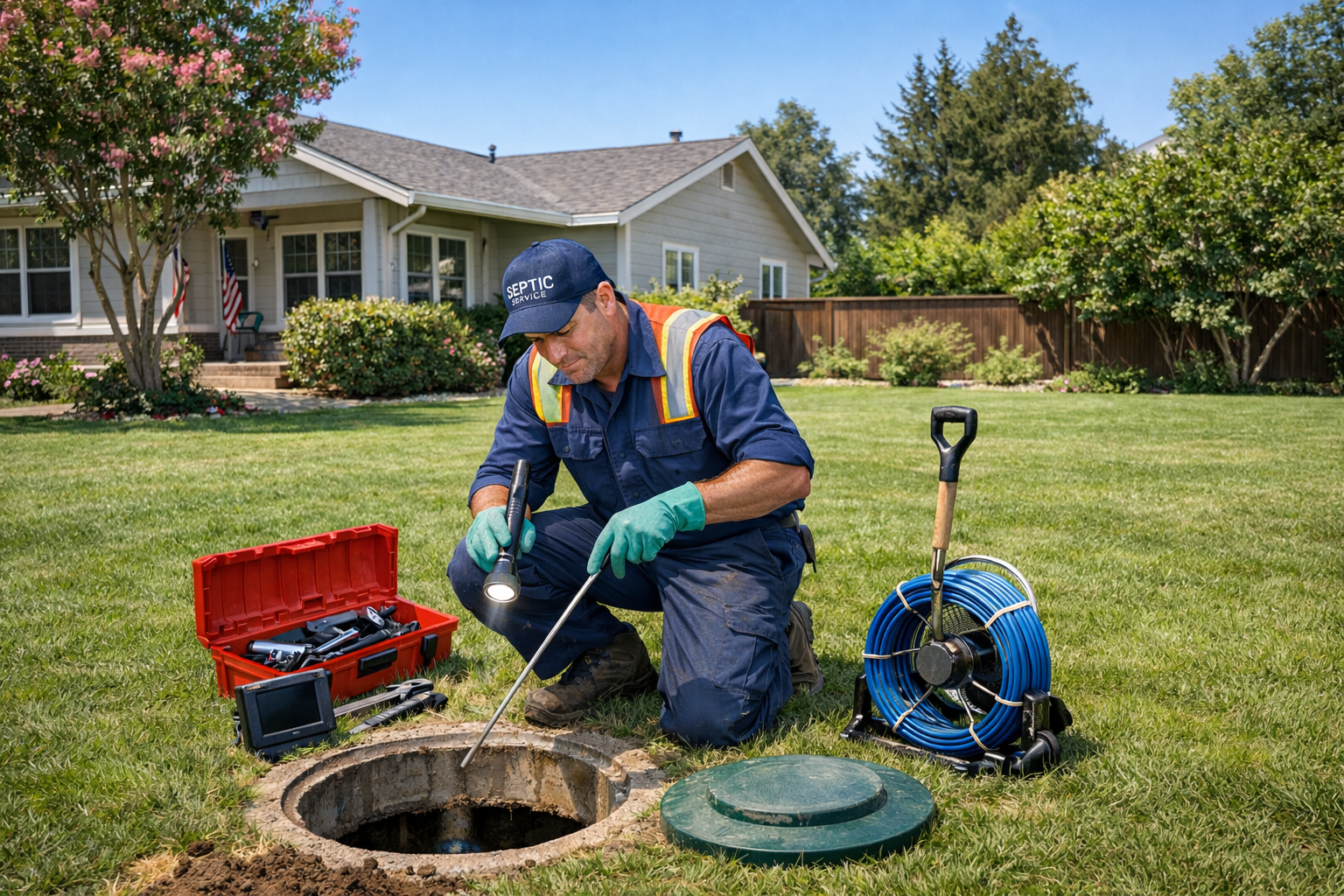
Protect Your Property Before Problems Start
Most homeowners rarely think about their septic system until something goes wrong. Unfortunately, by the time you notice sewage odors, slow drains, or standing water in your yard, the damage is often expensive and disruptive. In Northern California, soil conditions, aging septic systems, and local regulations make preventative maintenance essential.
A professional septic system inspection Sacramento homeowners schedule is not just a formality during a home sale. It is a proactive step that protects your property value, health, and finances. Regular inspections uncover hidden problems early, before minor issues escalate into full system failures that cost thousands of dollars to repair.
In this guide, you will learn:
- Why septic inspections matter in Sacramento
- What the septic tank inspection process includes
- When to schedule inspections
- Septic system inspection cost considerations
- What to expect during a home septic inspection
If you want peace of mind and long-term system reliability, this article will walk you through everything you need to know.
Why Septic System Inspection Sacramento Homeowners Schedule Matters
Septic systems operate underground and out of sight. That makes it easy to forget they require regular evaluation.
A septic system inspection Sacramento property owners rely on evaluates:
- Tank condition and structure
- Sludge and scum levels
- Inlet and outlet baffles
- Drainfield performance
- Signs of leakage or hydraulic failure
Sacramento’s soil variations and groundwater conditions make inspections especially important. What works in one neighborhood may fail in another due to drainage characteristics.
Routine inspections provide several critical benefits:
- Preventing costly repairs and system replacement
- Reducing the risk of sewage backups
- Protecting groundwater and local waterways
- Supporting compliance during property sales
- Extending overall system lifespan
Many homeowners believe septic tank pumping and inspection are the same thing. While pumping removes waste, inspections evaluate the structural and functional integrity of the entire system.
Both are necessary.
When Should You Schedule a Septic System Inspection?
Timing matters. You should consider septic inspection services in the following situations:
- Every 3 to 5 years for routine maintenance
- Before buying or selling a home
- If experiencing slow drains or odors
- After heavy rainfall or flooding
- When adding household occupants
If you are asking “septic system inspection near me,” it may already be time to schedule service.
Sacramento homeowners also benefit from inspections when planning property upgrades or expansions that could affect wastewater flow.
The Septic Tank Inspection Process Step by Step
Understanding the septic tank inspection process removes uncertainty and helps you prepare.
Step 1: System History Review
A septic tank plumbing professional begins by reviewing:
- System age
- Tank size
- Pumping history
- Previous repair records
This background helps identify potential risk areas.
Step 2: Tank Locating and Access
If tank lids are buried, technicians locate and uncover them. Services such as tank locating and outlet baffle replacement ensure proper access and safe inspection.
If risers are missing, installing them improves future service accessibility. You can learn more about septic risers and lid installation for easier maintenance moving forward.
Step 3: Sludge and Scum Measurement
Inspectors measure sludge accumulation to determine whether pumping is needed.
If levels exceed safe thresholds, solids may enter the drainfield, causing expensive damage.
This step often leads to scheduling professional septic tank cleaning and pumping when necessary.
Step 4: Structural and Component Inspection
The tank interior is evaluated for:
- Cracks or leaks
- Corrosion
- Damaged baffles
- Improper water levels
Even minor structural issues can lead to major failures if ignored.
Step 5: Drainfield Evaluation
The drainfield is examined for:
- Pooling water
- Saturated soil
- Sewage odors
- Poor absorption
Drainfield replacement is one of the most expensive septic repairs. Early detection significantly reduces risk.
Septic Inspection Checklist
Here is a simplified septic inspection checklist professionals follow:
- Locate tank and access lids
- Measure sludge and scum levels
- Inspect inlet and outlet baffles
- Check tank structure for cracks
- Evaluate drainfield performance
- Confirm proper water flow
- Identify signs of backup or leakage
This structured evaluation ensures no component is overlooked.
Septic System Inspection Cost in Sacramento
Septic system inspection cost varies based on:
- Tank size
- Accessibility
- Whether pumping is required
- Property location
- Inspection type (routine vs. real estate)
A basic home septic inspection may cost less than a full real estate septic evaluation with detailed reporting.
For property sales, specialized real estate septic system inspections with full report provide documentation required for escrow and buyer confidence.
While cost matters, delaying inspection often leads to significantly higher repair expenses later.
Real Estate and Septic Inspections in Sacramento
Home septic inspection requirements frequently arise during property transactions.
Buyers want assurance the system functions properly. Sellers want to avoid last-minute deal disruptions.
A professional septic inspection:
- Identifies necessary repairs early
- Provides documentation for negotiations
- Prevents escrow delays
- Protects both parties
If you are preparing to sell, reviewing Sacramento permit guidelines may also be helpful. This resource on septic system permit Sacramento requirements outlines important compliance considerations.
Who to Call for Septic Tank Problems
If you notice:
- Slow drains
- Gurgling pipes
- Sewage smells
- Wet spots in the yard
You may wonder who to call for septic tank problems.
A licensed septic tank plumbing professional with experience in septic inspection services is the correct first step. Avoid general plumbing-only providers who may not specialize in septic systems.
When searching for sewage companies near me, prioritize those with:
- Local Sacramento experience
- Licensing and certifications
- Real estate inspection capability
- Drainfield evaluation expertise
Specialization matters.
Combining Inspection with Additional Services
Inspections often reveal related maintenance needs.
For example:
- Lift stations may require service. Learn more about lift station pumping.
- Systems overdue for maintenance benefit from professional pumping.
- Baffle replacement prevents solids from entering the drainfield.
Combining services improves system performance and reduces repeat visits.
Common Septic Inspection Mistakes to Avoid
Even proactive homeowners can make costly errors.
Avoid these mistakes:
- Ignoring inspection recommendations
- Delaying pumping after sludge measurement
- Attempting DIY inspections
- Skipping inspections between home ownership transfers
- Assuming newer systems do not need evaluation
Regular professional evaluation protects your investment.
How Often Does a Home Septic Inspection Prevent Failure?
While no inspection can guarantee zero future issues, regular septic system inspection Sacramento professionals perform significantly reduces failure risk.
Early detection allows:
- Affordable component repairs
- Targeted maintenance
- Drainfield preservation
- Extended system lifespan
Proactive inspections are far less expensive than emergency replacements.
Final Thoughts on Septic System Inspection Sacramento
Your septic system is one of the most important and expensive components of your property. Because it operates underground, problems can develop silently for years.
Scheduling a septic system inspection Sacramento homeowners trust transforms uncertainty into clarity. It allows you to:
- Plan maintenance confidently
- Avoid emergency repairs
- Protect property value
- Ensure regulatory compliance
Whether for routine care or real estate transactions, a professional inspection is a smart investment in long-term reliability.
Septic System Inspection Sacramento FAQs
What is included in a septic inspection?
A septic inspection includes evaluating the tank structure, sludge levels, baffles, drainfield condition, and overall system performance.
How often should I schedule septic inspection services?
Most Sacramento homeowners should schedule inspections every three to five years, or sooner if experiencing system symptoms.
What is the average septic system inspection cost?
Costs vary based on system size, accessibility, and whether pumping is required. Real estate inspections may cost more due to reporting requirements.
Is septic tank pumping and inspection the same?
No. Pumping removes waste. An inspection evaluates structural integrity and system performance. Both are important.
Who should I call for septic tank problems?
A licensed septic tank plumbing professional with local Sacramento experience should evaluate and inspect your system.


