
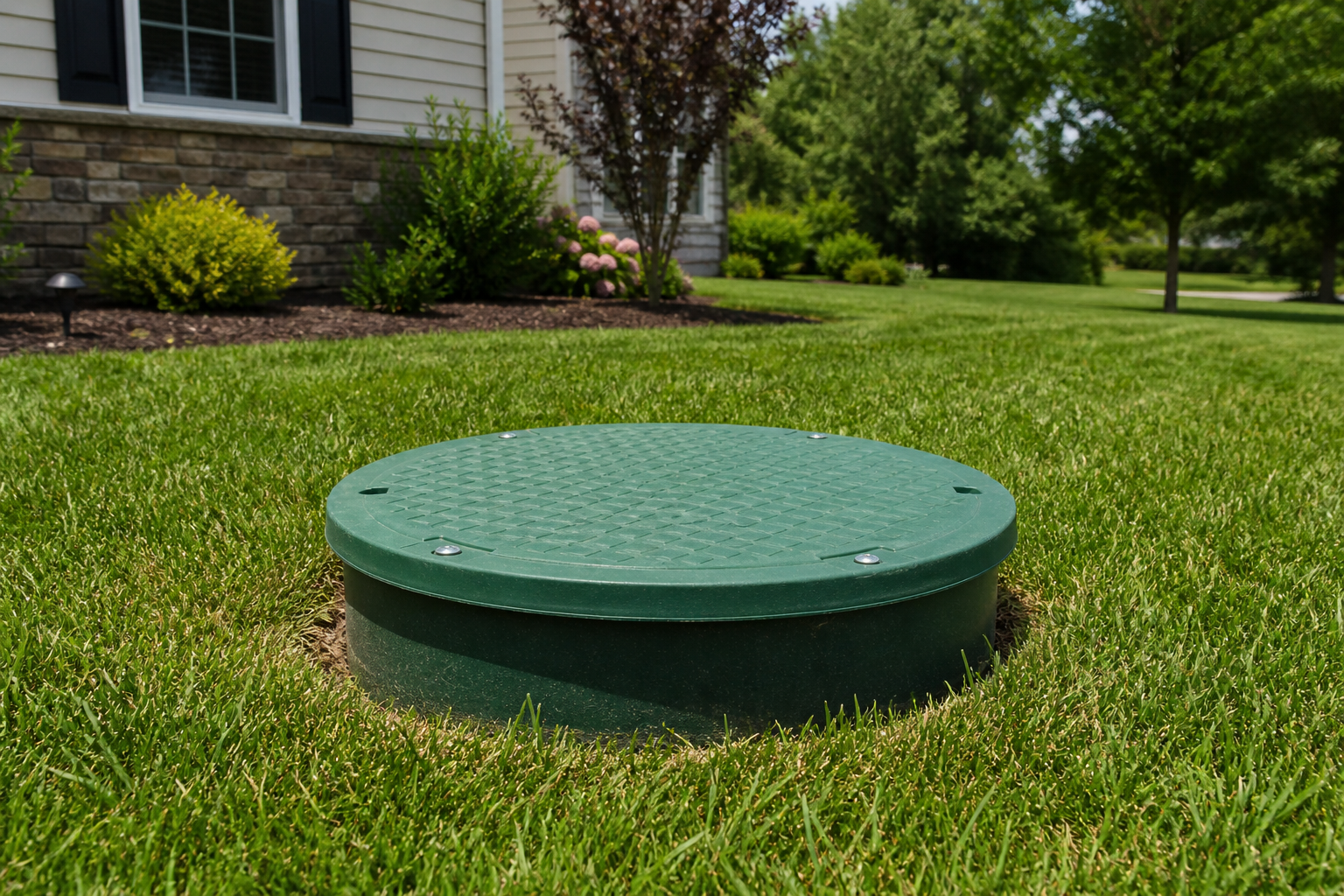
When it comes to securing your property, choosing the right septic tank covers is the single most important step to prevent accidental falls, keeping your family, pets, and guests completely safe. The safest options available today are heavy-duty, modern plastic or fiberglass septic tank lids equipped with secondary safety screens and secure fasteners. For decades, many homes in Auburn relied on heavy concrete styles, but as these age, they can corrode, crack, and become incredibly brittle beneath the surface.
A compromised or unsecured septic tank cover creates a hidden, severe structural hazard in your yard that can fail without warning. By upgrading to modern, code-compliant materials, you eliminate these structural vulnerabilities and gain permanent peace of mind. In this quick guide, we will break down the safest options for a septic tank lid replacement so you can make an informed choice for your property.
Let's look at how different materials compare when it comes to keeping your yard secure.
Why Choosing the Right Septic Tank Covers Matters for Auburn Homeowners
At its core, a septic tank cover is the heavy-duty barrier that seals the access port of your underground wastewater system. Its primary job is twofold: keeping sewage odors and gases contained inside the tank while preventing people, pets, and lawn equipment from falling in. However, not all septic tank covers are engineered equally. Older systems frequently utilize heavy concrete slabs that degrade over time due to the corrosive sewer gases trapped beneath them. When concrete degrades, it becomes brittle and can collapse under weight, turning a routine walk across the lawn into a major safety crisis.
For property owners in Auburn, prioritizing a secure, structural barrier is a critical part of home safety and regular maintenance. Ensuring you have a durable, modern lid installed eliminates the hidden anxiety of a yard hazard. If you are uncertain about the current state or exact location of your access points, scheduling professional tank locating and outlet baffle replacement is the best way to safely assess what lies beneath the surface without damaging your landscape.
Upgrading to modern, secure septic tank lids offers several immediate advantages for your home:
- Accident Prevention: High-quality lids feature secure locking mechanisms that prevent curious children or heavy wildlife from shifting the cover.
- Easier Maintenance Access: Modern lightweight, durable covers make routine service smoother, saving time during your regular septic tank cleaning and pumping appointments.
- Structural Longevity: Advanced materials like HDPE plastic and fiberglass resist sewer gas corrosion, ensuring the lid remains structurally sound for decades.
A common misconception among homeowners is that a heavy lid is automatically a safe lid. In reality, a heavy concrete cover can mask severe underside rotting until it is completely too late. Recognizing the specific differences between modern cover materials is the next step to ensuring your property stays completely secure.
Comparing the Safest Types of Septic Tank Lids
Choosing the right covers for your system involves understanding how different materials handle weight, weather, and environmental exposure. The best septic tank covers combine structural integrity, secure locking mechanisms, and long-term resistance to corrosion. Below, we break down the most common types of septic box covers and lids available to help you identify the safest choice for your property.
1. Heavy-Duty Injection-Molded Plastic (HDPE) Lids
High-Density Polyethylene (HDPE) has become the modern gold standard for residential septic safety. These covers are treated with UV inhibitors to prevent sun damage and brittleness from outdoor exposure, making them highly resilient against seasonal weather changes in Auburn.
- Safety Features: Modern HDPE septic tank lids are designed with structural ribbing on the underside, allowing them to withstand significant weight from pedestrian traffic and lawnmowers. They are also securely bolted down to the riser, preventing children or pets from lifting or shifting them.
- Why It Wins on Safety: Unlike concrete, plastic will never corrode or rot due to exposure to sewer gases. When combined with a professional septic risers and lid installation, an HDPE cover creates a watertight, airtight seal that eliminates hidden collapse risks entirely.
2. Fiberglass Septic Tank Covers
Fiberglass is an exceptionally strong, lightweight material that offers structural performance comparable to steel but without the rust factor.
- Safety Features: Fiberglass covers are incredibly rigid and do not flex or warp under pressure. They handle heavy loads easily and are practically impervious to underground chemical degradation.
- Why It Wins on Safety: Because they are lightweight but exceptionally tough, they reduce the risk of physical injury during routine inspections or system servicing. They are fastened with heavy-duty safety screws to ensure they remain anchored flat against the ground.
3. Concrete Lids (The Traditional Option)
While concrete was the default choice for decades, it is no longer considered the safest option for modern homes. Concrete covers rely purely on their massive weight—often exceeding 100 pounds—to stay secure.
- The Safety Risks: Over time, the hydrogen sulfide gas inside the septic tank reacts with moisture to form a mild acid that slowly eats away at the concrete from the inside out. A concrete lid can look perfectly fine from above while being thin, weak, and ready to cave in underneath. Furthermore, because they are heavy and clumsy to lift, they increase the risk of accidental drops during maintenance, which can crack the underlying tank structure.
- When to Replace: If your home still features an older concrete block over the tank, planning a professional septic tank lid replacement is highly recommended to eliminate the unpredictability of an aging structural barrier.
4. Steel and Cast Iron Covers
Typically reserved for commercial properties or residential traffic areas like driveways, steel and cast iron offer maximum load-bearing capacities.
- Safety Features: These covers can withstand vehicle traffic without breaking, making them essential if an access point sits near a path or parking area.
- The Downside: Steel is highly susceptible to rust and corrosion if not treated with specialized coatings regularly. They are also incredibly heavy, making routine inspections more difficult.
The Role of Secondary Safety Screens
Regardless of the material you choose, the absolute safest setup includes a secondary safety screen installed directly inside the septic riser. This durable plastic mesh grid acts as a secondary safety net. If a lawnmower accidentally shatters the top lid, or if someone leaves the main cover unbolted, the safety screen remains securely in place to prevent anything or anyone from falling into the open tank chamber.
Upgrading your system with a complete septic tank riser kit ensures that your access points are brought up to modern safety codes, making your yard safe for everyone while simplifying your next scheduled service.
Real-World Examples: Choosing and Installing Secure Covers
Moving from septic theory to practical home maintenance shows how upgrading your access setup solves everyday yard safety challenges. Here is how Auburn property owners handle covering septic tank openings in real-world scenarios.
Scenario 1: The Aging Family Property
An Auburn homeowner noticed the original concrete septic tank cover on their 1990s property was beginning to flake and crumble around the edges. Concerned about the safety of their young children playing in the backyard, they opted for a proactive septic tank lid replacement. Technicians installed an elevated, green HDPE septic riser complete with a secondary safety screen and a heavy-duty, bolt-down lid. The new setup blended perfectly with the lawn, eliminated the hidden collapse risk, and made the backyard 100% safe for family playtime.
Scenario 2: Preparing a Home for Sale
A seller navigating a real estate septic system inspection discovered their existing buried lid did not meet current local safety codes. To keep the sale on track, they quickly arranged a modern septic tank riser kit installation. By bringing the access point up to grade with an approved, lockable plastic septic tank lid, they satisfied the buyer's safety concerns, passed inspection effortlessly, and finalized the home sale without a single delay.
These examples prove that addressing your septic tank covers before a major problem arises protects your family and keeps your property fully compliant.
Proactive Best Practices for Managing Your Septic Lid Safety
Taking a proactive approach to your underground system ensures your yard remains safe and your equipment stays functional between regular service appointments. These expert tips help you maintain your septic tank covers efficiently over time.
- Never Drive Heavy Machinery Over the Cover: Even heavy-duty plastic septic box covers are designed primarily for foot traffic and standard lawnmowers. Driving a vehicle or heavy tractor over the area can crack the underlying septic riser or shift the lid entirely, creating immediate structural damage. Keep heavy paths clearly clear of your system layout.
- Keep the Access Area Visible and Clear: Avoid burying your septic tank lids under thick mulch, decorative rocks, or heavy soil. Keeping the lid at or slightly above ground grade prevents accidental lawnmower strikes and ensures technicians can perform quick, regular lift station pumping or routine tank cleaning without digging up your landscape.
- Regularly Inspect and Tighten Fasteners: A secure septic tank cover is only safe if it stays firmly bolted down. Check the stainless steel safety screws or locking fasteners twice a year to ensure they haven't loosened due to vibrations from lawn equipment or heavy foot traffic, keeping curious hands or paws completely out.
Applying these basic safety habits keeps your home secure, protects your investment, and ensures your next system service is straightforward and hassle-free.
Secure Your Home with the Safest Septic Tank Covers
Upgrading your property with high-quality, modern septic tank covers is the most effective way to eliminate hidden yard hazards and protect your family. By replacing heavy, decaying concrete lids with durable, UV-resistant plastic or fiberglass septic tank lids, you ensure your wastewater system remains completely sealed, structurally sound, and secure against accidental falls.
Taking action today means you no longer have to worry about the unpredictable condition of an aging, corroded cover buried beneath your lawn. Bringing your system up to modern safety standards provides lasting peace of mind while making future maintenance completely stress-free for years to come.
If you are ready to secure your yard, the experienced team at Blue Ribbon Septic is here to help with honest, upfront recommendations and no high-pressure sales tactics. Contact us today to schedule your professional septic risers and lid installation and get the perfect, code-compliant septic tank cover solution for your Auburn home.
Contact Information & Social Links
Blue Ribbon Septic
- Address: PO Box 698, Loomis, CA 95650
- Phone: (530) 444-4636
- Website: blueribbonseptic.com
Connect With Us Online:
- Yelp: Blue Ribbon Septic Service on Yelp
- MapQuest: Blue Ribbon Septic Service on MapQuest
- Instagram: @blueribbonseptic
Frequently Asked Questions About Septic Tank Covers
What are the safest septic tank covers for residential yards?
The safest septic tank covers are high-density polyethylene (HDPE) plastic or fiberglass septic tank lids that feature heavy-duty structural ribbing and secure locking fasteners. Unlike traditional concrete, these advanced materials never corrode from underground sewer gases, meaning they will not become brittle or collapse under weight. For maximum protection, pair them with an interior safety screen to prevent accidental falls.
How often should I check or perform a septic tank lid replacement?
You should visually inspect your cover at least twice a year and right after heavy lawn mowing. Look for cracks, chips, loose bolts, or shifting. If you have an older concrete septic tank lid, it should be inspected underneath during your regular septic tank cleaning and pumping service. Replace any concrete lid showing signs of flaking or erosion immediately.
Can I cover my septic tank lid with dirt or mulch for landscaping?
While you can cover a lid with light mulch, it is highly discouraged to bury it under heavy soil or deep stone layers. Completely covering septic tank openings makes emergency access difficult and often leads to accidental lawnmower impacts. The safest approach is installing a modern green septic riser that sits flush with or slightly above your lawn level, keeping it secure yet accessible.
Are plastic septic tank lids strong enough to be stepped on?
Yes, high-quality plastic septic box covers and lids are specifically engineered to safely support pedestrian foot traffic, pets, and standard residential push or riding lawnmowers. They are designed with heavy internal reinforcing ribs to distribute weight evenly. However, they are not rated for heavy vehicles, trucks, or heavy construction equipment, which should always stay clear of the entire system.


