
What to Expect During Septic Tank Installation in Sacramento
Installing a septic system is not something most homeowners think about until it becomes necessary. You may be building a new home outside city sewer lines, replacing a failing system, or purchasing rural property. Suddenly, septic tank installation Sacramento becomes a major decision that impacts your timeline, budget, and long-term property value.
The process involves far more than digging a hole and placing a tank. Sacramento soil conditions, local environmental regulations, permit requirements, and inspection protocols all influence how installation unfolds. Without understanding each stage, homeowners can feel overwhelmed or concerned about costly mistakes.
This guide explains the septic tank installation process step by step so you know exactly what to expect from planning and permitting to excavation and final approval. By the end, you will understand how professional installation protects your property and how to avoid common pitfalls that lead to delays or premature system failure.
Whether you are planning ahead or already facing a septic upgrade, this overview will help you move forward with confidence.
Understanding Septic Tank Installation in Sacramento
Septic tank installation is the process of designing, placing, and connecting an on-site wastewater treatment system that safely manages household waste. In Sacramento County, this process is regulated to protect groundwater, public health, and surrounding properties.
Unlike homes connected to municipal sewer systems, septic systems operate independently. Wastewater flows from your home into a tank where solids settle at the bottom. Liquids then move into a drainfield, where the soil naturally filters and treats wastewater.
When properly installed and maintained with routine septic tank pumping Sacramento CA services, a septic system can function reliably for decades.
Why Proper Installation Matters
- Ensures compliance with Sacramento County regulations
- Prevents backups and system overflows
- Protects groundwater and nearby properties
- Reduces long-term repair and replacement costs
- Supports smooth real estate transactions
Every property is different. Soil composition, lot size, water table depth, and household usage patterns all influence system design. Professional planning is essential before excavation begins.
Step-by-Step Septic Tank Installation Process
Step 1: Site Evaluation and System Planning
The first stage determines whether a septic system is feasible and what type is required.
A licensed professional evaluates:
- Soil composition and percolation rate
- Property size and layout
- Groundwater levels
- Distance from wells and property lines
- Household water usage estimates
This information determines tank size, drainfield configuration, and system type.
Skipping or rushing this phase often leads to permit denial or future system failure. Sacramento soil conditions vary by neighborhood, so local experience is critical.
Step 2: Permits and County Approvals
Before installation begins, permits must be secured through Sacramento County environmental health authorities.
This typically includes:
- Submitting soil test results
- Providing system design plans
- Mapping property layout
- Scheduling required inspections
Permits ensure the system meets environmental and safety standards. Installing without proper approval can result in fines, forced removal, or complications during property sales.
Working with professionals who understand local regulations streamlines the process and reduces delays.
Step 3: Excavation and Site Preparation
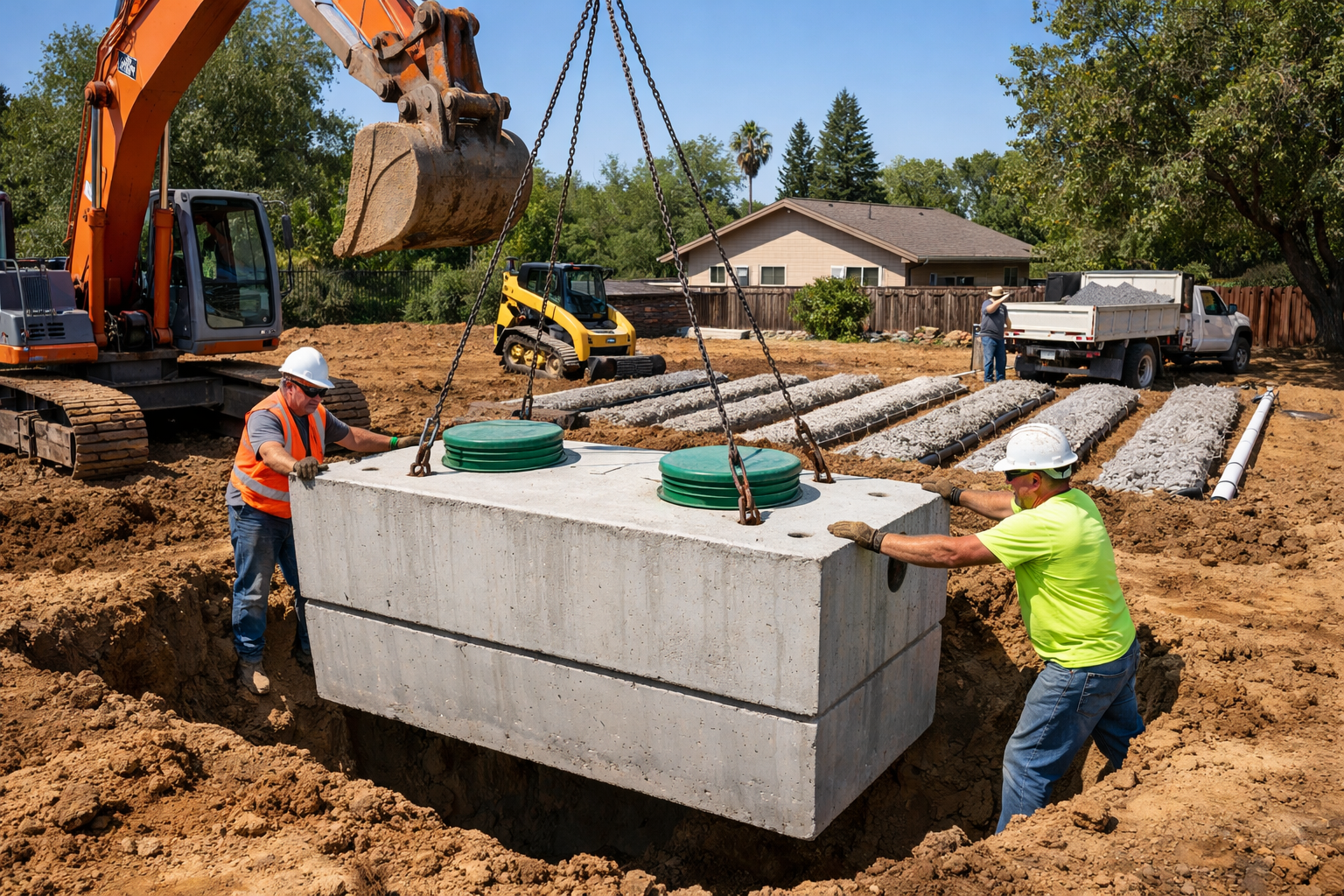
Once approved, excavation begins. Heavy equipment is used to dig space for the septic tank and construct drainfield trenches.
Proper grading and slope are essential. Incorrect depth or leveling can disrupt wastewater flow and cause backups. Careful excavation also protects surrounding landscaping and prevents unnecessary soil compaction.
Precision during this phase directly affects long-term performance.
Step 4: Septic Tank Placement and Connection
The septic tank is lowered into the prepared excavation site and carefully leveled.
Connections are made between:
- The home’s main sewer line
- The tank inlet and outlet
- The drainfield distribution system
Proper leveling prevents structural stress and internal damage. Tank material and size must match the approved design.
Many homeowners also choose to install access risers at this stage for easier future maintenance. Learn more about riser options through this service page on septic risers and lid installation.
Step 5: Drainfield Construction
The drainfield is where treated wastewater disperses into the soil. Trenches or chamber systems are installed using approved materials that promote filtration and absorption.
A poorly constructed drainfield is one of the most common causes of septic failure. Proper spacing, grading, and soil compatibility are essential.
Future maintenance access should also be considered during layout planning.
Step 6: Inspection, Backfilling, and Final Approval
Before covering the system, county inspectors review the installation to confirm compliance.
After approval:
- The tank and drainfield are backfilled
- The site is restored
- Final documentation is issued
Keep inspection records for future property transactions or service needs. If you ever plan to sell, professional inspections are often required. Learn more about real estate septic system inspections with full report.
Maintenance After Installation
Proper installation is only the beginning. Routine septic tank pumping Sacramento services are essential to maintain performance.
Most households require:
- Septic tank pumping Sacramento CA every 3 to 5 years
- Regular septic tank cleaning Sacramento
- Monitoring for early warning signs of failure
If you ever face urgent issues, this guide to emergency septic pumping near me Sacramento explains what to expect.
Routine maintenance prevents backups, odors, and costly drainfield repairs.
Real-World Scenarios in Sacramento
New Home Construction
Rural Sacramento properties often require full system installation from scratch. With proper planning and permitting, most installations are completed within one to two weeks, depending on weather and soil conditions.
Replacement of a Failing System
Older homes may need drainfield relocation or tank replacement. Modern upgrades restore property usability and prevent repeated backups that require frequent septic pumping Sacramento.
Lift Station Installation
Some properties with challenging elevation changes require additional equipment. In those cases, lift station systems may be necessary. Learn more about lift station pumping services if your property includes this setup.
Avoiding Common Septic Installation Mistakes
Do Not Skip Soil Testing
Improper soil evaluation often leads to system overload and failure.
Avoid Unlicensed Installers
Improper work can cost significantly more in repairs later.
Plan for Tank Accessibility
Knowing your tank’s location prevents delays during septic tank pumping Sacramento CA appointments. If your tank is difficult to locate, professional assistance is available through tank locating and outlet baffle replacement services.
Schedule Routine Maintenance
Regular septic tank cleaning Sacramento prevents sludge buildup and protects the drainfield.
These proactive steps help maximize the lifespan of your new system.
Septic Tank Installation Sacramento: Cost and Timeline Expectations
Installation timelines typically range from one to two weeks, depending on:
- Permit approval speed
- Soil conditions
- Weather
- Equipment availability
- Inspection scheduling
Costs vary based on system size, drainfield type, and site complexity. A professional evaluation is the most accurate way to estimate total septic tank installation Sacramento costs.
Keep in mind that investing in proper installation reduces long-term septic pumping Sacramento expenses and emergency repairs.
Choosing the Right Professionals
Septic tank installation is a significant investment in your property’s infrastructure. When done correctly, it provides safe, reliable wastewater management for decades.
Professional installers ensure:
- Regulatory compliance
- Proper system sizing
- Correct drainfield construction
- Long-term reliability
- Smooth inspection approval
By understanding each step in advance, you can approach the process with clarity instead of uncertainty.
Frequently Asked Questions
How long does septic tank installation take in Sacramento?
Most projects take one to two weeks depending on permits, inspections, and site conditions.
Do I need a permit for septic tank installation Sacramento?
Yes. Sacramento County requires permits and inspections for all new septic systems.
How much does septic tank installation cost?
Costs vary based on soil conditions, system size, and property layout. A professional assessment provides accurate pricing.
How often should septic tank pumping Sacramento CA be scheduled?
Most households require pumping every 3 to 5 years depending on usage.
Can regular septic tank cleaning Sacramento prevent major repairs?
Yes. Routine maintenance helps prevent drainfield failure and emergency service calls.
Septic tank installation Sacramento requires careful planning, regulatory compliance, and professional expertise. From soil testing to final inspection, every step influences system performance and longevity.
With proper installation and ongoing septic pumping Sacramento maintenance, your septic system can operate efficiently for decades while protecting your property and the surrounding environment.


