
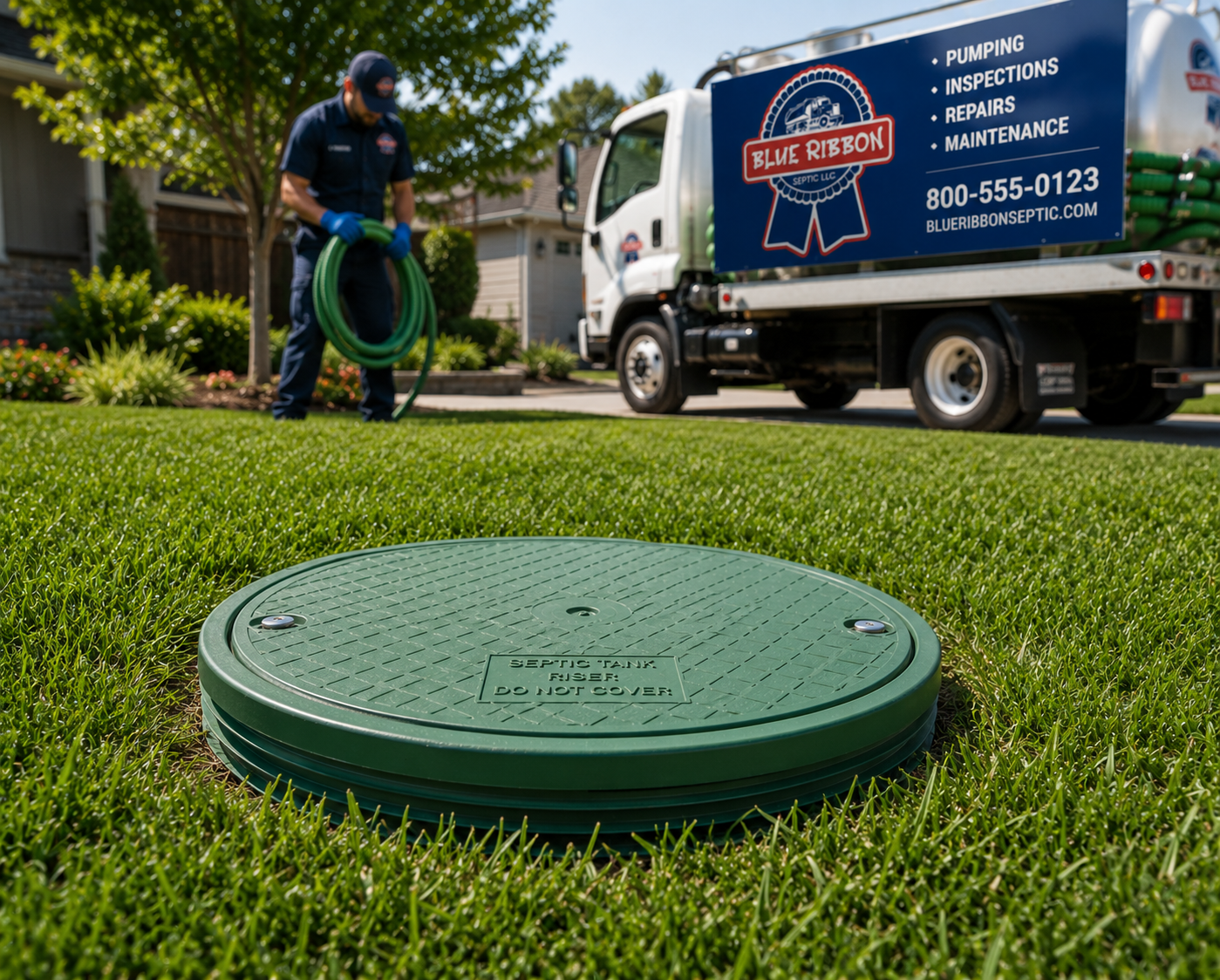
Yes, you should install septic tank risers if you want to eliminate the labor, mess, and extra costs associated with digging up your yard every time your system needs service. For many homeowners, the actual septic tank is buried deep underground, meaning a routine pump-out involves a shovel, destroyed grass, and a higher bill for the manual labor. By installing a septic tank riser kit, you bring the access point to the surface, making maintenance as simple as removing a few screws.
Having septic tank risers and lids at ground level isn't just about convenience; it’s about protecting your property and ensuring your system is inspected regularly. When access is difficult, it’s easy to put off maintenance, which often leads to the exact overflows and backups every homeowner fears. This guide will help you understand the long-term savings of septic risers, the different types of septic tank covers available, and how this one-time upgrade can simplify your home maintenance for decades.
Here is everything you need to know to make an informed decision for your property.
Why Septic Tank Risers are Essential for Modern Homeowners
A septic tank riser is a durable, waterproof pipe made of plastic or concrete that extends from the access port of your buried septic tank up to the ground surface. Essentially, it acts as a structural chimney that bridges the gap between your tank and your yard. By installing septic tank risers, you replace the need to excavate several feet of dirt with a secure, accessible entry point that sits flush with or just above your lawn.
For property owners, the primary impact of this upgrade is the removal of the "hidden" barrier to system health. Many homeowners postpone necessary septic tank cleaning and pumping simply because they don't want their landscaping torn up or cannot remember exactly where the tank is buried. This delay is dangerous; a neglected system can lead to soil contamination and catastrophic backups into your home. When you have a professional septic riser and lid installation completed, the "out of sight, out of mind" risk is eliminated, allowing for effortless inspections and timely maintenance.
The practical advantages of installing septic tank risers and lids include:
- Financial Savings: You stop paying "search and dig" fees to technicians every time the tank needs to be serviced.
- Landscape Protection: No more unsightly holes or dead patches of grass in your yard every three to five years.
- Emergency Accessibility: In the event of a backup, a septic riser allows for immediate service, even if the ground is frozen or saturated.
- Safety: Modern septic tank lids are designed with secondary safety barriers and heavy-duty fasteners to prevent accidental entry.
A common misconception is that a septic tank riser kit will be an eyesore in a well-manicured yard. In reality, modern septic box covers are often green or tan and can be easily camouflaged with light landscaping or decorative covers, making them nearly invisible while remaining perfectly functional.
The Real-World Benefits of Installing Septic Tank Risers
Deciding to install septic tank risers is one of the most practical upgrades a property owner can make. While a standard system functions perfectly well underground, the "buried" nature of the tank often creates a barrier to proper care. By bringing the access point to the surface, you aren't just making life easier for your service technician; you are actively extending the lifespan of your entire wastewater system.
At Blue Ribbon Septic, we specialize in professional septic riser and lid installation to ensure your system remains compliant, safe, and easy to maintain. Below, we break down the specific ways these components change the way you manage your home's infrastructure.
Eliminating the "Dig Fee" and Landscape Damage
Every time a septic professional visits your home for septic tank pumping, they must access the main manhole cover. If that cover is buried 12 to 24 inches underground, it requires significant manual labor to uncover. Most companies charge a "dig fee" or an hourly labor rate to locate and excavate the lid.
Over the course of two or three service cycles, the cost of the septic riser often pays for itself through these saved labor fees. Furthermore, you avoid the periodic destruction of your lawn. Instead of a muddy hole and a patch of dead grass every few years, you have a clean, stable septic riser that stays at ground level, allowing the technician to get straight to work.
Facilitating Frequent Inspections and Repairs
A septic system is more than just a tank; it involves complex components like the outlet baffle, which prevents solids from entering your leach field. When a tank is buried, homeowners are less likely to request an inspection of these parts because of the hassle involved.
With a septic tank riser, a technician can quickly pop the lid to check fluid levels or perform an outlet baffle replacement without a major construction project. This ease of access encourages proactive maintenance, which is the number one way to prevent a multi-thousand-dollar leach field failure.
Ensuring Safety and Security
A common concern for parents and pet owners is whether septic tank lids at the surface are safe. Modern septic tank risers and lids are engineered with safety as a priority. Unlike the heavy concrete lids of the past that can crumble or shift, modern high-density polyethylene (HDPE) lids are:
- Lockable: Most kits include stainless steel screws or locking mechanisms to prevent unauthorized entry.
- Durable: They are designed to withstand foot traffic and even the weight of a riding lawnmower.
- Watertight: High-quality septic tank covering solutions include gaskets that prevent groundwater from leaking into your tank (which can cause overfilling) and prevent odors from escaping.
Emergency Readiness
Septic emergencies rarely happen on sunny, dry afternoons. They often occur during heavy rains or in the dead of winter when the ground is frozen. If your tank is buried, an emergency pumper may find it nearly impossible to dig through frozen earth or mud to reach your tank in time to prevent a backup into your home. A septic riser ensures that even in the worst weather conditions, your system is accessible for an immediate pump-out.
Choosing the Right Septic Tank Riser Kit
When you decide to move forward, you’ll find several options on the market. Most professional installations utilize a septic tank riser kit made of heavy-duty PVC or corrugated plastic. These materials are preferred over concrete because they do not corrode from the sewer gases found inside the tank.
When selecting your kit, ensure it includes:
- The Riser Pipe: Available in various heights (usually 6", 12", or 18" segments) that can be stacked to reach your specific ground level.
- The Adapter Ring: This seals the new riser to your existing concrete or plastic tank.
- The Safety Lid: A reinforced septic tank cover that provides a watertight seal and a non-slip surface.
By investing in septic tank risers, you transition from a "reactive" homeowner—waiting for a disaster to happen—to a "proactive" one. You’ll have total peace of mind knowing that your system is protected, accessible, and ready for decades of reliable service.
Real-World Scenarios: Septic Risers in Action
Seeing how septic tank risers function in everyday situations helps illustrate why they are a favorite upgrade for local property owners. Here are a few ways this simple addition solves common headaches for different types of homeowners.
Use Case #1: The Proactive Homeowner
A homeowner in Roseville wanted to ensure their system remained in peak condition without the guesswork of "prodding" the yard every few years. They opted for a professional septic riser and lid installation to bring their access ports to the surface. As a result, their last routine service was completed in half the time, and they saved significantly on labor costs because the technician didn't have to spend an hour digging through compact clay.
Use Case #2: The Real Estate Transaction
During a real estate septic system inspection, a buyer discovered the tank was buried nearly three feet deep. To avoid future maintenance hurdles and potential negotiation delays, the seller installed a septic tank riser kit before closing. This gave the new buyers peace of mind that they could easily monitor the system, and it removed the "hidden" liability of a deep-buried tank from the property’s profile.
Use Case #3: The Landscape Enthusiast
A family with a pristine backyard used septic risers to stop the cycle of dead grass patches. By installing low-profile septic tank lids and blending them with light mulch, they maintained their yard's aesthetics while ensuring the tank remained accessible for emergencies.
Whether you are preparing for a sale or simply simplifying your home maintenance, these examples show how septic risers provide immediate, tangible value.
Professional Tips for Choosing and Maintaining Septic Tank Risers
Once you decide to install septic tank risers, a few professional insights can help ensure the upgrade lasts as long as your home. Moving from the "why" to the "how" requires attention to detail to ensure your septic tank covering remains watertight and secure.
- Prioritize a Watertight Seal. The connection between your tank and the septic tank riser must be perfectly sealed with butyl rope or specialized silicone. If groundwater leaks into your tank through the riser base, it can overfill the system and cause a premature lift station pumping failure or a saturated leach field.
- Install Above Grade for Drainage. Always ensure the final septic tank lid sits about two inches above the surrounding soil. This prevent surface rainwater from pooling on top of the cover. If you prefer a flush look for mowing, ensure the area is graded so water sheds away from the septic riser opening.
- Use Safety Screws and Secondary Barriers. Safety is paramount, especially with children or pets on the property. Always use stainless steel security screws to fasten your septic tank covers. For added peace of mind, many homeowners install a secondary "safety pan" or net inside the riser that provides a fall-protection barrier even if the main lid is removed.
- Document the Height for Future Service. If you are installing a septic tank riser kit yourself or through a contractor, keep a record of the riser height and diameter. This makes finding replacement lids or extensions much easier in ten or twenty years if the plastic becomes weathered or damaged.
Applying these best practices ensures your investment in septic tank risers provides maximum convenience without compromising the safety or integrity of your wastewater system.
Take Control of Your System With Septic Tank Risers
Installing septic tank risers transforms a buried, difficult-to-manage utility into an accessible and stress-free part of your home’s infrastructure. You now understand how a septic tank riser kit not only saves you money on labor fees but also protects your landscaping and ensures your system can be serviced in any weather. By bringing your septic tank covers to the surface, you remove the barriers to consistent maintenance and long-term system health.
Taking this proactive step today prevents the stress of emergency "search and dig" missions during a backup and gives you total confidence in your property's safety. Don't wait until your next pump-out to deal with the mess of excavation and destroyed grass.
If you are ready to simplify your maintenance and protect your investment, contact the experts at Blue Ribbon Septic for professional septic riser and lid installation and start enjoying a more manageable, reliable septic system today.
Frequently Asked Questions About Septic Tank Risers
How much do septic tank risers cost to install?
The cost of installing septic tank risers typically depends on the depth of your tank and the number of access points. On average, homeowners can expect to pay for the septic tank riser kit and a few hours of professional labor. While there is an upfront investment, most people find the system pays for itself within two service cycles by eliminating the "search and dig" fees often associated with septic tank pumping.
Can I install a septic tank riser kit myself?
While some homeowners attempt a DIY installation, it is generally recommended to hire a professional. A proper septic riser installation requires a watertight seal between the riser and the tank to prevent groundwater from leaking in. If the seal is compromised, your tank can overfill, leading to system failure. Professionals ensure the septic tank covers are set at the correct grade for safety and drainage.
Are septic tank lids safe to walk on?
Yes, modern septic tank lids are designed to be extremely durable. High-quality plastic or composite septic tank covering solutions are engineered to withstand foot traffic and the weight of standard lawn maintenance equipment like riding mowers. Most lids also feature non-slip surfaces and security screws to ensure they remain a safe and permanent part of your yard without posing a tripping or falling hazard.
How do I hide septic risers in my landscaping?
Many homeowners worry that septic risers will be unsightly, but they are easy to conceal. You can use lightweight decorative rocks, potted plants, or specialized septic box covers that look like natural stones. It is important, however, to keep the area immediately around the septic riser clear of heavy permanent structures or deep-rooted shrubs so that technicians can still access the lid easily during your next maintenance visit.


