
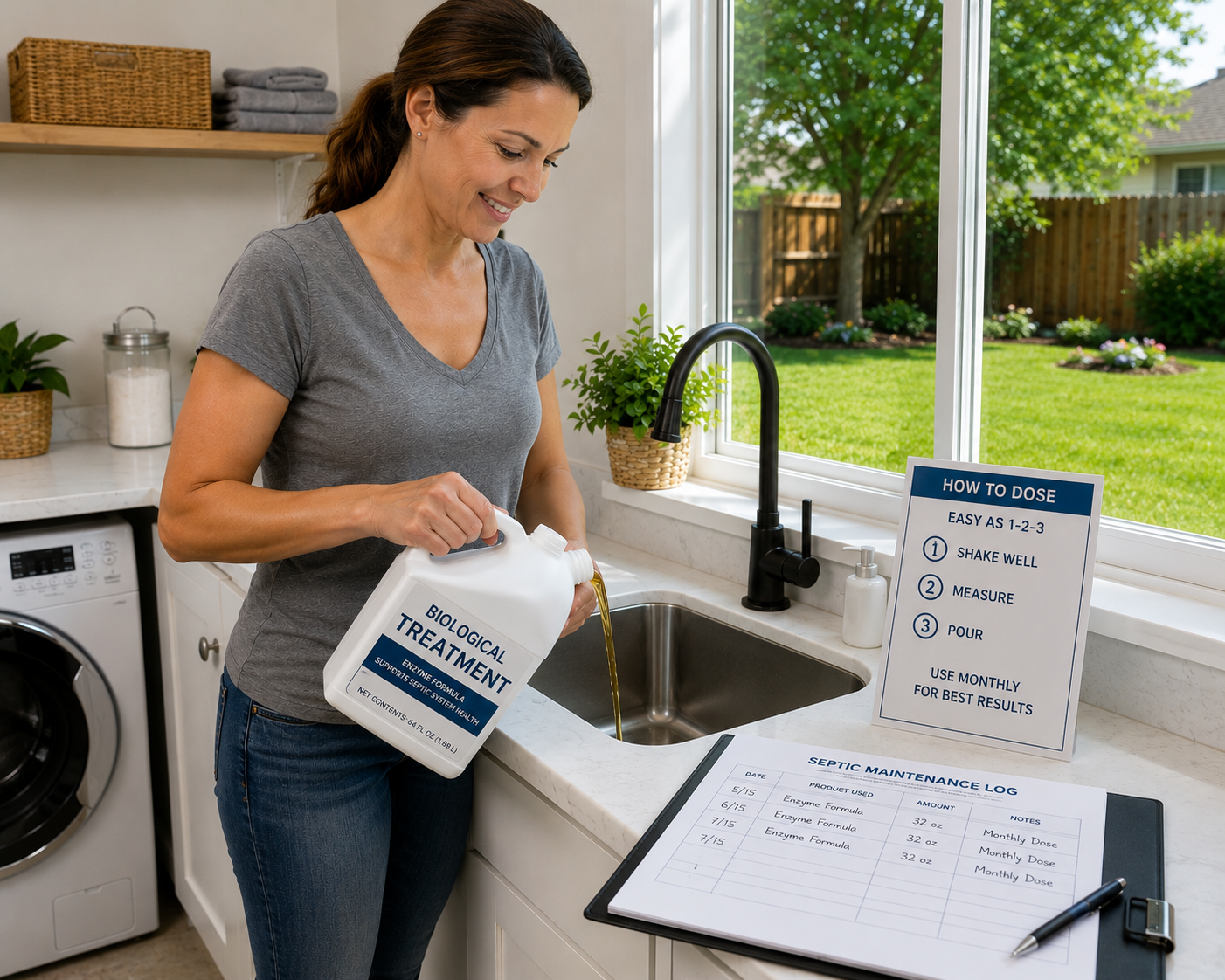
The best septic tank treatment typically relies on natural, biological additives rather than harsh chemicals, which can actually kill the essential bacteria your system needs to function. Many homeowners mistakenly believe that aggressive store-bought formulas act as the best septic system treatment, but these chemicals often accelerate system failure by hardening solids and disrupting the delicate biological balance inside the tank.
For a family relying on a private septic system, the health of this environment is the only barrier between a smoothly running home and a costly, messy sewage backup in the yard. By choosing the right maintenance approach, you can significantly extend the time between services. This guide will help you understand which additives actually work, which to avoid, and how to make the right decision for your system’s long-term health. Let’s dive into the science of septic care.
Understanding the Basics of Septic Tank Additives
A septic tank treatment is an additive designed to supplement the naturally occurring bacteria in your tank, helping it break down solid waste into liquid effluent. While your system naturally generates its own bacteria from household waste, certain conditions, like the heavy use of antibacterial soaps, detergents, or bleach, can kill these helpful organisms. The best septic tank treatment acts as a biological "booster" to replace these colonies and keep the decomposition process moving efficiently.
For homeowners, understanding the distinction between additives is not just a maintenance tip, it is a critical strategy for avoiding emergency repairs. When your tank fails to break down solids, they accumulate, clogging the outlet and potentially forcing untreated waste into your drain field. To maintain your system’s health effectively, we recommend scheduling regular septic tank cleaning and pumping to remove excess sludge that no additive can dissolve.
By choosing the top rated septic tank treatment options, you gain several practical advantages:
- System Longevity: Biological treatments maintain the active bacterial environment needed to prevent premature sludge buildup.
- Preventative Peace of Mind: Using the correct products helps you avoid the common mistake of relying on harsh chemicals that can damage your system’s internal components, such as your outlet baffle.
- Reduced Odors: A healthy, functioning bacterial colony is highly effective at neutralizing common septic gases.
Many property owners mistakenly assume that more additive is always better, or that any store-bought bottle will solve an existing backup. The reality is that these products are for maintenance, not for fixing an already failed system.
Comparing Natural Biological Additives vs. Harsh Chemicals
To identify the best septic tank treatment, you must first understand the fundamental difference between biological enzymes and chemical agents. While chemicals promise a "quick fix" for clogs or odors, they often act as a temporary mask that harms your system's long-term health. For a truly reliable system, our team at Blue Ribbon Septic encourages focusing on routine septic tank cleaning and pumping to remove solid accumulation, which no additive, natural or chemical, can completely eliminate.
The Dangers of Chemical Treatments
Many store-bought "cleaners" contain harsh acids or caustic substances. While they might briefly dissolve some buildup, they also destroy the good bacteria necessary for your system to function. This is a common mistake that property owners make; by attempting a DIY fix, you end up sterilizing your tank. Once the biological balance is lost, the breakdown of solids stops entirely, leading to much faster sludge accumulation and potential damage to your home’s plumbing pipes.
Why Natural Biological Formulas Lead the Way
The most effective septic tank treatment utilizes natural enzymes and bacteria that work in harmony with your system. Here is how these formulas help you maintain a healthy environment:
- Enzymatic Digestion: These treatments introduce specialized enzymes that break down proteins, fats, and starches into simpler compounds that the naturally occurring bacteria in your tank can easily consume.
- Bacterial Colony Support: By adding beneficial bacteria, you ensure that the decomposition process continues even if your household uses antibacterial cleaners or soaps that would otherwise kill off your system’s natural flora.
- Preventative Maintenance: Regular, low-dose applications of these natural formulas keep the tank walls clean and prevent thick, hardened sludge from forming, which significantly extends the intervals between professional service visits.
How to Choose the Right Maintenance Plan
When looking for the best septic treatment for your specific needs, consider these three factors to guide your decision-making process:
- Prioritize Biological Ingredients: Always check the label for "enzymes" or "bacteria" and avoid anything that markets itself as "caustic" or "acidic." A top rated septic tank treatment will almost always be biological.
- Consistency Over Volume: Do not dump a large quantity of product into your system hoping to fix a major issue. Maintenance is about steady, small-scale additions that support existing bacterial colonies.
- Physical System Integrity: Remember that no additive can fix physical damage. If you have concerns about your system's performance, it is better to schedule a professional septic system inspection rather than relying on a chemical "cure-all."
By focusing on these biological approaches, you are investing in the longevity of your system. A healthy, enzyme-rich tank is far less likely to develop the foul odors or slow drainage that cause homeowners so much stress. Ultimately, the best product is one that works with nature to keep your household wastewater moving safely and efficiently.
Real-World Strategies for Applying Septic Treatments
Understanding the science behind additives is helpful, but seeing how they apply to your daily routine is what truly protects your home. Here is how different property owners use the best septic tank treatment to ensure their systems remain functional year-round.
Case 1: The High-Usage Family A family of six noticed frequent odors near their yard after upgrading their laundry appliances. Worried their best septic system treatment wasn't enough, they consulted a professional who identified that increased water flow was disrupting the tank's biological stability. They switched to a high-quality biological enzyme, paired with the installation of septic risers to make routine monitoring and dosing much easier. The odors dissipated within weeks, and their system regained its balance.
Case 2: The Proactive Homeowner An owner of an older property wanted to avoid the risks of a failing system. They began using the best septic tank additive monthly to maintain a robust bacterial colony, ensuring that household detergents didn't kill off the necessary enzymes. Because they combined this with professional maintenance every three years, they successfully avoided the common pitfalls of sludge buildup and drain field saturation, keeping their system performing like new.
Case 3: Real Estate Preparedness Before listing their home, a seller used a biological treatment to ensure the system was odor-free and operating at peak efficiency. This simple step helped the system pass a rigorous inspection on the first try, preventing potential delays in their property sale.
These simple, consistent actions provide long-term security. By integrating these practices into your maintenance schedule, you ensure your home stays protected against unexpected system disruptions.
Proactive Tips for Maintaining Your Septic System Health
Moving from simple knowledge to effective application is the key to preventing emergencies. These expert-driven tips will help you refine your use of the best septic tank treatment and ensure your overall maintenance strategy remains effective in the long term.
- Audit Your Household Chemicals The effectiveness of any best septic system treatment is severely limited if you continue to flush harsh disinfectants, bleach, or heavy antibacterial soaps. These chemicals create a hostile environment that kills beneficial enzymes. Instead, switch to septic-safe cleaning supplies to protect your bacterial colony, ensuring that your chosen additive can actually do its job without interference from toxic substances.
- Time Your Dosing Strategically For the most effective septic tank treatment results, add your biological formula at night when water usage is at its lowest. This gives the enzymes and bacteria several hours to settle into the tank and begin breaking down solids before the next morning's heavy water flow. If you have easy access to your tank, septic risers make this process significantly cleaner and more efficient.
- Avoid the "More Is Better" Fallacy A common misconception is that doubling the dose will fix a slow-draining system. In reality, your tank has a limited capacity for biological activity. Over-dosing can lead to excessive accumulation of byproducts or simply waste your money. Stick strictly to the manufacturer's recommended monthly dosage to keep your system in a state of balanced, sustainable decomposition.
Implementing these focused habits ensures your septic system remains a reliable asset rather than a source of unexpected household stress.
Securing Your Home with the Right Septic Maintenance
By now, it should be clear that the best septic tank treatment is not a miracle chemical, but a consistent, biological support system that works with nature to break down waste. You now have the knowledge to avoid common pitfalls like harsh cleaners and over-dosing, allowing you to prioritize the long-term health of your infrastructure over quick, temporary fixes.
Choosing the right approach today is the most effective way to prevent the stress, expense, and safety risks associated with unexpected system failures. Proactive care gives you the confidence that your home’s essential systems are operating reliably, protecting both your property and your family.
If you suspect your system is struggling or you simply want to ensure everything is running at peak performance, let our experienced team help you stay on track. Contact Blue Ribbon Septic today to schedule your professional septic tank cleaning and pumping.
Frequently Asked Questions About Your Septic Tank Treatment
How often should I use the best septic tank treatment?
For most households, the best septic tank treatment should be applied on a consistent, monthly basis to maintain a healthy bacterial population. Regular, small doses are far more effective than sporadic, heavy applications. This schedule ensures that your best septic system treatment continuously supports the natural breakdown of solids, preventing them from accumulating too quickly and helping you avoid the need for premature or emergency system interventions.
Can I use harsh drain cleaners alongside the best septic treatment?
You should avoid using harsh chemical drain cleaners if you want your best septic treatment to work effectively. Strong acids and caustic substances can sterilize your tank, destroying the beneficial enzymes and bacteria that perform the actual waste digestion. If you are experiencing persistent slow drainage or blockages, it is safer to contact a professional for a proper septic system inspection to diagnose the physical cause rather than risking the entire system's biological health with chemicals.
What is the best treatment for septic systems if I have a slow drain?
The best treatment for septic systems experiencing slow drains is not an additive, but a professional diagnostic service. While many owners search for a top rated septic tank treatment to clear backups, slow drainage is often caused by physical issues like pipe clogs, full tanks, or drain field saturation. Additives are strictly for long-term preventative maintenance and cannot dissolve debris or fix mechanical failures within your plumbing lines.
Do natural enzymes actually work better than chemicals?
Yes, natural enzymes are the most effective septic tank treatment because they sustain the system's biological function rather than damaging it. Chemical treatments may offer a fleeting, superficial clean, but they ultimately disrupt the essential decomposition process. Biological formulas provide a sustainable, long-term solution that keeps your system working efficiently, reduces odors, and protects the delicate balance of your entire home wastewater infrastructure from premature failure or costly damage.


